High-Performance Warehouse Racking Systems
Explore our engineering-led storage solutions customized for warehouse operations across Santiago, Valparaíso, Antofagasta, and nationwide logistics hubs.
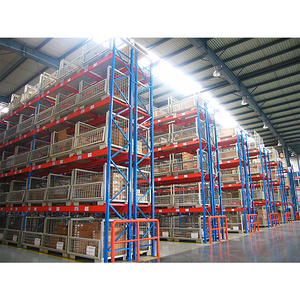
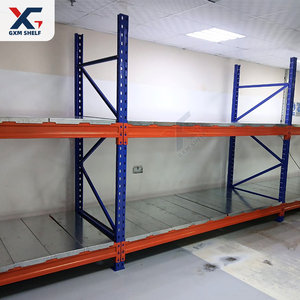
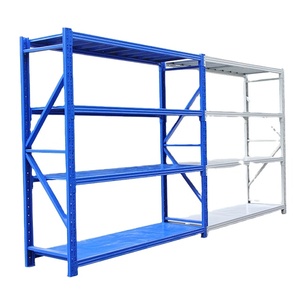
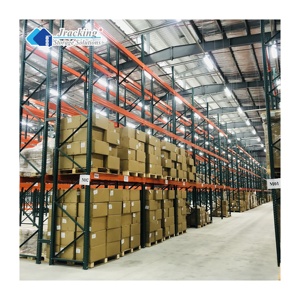
Optimizing Warehouse Density in Chile: The Engineering Mechanics of Push Back Racking
A comprehensive analysis of high-density Last-In, First-Out (LIFO) dynamic cart storage systems designed to maximize volumetric efficiency while satisfying rigorous structural standards.
Dynamic Nested Cart Kinematics
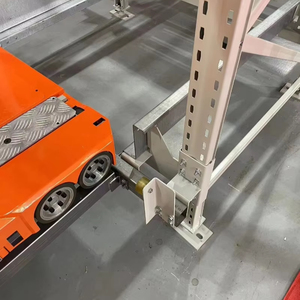
Push back warehouse racking operates using a series of nested, telescoping wheeled carts riding on inclined structural steel rails. When a forklift loads the first pallet, it rests on the top cart. Loading the second pallet gently pushes the first cart back into the system, exposing the second cart beneath it.
- Nested cart design accommodates up to 6 pallets deep per aisle lane.
- Low-profile rail incline (typically 1.5° to 3°) ensures smooth gravity-assisted retrieval.
- Eliminates forklift entry into the rack structure, minimizing frame impact risks.
- Compatible with standard counterbalance and reach trucks without specialty attachments.
LIFO Logistics Dynamics & Operational Efficiency
Unlike standard drive-in racking, push back systems enable independent lane selection at every level. Each elevation operates as a distinct picking aisle, offering significantly higher SKU flexibility while retaining high-density storage ratios.
- Reduces honeycombing effects commonly seen in traditional drive-in racking layouts.
- Increases forklift driver productivity by up to 40% compared to deep-reach drive-in systems.
- Optimal for medium-turnover batch goods, raw materials, and cold store bulk buffers.
- Designed for standard Chilean wooden pallets (1,000 × 1,200 mm) and Europallets.
“In high-cost Chilean industrial zones like Pudahuel and Quilicura, push back racking allows facility operators to store up to 75% more pallets than selective racking without extending the physical floor footprint—delivering immediate ROI on industrial real estate capital expenditures.”
Comparative Performance Analysis: High-Density Warehouse Systems
| Storage System Type | Floor Space Utilization | SKU Selectivity | Forklift Risk Profile | Seismic Stability (Chile) |
|---|---|---|---|---|
| Push Back Racking (2–6 Deep) | 70% – 80% High Density | Medium (1 SKU per lane/level) | Low (Forklift remains in aisle) | Excellent (Tied framework + dynamic dampening) |
| Selective Pallet Racking | 35% – 45% Low Density | 100% Full Selectivity | Medium (Aisle travel risk) | Standard (Requires wider footings) |
| Drive-In Racking | 65% – 75% High Density | Very Low (1 SKU per bay) | High (Forklift enters rack core) | Moderate (Subject to frame swaying) |
| Radio Shuttle System | 80% – 90% Ultra High | Medium-Low (Automated channel) | Very Low (Automated shuttle) | High (Requires rigid rail ties) |
Seismic Design Standard Compliance for Chilean Warehouses
Chile is situated on the seismically volatile Pacific Ring of Fire. Installing non-seismic certified industrial storage systems poses severe operational, structural, and legal liabilities.
NCh2369 Structural Standard
Chilean standard NCh2369 specifies seismic design rules for industrial structures and heavy machinery systems. Our push back structures incorporate reinforced upright profiles, expanded seismic footplates, and chemical anchor arrays to resist extreme lateral earthquake shear forces.
Soil & Zone Factor Analysis
From Zone 3 coastal sites (Valparaíso/San Antonio) to continental clay soils in the Santiago Basin, our engineering team performs site-specific dynamic response spectrum assessments under NCh433 to ensure zero dynamic frame buckle during severe ground acceleration events.
CE Certification & EN 15512
Every beam, column brace, and cart assembly leaves our manufacturing facility with CE certification, built under strict ISO 9001 quality controls and compliant with EN 15512 European structural steel racking design criteria for verified load ratings.
Localized Storage Applications Across Chilean Industrial Hubs
Customizing push back and pallet racking configurations to match regional supply chain dynamics from Northern mining logistics to Southern cold storage exports.
1. Agro-Export Cold Chains (O'Higgins, Maule & Los Lagos)
Chile is a global leader in fresh fruit exports (cherries, berries, grapes) and salmon aquaculture. Cold storage facilities in Rancagua, Talca, and Puerto Montt face massive refrigeration energy overheads.
- Low Temperature Mechanics: Push back cart bearings are packed with specialized non-freezing low-viscosity lubricants rated for sub-zero operating environments down to -30°C.
- Thermal Cube Efficiency: Push back racking eliminates unnecessary cold store aisles, maximizing thermal density and reducing refrigeration electricity costs per pallet slot.
- Stainless & Hot-Dip Galvanized Finishes: Protects steel structures against corrosive saline atmospheric humidity in aquaculture packing rooms.
2. Mining Supply Chain Logistics (Antofagasta & Atacama)
Northern Chile’s mining complexes require heavy-duty storage for industrial replacement components, heavy valves, drill spares, and chemical reagents under severe environmental dust.
- High Tonne Capacity: Reinforced structural Q355B steel beam profiles designed to handle extreme pallet loads of up to 1,500 kg per pallet cart slot.
- Dust-Shielded Wheel Bearings: Sealed cart bearings prevent copper dust ingress from clogging rolling channels.
- High-Altitude Engineering: Structural stability factors adjusted for high-altitude thermal fluctuations and seismic shock loads.
3. Metropolitan Retail & E-Commerce Hubs (Santiago RM)
Distribution centers in Lampa, San Bernardo, Pudahuel, and Quilicura process massive last-mile e-commerce and retail stock turn over daily for the Greater Santiago population.
- Fast Batch Staging: Push back lanes serve as ideal buffer storage for fast-moving consumer packaged goods (FMCG) before final dispatch.
- Vertical Cube Utilization: Capitalizes on vertical clear heights up to 12 meters, creating multi-tier push back structures above lower-level picking operations.
- Rapid Stock Rotation: Clear visual load signs allow forklift operators to swiftly identify lane occupancy and rotation velocity.
4. Maritime Container Staging Ports (Valparaíso & San Antonio)
As main gateways for Chilean international trade, port-adjacent logistics warehouses require fast container un-stuffing and rapid pallet buffering under coastal marine climates.
- Anti-Corrosive Coatings: Heavy-duty thermosetting epoxy-polyester powder coats formulated for C3/C4 industrial marine environments.
- Cross-Docking Buffer: 2 to 4-deep push back lanes store incoming ocean container lots safely until customs release and outbound dispatch.
- Reduced Aisle Footprint: Maximizes storage yields in highly restricted port land zones.
Chilean Logistics & Warehouse Infrastructure Trends (2025–2030)
Key technological, regulatory, and market factors reshaping storage design across the Chilean industrial sector.
1. Industrial Land Scarcity & Skyrocketing Rent
Prime logistics land prices in the Región Metropolitana have surged significantly. Warehouses are forced to transition from horizontal sprawl to vertical high-density systems. Certified push back and shuttle systems are rapidly replacing traditional single-selective layouts in new Grade-A logistics parks.
2. Strict Enforcement of Decree 594 & Law 16.744
Chilean health and safety regulators (Seremi de Salud) and insurance mutuals (Mutual de Seguridad, ACHS) are strictly enforcing workplace safety regulations under Decree 594. Racking systems must provide documented structural capacity certificates, anti-collapse guards, and annual seismic integrity checks.
3. Decarbonization & Green Cold Storage
With Chile's commitment to carbon neutrality, cold store operators are redesigning refrigerated rooms to minimize thermal volumes. High-density push back racking minimizes empty air volume inside cold chambers, driving down HVAC power consumption by up to 30% per stored pallet.
Why Partner with Our Factory for Your Chilean Projects?
Combining world-class steel fabrication with specialized Chilean engineering compliance to deliver end-to-end reliability for enterprise logistics.
Direct Factory Manufacturing
We eliminate intermediary trading markup. Our automated roll-forming production lines, robotic laser welding, and automated powder-coating lines deliver precision structural profiles designed to exact millimeter tolerances.
High-Grade Structural Steel
Manufactured strictly using high-tensile structural steel (Q235B, Q355B equivalent to EN SS400/S355). Mill test certificates (MTC) accompany every shipment to guarantee raw material elasticity and yield strength under load.
Full Turnkey Engineering Support
Our structural engineers assist Chilean clients from preliminary 2D/3D DWG spatial planning and seismic loading calculations through to maritime freight forwarding, customs documentation, and installation supervision.
Frequently Asked Questions: Warehouse Racking in Chile
Addressing essential engineering, compliance, logistics, and operational queries raised by Chilean facility managers and procurement teams.
Is structural racking in Chile legally required to undergo seismic calculation?
+
How does push back racking perform in cold storage and sub-zero temperatures?
+
What is the standard delivery timeline for custom racking orders shipped to Chile?
+
Can your push back racking accommodate standard Chilean pallet dimensions?
+
How often must industrial racking be inspected in Chile?
+
What is the difference between push back cart systems and push back roller systems?
+
Request Your Seismic Structural Layout & Product Catalog
Planning a new warehouse facility or upgrading storage density in Chile? Connect with our senior structural logistics engineers for custom CAD layouts, seismic loading reports, and direct factory pricing.