Engineering-Grade Industrial Racking Systems
Explore our heavy-duty, factory-direct pallet rack systems built for high load capacity, maximum space utilization, and full safety compliance.
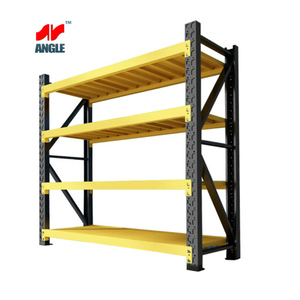
High Quality Heavy Duty Warehouse Shelf Industrial Warehouse Racking Storage Shelf Manufacturer
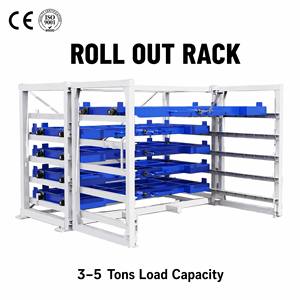
Industrial Heavy Duty Customizable Foldable Corrosion Resistant 8-Layer Powder Coated Carbon Steel Warehouse Rack Cantilever
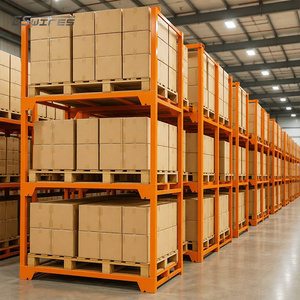
Heavy Duty Warehouse Industrial Storage Nestainer Metal Portable Steel Racks Pallet Stacking Frames
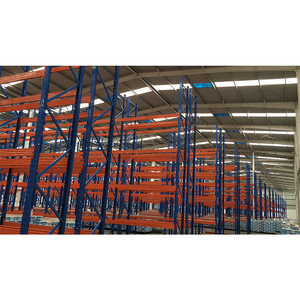
Industrial Warehouse Racking System With Heavy Duty Steel Pallet Rack Beams
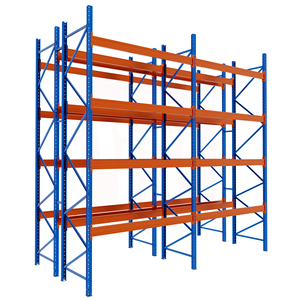
Customized Industrial Pallet Racks Beams Adjustable Steel Metal Heavy Duty Selective Pallet Racking System for Warehouse Storage
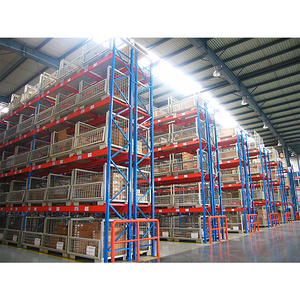
High Quality Selective Racking System Warehouse Storage Forklift Heavy Duty Rack Pallet Racking System Heavy Duty Racks
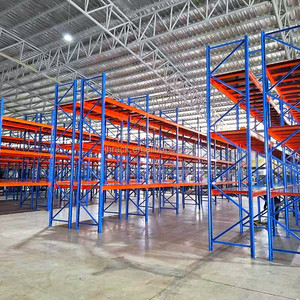
ODM Adjustable Beam Rack Industrial Heavy Duty Storage Shelves System Stacking Units Metal Rack Warehouse Steel Pallet Racking
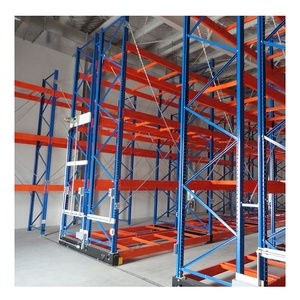
Factory Price Automatic Warehouse Storage Pallet Rack Mobile Racking System
Engineering Excellence in Heavy-Duty Warehouse Pallet Racking Architecture
Modern industrial supply chains demand more than mere vertical steel framing; they require fully calculated structural ecosystems designed to maximize volumetric efficiency while enduring intense physical dynamic stress. As top trusted warehouse pallet storage manufacturers and wholesalers, our engineering methodology integrates site-specific dynamic loading calculations, advanced cold-formed and structural steel metallurgy, and rigorous international code compliance (RMI, FEM 10.2.02, ANSI MH16.1, and Chilean Seismic standard NCh2369/NCh433).
When selecting industrial racking systems, warehouse operations directors and procurement heads must evaluate structural deflection limits (standardized at L/200 or L/240 for high-bay applications), beam-to-column connector rigidity, seismic dissipation capacity, and long-term mechanical degradation under severe thermal variations (such as cold-store logistics down to -30°C).
Technical Insight: Structural safety in seismic regions depends on column upright profile geometries, baseplate anchor shear resistance, and dynamic frame bracing design. Our systems utilize cold-rolled Q355B steel profiles featuring high yield tensile strengths to prevent irreversible deformation under micro-seismic vibrations and forklift impact forces.
Structural Integrity & Material Science Specifications
The core structural stability of selective pallet racking, drive-in systems, nestainer stacking frames, and automated mobile racking relies upon premium steel selection. Utilizing certified high-yield structural carbon steel (Q235B and Q355B grades), upright frames are roll-formed into continuous 8-to-13-fold profile patterns. This multi-stage cold-forming process elevates column moment of inertia while mitigating structural weight.
Surface finishing is executed via automated electrostatic powder coating or hot-dip galvanization (HDG). Powder coatings undergo a 7-stage chemical pre-treatment (degreasing, phosphating, rinsing) to yield a dry film thickness (DFT) of 70–90 microns, resisting chemical exposure, abrasion, and high moisture levels commonly encountered in port-adjacent distribution centers.
Industrial Warehouse Racking Systems: Engineering Comparison
To optimize warehouse floor layout and return on investment (ROI), supply chain executives must evaluate racking types against key operational metrics such as SKU density, selectivity percentage, initial capital expenditure, and compatibility with automated material handling equipment (MHE).
| Racking Architecture | Storage Density | SKU Selectivity | Handling Speed | Seismic Resistance | Optimal Industry Application |
|---|---|---|---|---|---|
| Selective Pallet Racking | Standard (35-40%) | 100% Immediate | High | Excellent (NCh2369) | General 3PL, FMCG, Retail Fulfillment |
| Drive-In / Drive-Thru Racking | High (65-75%) | Low (LIFO / FIFO) | Moderate | Engineered Bracing | Cold Storage, Bulk Single-SKU Agro-Export |
| Radio Shuttle Automation | Ultra-High (80-85%) | Medium (Batch FIFO) | Very High | Superior Lock-Rails | Frozen Food (-25°C), Deep-Lane Beverage |
| Cantilever Rack Systems | Custom Linear | 100% Linear Access | High | Heavy Anchor Plates | Mining Pipe, Timber, Steel Profiles |
| Automatic Mobile Racking | Maximum (85-90%) | 100% On-Demand | Moderate-High | Integrated Floor Rails | High Value Density, Space-Constrained Facilities |
Future Procurement Trends in Industrial Pallet Storage Systems
As global supply chains face escalating commercial real estate costs, labor shortages, and stringent sustainability imperatives, procurement strategies for industrial storage equipment are undergoing a structural shift. Buying decisions are transitioning from simple initial purchase price evaluations toward Total Cost of Ownership (TCO) and adaptive facility design.
1. Vertical Cube Maximization & Narrow Aisle (VNA) Adoption
Rising industrial land values across strategic logistics hubs (such as Santiago, Valparaíso, and regional distribution nodes) force operators to build vertically. Future-ready procurement prioritizes rack structures capable of reaching heights above 15 meters, requiring strict column tolerance manufacturing to prevent top-rack sway and ensure VNA turret truck compliance.
2. Automation-Ready & Shuttle Interface Structural Design
Modern pallet rack installations are increasingly specified as "Automation-Ready." Even if initial deployment relies on conventional forklifts, progressive enterprises specify structural beam connectors, guide rails, and shuttle channel tolerances suitable for seamless retrofitting with semi-automated Radio Shuttle cars or fully automated AS/RS crane systems.
3. Seismic Mitigation & Site-Specific Engineering Mandates
Regulatory authorities and global insurers now mandate site-specific structural calculation reports. Racking systems are no longer sourced as static catalog items; they must be engineered against localized peak ground acceleration (PGA), soil dynamics (Classes A through E), and real floor slab concrete compressive strength tests.
4. Sustainable Steel Procurement & Low-Carbon Coating
Corporate ESG objectives are directly impacting material handling procurement. Top storage manufacturers are moving toward green-certified structural steel, recycled alloy integration, zero-VOC powder coating technologies, and extended product lifecycles achieved through certified rack inspection, repair, and modular re-rating.
Technology & Development Trends in Heavy-Duty Rack Manufacturing
The manufacturing paradigm for warehouse racking has evolved beyond standard cold roll-forming into high-precision, software-driven industrial production. Key technological advancements shaping the next generation of pallet storage systems include:
- Finite Element Analysis (FEA) Simulation: Structural engineers utilize FEA software to simulate multi-directional dynamic seismic stress, wind load on rack-supported buildings, and localized stress concentrations on beam connectors under maximum overload conditions.
- Automated Robotic Welding Cells: Automated multi-axis robotic welding ensures zero-defect structural joint penetration on heavy-duty beam connector claws and heavy baseplates, eliminating human fatigue variance and guaranteeing uniform weld strength.
- Smart Rack Telemetry & Structural Health Sensors: Integration of micro-strain sensors and Wireless Impact Monitoring Devices within critical upright columns allows facility managers to log forklift impact events in real-time, instantly notifying HSE officers of potential structural integrity breaches.
- Cold-Chain Anti-Corrosion Alloys: Specialized hot-dip galvanized and Zinc-Aluminium-Magnesium (ZAM) coated steel formulations prevent structural rust formation in humid condensation zones and sub-zero blast-freezing environments.
Why Partner With Us: Direct Manufacturer & Wholesaler Strengths
ChileShelving Industrial Systems SpA delivers complete, turnkey structural engineering and manufacturing capability for global supply chains, mining facilities, port logistics hubs, and cold storage networks. We bridge the gap between heavy structural manufacturing and localized compliance execution.
Seismic Engineering Leadership
Every rack design undergoes rigorous structural modeling aligned with Chilean seismic codes NCh2369 and NCh433, ensuring full compliance for structural permits, insurance underwriting, and workplace safety audits.
Full Project Lifecycle Support
From initial 2D/3D CAD layout planning, floor slab capacity analysis, and precision ISO 9001 manufacturing to on-site assembly management, anchoring, and annual safety inspection programs.
Customization & OEM/ODM Rigor
Factory-direct manufacturing allows us to tailor upright profiles, beam pitch adjustments, load capacities (up to 4,000 kg per beam level), and custom powder-coat branding to exact buyer specifications.
Frequently Asked Questions (FAQs) - Procurement & Technical Guide
Is industrial pallet racking required to be engineered for seismic resistance?
What is the difference between Roll-Formed and Structural Steel Pallet Racking?
Which racking system is recommended for high-density cold storage logistics?
How often should enterprise warehouse racks be inspected for safety compliance?
What structural factors determine the load capacity of a pallet rack beam?
Can custom structural racking systems be integrated with existing automated equipment?
Optimize Your Warehouse Volumetric Space Today
Connect directly with our senior structural engineers and wholesale specialists to receive site-specific CAD layouts, load capacity calculations, and factory-direct price quotations.