Engineered Industrial Storage Systems
Explore our heavy-duty warehouse structural solutions engineered for high load capacities, seismic safety, and optimized cube utilization.
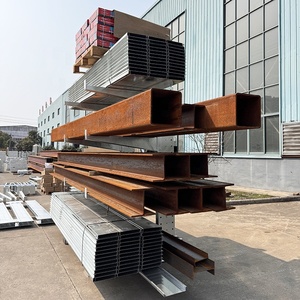
Outdoor Storage Corrosion Protection Hot-dip Galvanized Single Sided Cantilever Rack for Profile Storage
View Product Details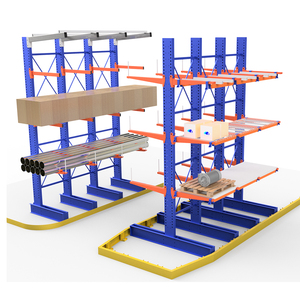
Corrosion Protection 5-Layer Steel Double-Sided Cantilever Shelving Pipe Warehouse Storage Heavy Duty Cantilever Racking
View Product Details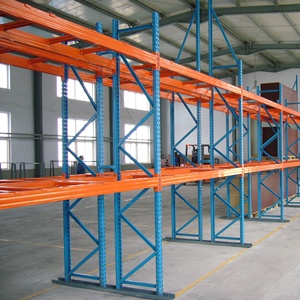
Adjustable Heavy Duty Pallet Rack Shelf Two Levels Custom High Load Capacity Industrial Warehouse Storage Pallet Racking System
View Product Details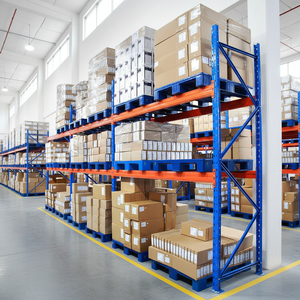
Heavy Duty Adjustable Corrosion Pallet Racking System Industrial Warehouse Storage Racks for Logistics E-commerce
View Product Details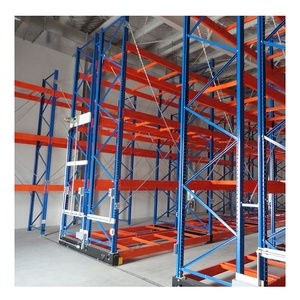
Factory Price Automatic Warehouse Storage Pallet Rack Mobile Racking System
View Product Details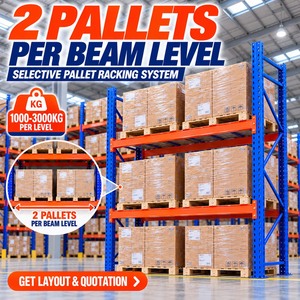
Selective Pallet Racking System with Two Pallet Positions Per Beam Level
View Product Details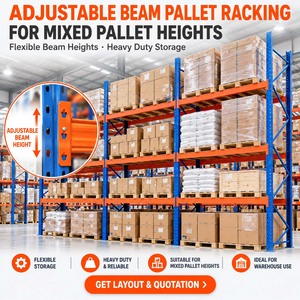
Adjustable Beam Pallet Racking System for Mixed Pallet Heights
View Product Details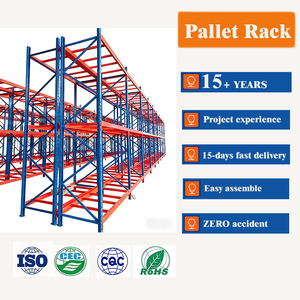
Heavy Duty Industrial Steel Durable Warehouse Pallet Racking System Adjustable Shelving Racks Warehouse Storage Rack
View Product DetailsTechnical Whitepaper: Push Back Pallet Racking Engineering Dynamics
In modern industrial logistics, maximizing the structural floor footprint while maintaining high throughput is a fundamental challenge for warehouse operations directors. As global industrial real estate costs rise and cold storage energy consumption spikes, standard selective pallet racking frequently fails to deliver the required volumetric density. Modern supply chain managers are shifting toward high-density dynamic storage architectures—specifically, Push Back Pallet Racking Systems.
As premier dynamic racking manufacturers and international exporters, our systems utilize nested, telescoping cart assemblies riding on inclined steel rails. Operating on a LIFO (Last-In, First-Out) inventory management rule, push back systems allow forklift operators to deposit pallets on nested carts at a single aisle interface. When a subsequent pallet is loaded, the operator gently pushes the existing pallet back into the lane, exposing the next nested cart underneath. Upon unloading, gravity smoothly advances the remaining pallets forward to the picking face at a controlled speed.
This structural arrangement eliminates the structural hazards common to Drive-In racking—where forklifts must physically maneuver deep inside steel upright corridors—while recovering up to 75% of the wasted aisle space required by standard selective layouts. The result is a high-performance, structurally robust system engineered to withstand dynamic kinetic impacts and site-specific seismic accelerations.
Comparative Storage Architecture & Performance Matrix
To evaluate the structural and economic trade-offs of Push Back Systems against alternative high-density configurations, our structural engineering team has synthesized real-world site metrics into the comparative decision matrix below:
| Storage System Type | Volumetric Density Utilization | SKU Selectivity Ratio | Forklift Damage Exposure | Honeycombing Loss Risk | Seismic Resistance Rating |
|---|---|---|---|---|---|
| Push Back Racking (2-6 Deep) | 75% - 85% | Medium (1 SKU per Lane) | Very Low (No Aisle Entry) | Low (Independent Levels) | High (Tying Frame Bracing) |
| Selective Pallet Racking | 35% - 45% | 100% (Immediate Access) | Moderate (Frequent Turning) | None | Standard Baseline |
| Drive-In Racking | 65% - 75% | Very Low (1 SKU per Bay) | Extreme (Vehicular Penetration) | High (Bay-Level Locking) | Requires Heavy Dynamic Bracing |
| Pallet Flow (Gravity FIFO) | 85% - 90% | Low (Dedicated FIFO Lanes) | Low (Separate Load/Unload) | Very Low | Moderate to High |
| Radio Shuttle Automation | 85% - 95% | Flexible (Software Managed) | Minimal (Robotic Cart) | Minimal | High Structural Requirement |
Key Insight: Unlike Drive-In racking, which locks an entire multi-level bay to a single stock-keeping unit (SKU), Push Back systems permit each horizontal beam level to function as an independent storage lane. This design minimizes structural honeycombing (unusable vacant pallet spaces) and drastically reduces handling cycles per pallet move.
Mechanical Design, Rail Geometry & Cart Assemblies
The operational integrity of a Push Back Racking system relies on rigid structural tolerances and precision-machined rolling components. As direct manufacturers, our engineering protocols focus on three critical sub-assemblies:
1. Slope & Inclined Flow Channels
Flow rails are precision-engineered with an exact gradient of 1.5% to 2.0% (approx. 3/8" per foot). This mathematically calibrated slope guarantees that friction is overcome safely under gravitational acceleration without allowing uncontrolled velocity build-up during pallet advance. Heavy-gauge structural steel C-channels prevent longitudinal twisting under full dynamic loads up to 1,500 kg per pallet position.
2. Low-Profile Nested Cart Systems
Our telescoping cart designs feature structural steel frames nested sequentially above one another. When empty, the carts stack neatly at the front loading edge, occupying less than 150 mm of vertical beam window height. Each cart is equipped with heavy-duty flange-guided steel wheels embedded with sealed-for-life precision bearings to prevent debris jam and eliminate maintenance downtime.
3. Kinetic Braking & Mechanical Stops
To eliminate impact shear forces on upright columns when front pallets are removed, our tracks incorporate integral structural end-stops and dynamic magnetic braking dampers (optional for deep 5 to 6-pallet runs). Heavy-duty lift-off locks prevent cart dislodgement caused by erratic forklift operator lift angles.
Seismic Resiliency Engineering (NCh2369, ANSI MH16.1 & FEM Standards)
Earthquakes pose a critical threat to high-density warehouse storage structures. In seismically active zones—such as the Pacific Rim, Chile, Japan, and Western North America—industrial pallet racks are subjected to extreme multi-axial acceleration loads, transient lateral displacements, and localized base-plate punching forces.
Our manufacturing plant enforces strict seismic engineering methodologies derived from Chilean Standard NCh2369 (Seismic Design of Industrial Structures and Equipment), RMI (Rack Manufacturers Institute) ANSI MH16.1, and FEM 10.2.02 European guidelines:
- Dynamic Slab Anchoring: Over-sized heavy-duty base plates utilize dual or quadruple wedge/chemical anchors designed to distribute dynamic uplift moments across the concrete floor slab, preventing anchor shear failure under high spectral acceleration.
- Structural vs. Roll-Formed Columns: For extreme-load applications or high-seismic zones, we fabricate upright frames using hot-rolled structural steel channels (UAP/UPN profiles) linked by heavy C-section horizontal and diagonal bracing members. Structural steel provides superior ductility and energy dissipation properties compared to thin cold-formed profiles.
- Row Spacers & Portal Ties: Back-to-back push back runs are interconnected using heavy-duty structural row spacers and elevated portal ties overhead, creating a rigid three-dimensional frame matrix that stabilizes the building cube during seismic resonance.
Future Sourcing & Procurement Trends for Push Back Systems (2025–2030)
As international supply chains evolve toward hyper-automation and zero-carbon operations, enterprise logistics buyers are looking beyond standard storage hardware. Key purchasing trends shaping the push back racking export market include:
Cold Chain Energy Optimization
Refrigerated warehouse space costs 3x to 5x more per cubic meter to operate than ambient space. Push Back racking allows cold chain operators (such as seafood, berry export, and meat processing facilities) to shrink refrigerated vault volumes, drastically cutting compressor energy consumption while retaining rapid LIFO stock rotation.
Automated Guided Vehicle (AGV) Integration
Modern Push Back systems are increasingly designed with precise mechanical tolerances to accommodate AGV reach trucks and Automated Forklifts. Precision laser-guided carts and optical sensors built into frame uprights facilitate automated pallet loading and retrieval without human intervention.
Hot-Dip Galvanizing for Corrosive & Coastal Sites
For chemical storage, coastal port logistics, and humid agricultural packing sheds, hot-dip galvanizing per ISO 1461 is rapidly replacing conventional powder paint coatings. Galvanized coatings provide self-healing sacrificial zinc protection against surface corrosion and impact scratches.
IoT Strain & Health Monitoring Sensors
Next-generation high-density rack installations incorporate strain gauge sensors and wireless impact detectors embedded in upright guards. These IoT modules feed real-time structural health telemetry to warehouse management software (WMS), alerting safety officers instantly if a forklift collision exceeds structural tolerance thresholds.
Why Global Buyers Trust Our Manufacturing Ecosystem
As a certified exporter and structural engineering authority, we provide complete end-to-end support for warehouse storage projects worldwide. Our turnkey delivery capabilities include:
- Custom Structural Engineering & CAD Simulation: We model your floor plans, slab load limits, pallet dimensions, and lift truck specifications to deliver 2D/3D layouts alongside complete structural calculations validated by certified structural engineers.
- ISO 9001 Quality Assurance & Material Traceability: All steel profiles are rolled from certified structural grade steel (such as Q235B, Q355B, or ASTM A36 / A1011 equivalent) with full mill test certificates (MTC) provided for every export container.
- Integrated Safety Barriers & Accessories: Complete project shipments include heavy-duty corner guards, end-of-aisle protection barriers, wire mesh decking, structural backstops, and clear capacity safety signage compliant with global OSHA and EU regulations.
- Global Logistics & On-Site Installation Supervision: We manage export packing, container loading, international ocean freight, and dispatch experienced installation supervisors to ensure your project is completed safely, on schedule, and fully certified.
Technical Buyer Procurement FAQs
Ready to Optimize Your Warehouse Cube Density?
Contact our structural engineering team today for a free layout consultation, dynamic capacity simulation, and direct factory quotation for your facility.
Inquire Now