Certified Heavy-Duty Pallet Racking Systems
Precision-engineered industrial pallet racks designed for high-density logistics, harsh storage environments, and rigorous structural safety standards.
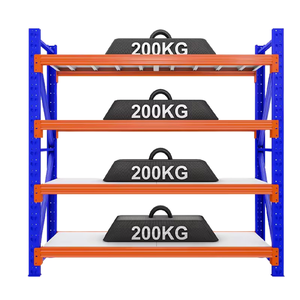
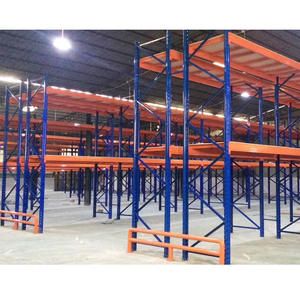
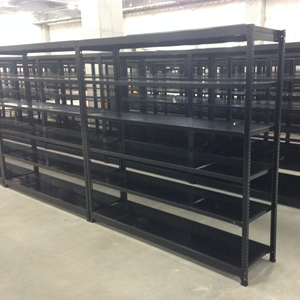
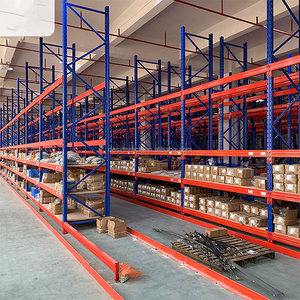
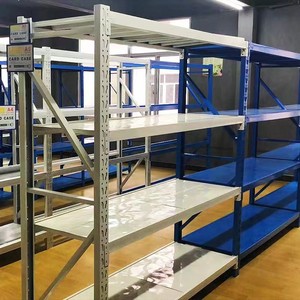
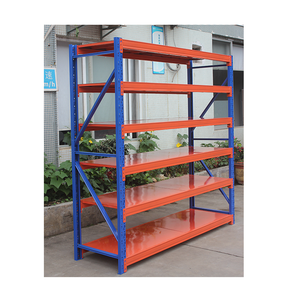
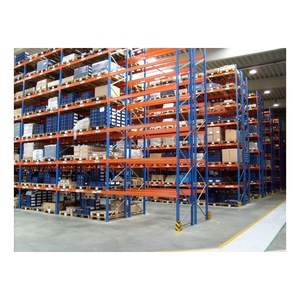
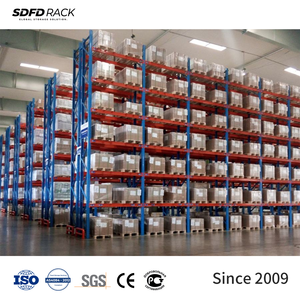
Navigating High-Load Industrial Storage Procurement
In an era defined by omnichannel velocity, escalating real estate expenses, and stringent workplace safety standards, selecting top-tier pallet shelf rack exporters and wholesalers is a foundational strategic decision for supply chain executives.
Modern distribution centers, cold-storage warehouses, and manufacturing plants operate under unprecedented structural demands. Pallet racking is no longer static ironwork; it is an active structural envelope engineered to withstand dynamic forklift impacts, high-tier stack loads, seismic acceleration forces, and harsh thermal cycles down to -30°C. For international buyers seeking reliable export partners, evaluation must extend beyond initial cost-per-pallet position to encompass material yield strength, certified FEA (Finite Element Analysis) stress modelling, and systemic total cost of ownership (TCO).
Volume & Vertical Density
Maximizing vertical clear height (up to 15+ meters) allows logistics operators to expand storage capacity by up to 60% without expanding the physical footprint, dramatically amortizing facility lease costs.
Structural Resilience
Mitigating rack collapse risks requires precision-rolled structural profiles, continuous seam robotic welding, and cold-rolled upright columns capable of absorbing torsional loading forces.
Compliance & Traceability
Adherence to international racking codes—including RMI (ANSI MH16.1), EN 15512, FEM 10.2.02, and Chilean NCh2369/NCh433—ensures regulatory sign-off and insurance approval.
Why Top Global Wholesalers Trust Our Engineering
Combining advanced metallurgical standards, custom seismic calculation dossiers, and end-to-end manufacturing oversight to deliver fail-safe pallet rack installations worldwide.
Advanced Material Science & Structural Steel Grades
Unlike standard commercial grade steel tubing, our heavy-duty rack components utilize high-yield structural steel grades such as Q235B, Q355B, and ASTM A1011 SS Grade 50. These materials undergo strict tensile testing to guarantee minimum yield stress tolerances under full design loads.
Upright frame columns feature multi-stage cold-roll profiling with optimized geometry, introducing structural ribs that increase buckling resistance while minimizing deadweight. Connector beams are integrated with 3-hook, 4-hook, or 5-hook heavy-gauge connector plates featuring automatic safety locking pins to prevent accidental dislodgement from uplift forces during forklift operation.
| Steel Spec Parameter | Standard Grade (Q235B) | High-Capacity Grade (Q355B) |
|---|---|---|
| Yield Strength (MPa) | ≥ 235 MPa | ≥ 355 MPa |
| Tensile Strength (MPa) | 370 - 500 MPa | 470 - 630 MPa |
| Elongation Rate (%) | ≥ 26% | ≥ 22% |
| Recommended Use | Medium-duty, standard pallet heights (< 6m) | Heavy-duty, high-bay VNA, seismic zones (> 6m) |
Seismic Safety & Structural Design Dossiers
Operations in seismically active regions—such as Chile, Peru, Japan, California, or Turkey—require specialized rack engineering. Standard catalog racking systems lack the lateral bracing stiffness required to endure ground accelerations.
Our engineering division provides complete 3D dynamic finite element analysis (FEA) and site-specific calculation dossiers in compliance with NCh2369, NCh433, and RMI standards. Key seismic modifications include oversized footplates, dual-anchor expansion bolts, heavy-gauge horizontal and diagonal truss bracing, and rigid beam-to-column moment connections.
Corrosion Resistance & Cold-Chain Finishing
Cold storage environments (-25°C to -30°C) and coastal port logistics facilities introduce extreme humidity, condensation, and chemical corrosion challenges that deteriorate low-grade paint coatings within months.
We implement an automated 9-stage pre-treatment washing process followed by thermosetting electrostatic epoxy-polyester powder coating (60-80 microns thickness) or full Hot-Dip Galvanizing (HDG according to ISO 1461). HDG components provide a zinc barrier protection exceeding 500g/m², guaranteeing over 25 years of corrosion-free service in sub-zero or high-salinity applications.
Future Trends in Industrial Storage & Sourcing
How intelligent automation, sustainable steel manufacturing, and predictive maintenance are reshaping wholesale pallet rack procurement for the next decade.
Radioshuttle & Semi-Automated Integration
The transition from traditional Drive-In racking toward semi-automated Radio Shuttle systems is accelerating. By utilizing remote-controlled shuttle carts operating within deep racking lanes, warehouses achieve deep-lane storage density without requiring forklifts to enter structural channels, reducing rack impact damage by up to 80%.
Decarbonized Green Steel & EPD Certification
Global enterprise buyers are prioritizing Environmental Product Declarations (EPDs). Sourcing rack systems manufactured using electric arc furnace (EAF) technology and recycled steel coil drastically lowers Scope 3 embedded carbon emissions across global supply chains.
IoT-Enabled Digital Twin Rack Inspection
Future high-bay racking systems feature embedded strain gauges and optical sensors connected to IoT gateways. These sensors measure structural deflection in real-time, sending automated alerts to safety teams when overload thresholds or forklift impacts exceed safe operational limits.
System Architecture Sourcing Selection Matrix
| Storage System Type | Selectivity | Density Efficiency | Forklift Compatibility | Optimal Use Case |
|---|---|---|---|---|
| Selective Pallet Racking | 100% Direct Access | Moderate (35-40% volume) | Standard Counterbalance, Reach Truck | High SKU variety, fast-moving consumer goods (FMCG) |
| Very Narrow Aisle (VNA) | 100% Direct Access | High (55-65% volume) | Specialized Articulated or VNA Turret Truck | High-cost floor space, high-bay vertical expansion |
| Drive-In / Drive-Thru | LIFO / FIFO Limited | Very High (75-80% volume) | Standard Reach (Enters rack lanes) | Low SKU count, high pallet volume per SKU, cold store |
| Radio Shuttle System | LIFO or FIFO Automated | Maximum (>85% volume) | Standard Forklift (Stays at aisle interface) | Automated cold storage, high-throughput bulk distribution |
| Push-Back Racking | LIFO (2 to 6 deep) | High (60-70% volume) | Standard Counterbalance / Reach | Medium SKU density, rapid loading/unloading stages |
State-of-the-Art Export & Manufacturing Infrastructure
Delivering engineering-led racking solutions across Latin America, North America, Europe, Australia, and the Middle East with strict quality control from raw coil to container dispatch.
Robotic Manufacturing Precision
Our modern production facilities utilize multi-station automated roll-forming lines, fiber laser cutting for precise hole patterns, and robotic welding cells. Continuous seam welding on beam connectors guarantees zero weld porosity, ensuring uniform load transfer across every junction.
Every batch of raw steel coil undergoes chemical composition analysis and physical strength testing. Final components are quality checked under ISO 9001 quality management protocols prior to protective wrapping and export container packing.
Export Packaging & Container Optimization
International ocean freight demands specialized packing methodologies to prevent transit damage and corrosion. Uprights and beams are bundled using steel banding with corner protection cradles and heavy-duty shrink wrapping.
Our logistics engineering team optimizes 40ft High-Cube container loading layouts to maximize weight and volume capacity, lowering sea freight cost per unit position for global wholesalers and project contractors.
Frequently Asked Questions for B2B Buyers & Wholesalers
In-depth technical answers addressing structural certification, export logistics, rack maintenance, and customization requirements.
Accelerate Your Warehouse Capacity & Storage Efficiency
Partner with a globally trusted pallet shelf rack exporter and wholesaler. Speak directly with our structural engineering team to receive custom CAD layouts, seismic load calculations, and wholesale price quotes tailored to your project schedule.