Featured Industrial Pallet Racking & Automated Systems
Select from certified heavy-duty storage configurations designed for maximum cube utilization, structural safety, and high-density material handling.
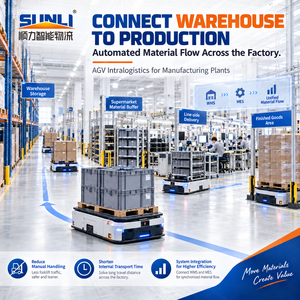
SUNLI Pallet AS/RS Smart Warehouse Automated Storage and Retrieval System with WMS/WCS Stacker Crane Racking Steel Shuttle Rack
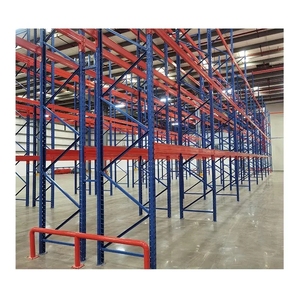
Steel Pallet Racking System Industrial Storage Heavy Duty Factory Shelving Racks for Warehouse
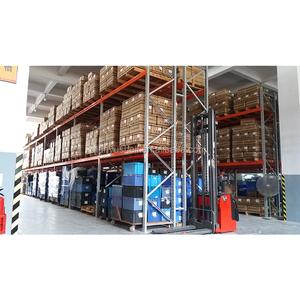
Industrial Pallet Storage Rack Heavy Duty Steel Warehouse Equipment Supplier
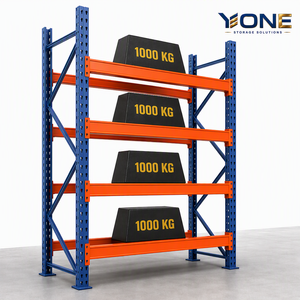
Durable Steel Storage Rack Heavy Duty Pallet Racking for Industrial Warehouse Storage with Safety Accessories
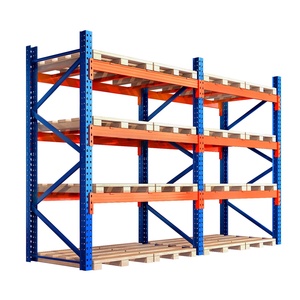
Industrial Heavy Duty Storage Shelves system Stacking Units Metal Rack Warehouse Steel Pallet Racking
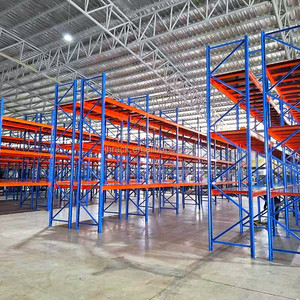
ODM Adjustable Beam Rack Industrial Heavy Duty Storage Shelves System Stacking Units Metal Rack Warehouse Steel Pallet Racking
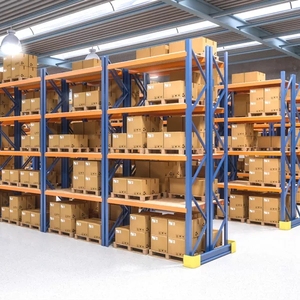
Racks Steel Storage Shelf Industrial Factory Stacking Rack Shelving Heavy Duty Warehouse Pallet Racking System
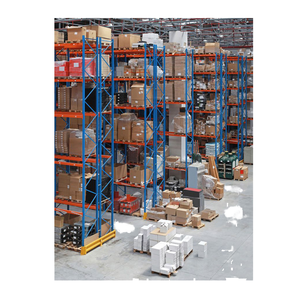
Factory Storage Heavy Duty Steel Detachable Pallet Racking Shelving for Industrial
Navigating Enterprise Industrial Racking: Structural Integrity, Load Dynamics, and Density Optimization
The Strategic Role of Modern Intralogistics
In contemporary enterprise logistics, industrial pallet racking and shelving systems are no longer passive metal frameworks; they are structural assets engineered to directly dictate warehouse throughput, operational safety, and volumetric efficiency (cube utilization). As commercial real estate costs continue to escalate globally, procurement directors and logistics operations executives are compelled to extract maximum density from existing square footage while upholding rigid structural integrity.
Choosing an industrial storage partner requires moving beyond basic cost-per-ton metrics to evaluate structural engineering methodologies, material yield strengths (e.g., Q235 vs Q355 structural steel grades), cross-sectional column design, dynamic load resilience, and seismic compliance under international codes such as FEM 10.2.02, ANSI/RMI MH16.1, and Chilean NCh2369 / NCh433 standards.
Information Gain Insight: Structural rack failure rarely stems from static overload alone. Over 84% of rack integrity compromises originate from unmitigated forklift micro-impacts at base connections, combined with improper frame bracing geometry and elastic deflection exceeding allowable L/240 design limits. Engineering high-density racking requires custom strain-distribution calculations based on your specific floor slab concrete rating.
Comprehensive Industrial Racking System Selection Matrix
Different warehouse SKU profiles demand tailored structural topologies. The comparative matrix below outlines the performance trade-offs across core racking configurations:
| Storage System Type | Pallet Selectivity | Storage Density | Optimal SKU Profile | Relative Cost / Position | Seismic Resilience Grade |
|---|---|---|---|---|---|
| Selective Pallet Racking | 100% Direct Access | Moderate (40-50%) | High SKU count, low volume/SKU | Baseline ($) | High (Standard Frame) |
| Drive-In / Drive-Thru | LIFO / FIFO Limited | High (75-85%) | Low SKU count, uniform bulk stock | Moderate ($$) | Requires Rigid Top Bracing |
| Push-Back Racking | LIFO (2 to 6 deep) | High (70-80%) | Medium SKU count, fast rotation | Upper-Moderate ($$$) | High Dynamic Stability |
| Radio Shuttle Automated Racking | Programmed FIFO/LIFO | Ultra-High (85-92%) | Cold storage, high throughput bulk | Premium ($$$$) | Superior (Low Frame Mass) |
| Automated Storage & Retrieval (AS/RS) | 100% Computer Controlled | Maximum (90-95%) | High-density dark warehousing | Capital Enterprise ($$$$$) | Engineered Custom Monolith |
Why Industry Leaders Select Our Manufacturing Infrastructure
We combine state-of-the-art cold-roll forming, automated robotic welding, and rigorous structural engineering to deliver racking systems built for maximum longevity.
Precision Steel Metallurgy
We strictly utilize certified Q355B high-yield strength structural steel. Our cold-formed profile geometries yield superior moment-of-inertia, offering elevated rigidity against torsional buckling under extreme load capacities.
Seismic-Ready Engineering
Every system is customized with site-specific ground acceleration metrics (PGA), structural dynamic response spectra, and specialized anchor bolt shear calculations designed for volatile seismic zones.
Advanced Surface Protection
Pre-treated with automated 9-stage phosphate washing and finished with electrostatic thermosetting epoxy-polyester powder coating (or hot-dip galvanizing for cold chain environments down to -30°C).
Full Project Lifecycle Support
From initial 3D BIM modeling and structural floor-slab load validation to certified professional installation and post-occupancy HSE safety inspections, we manage every phase seamlessly.
Seamless WMS/WCS Integration
Our semi-automated Radio Shuttle and fully automated AS/RS stacker crane racking configurations are engineered with integrated sensor bracketry, precise optical reflector mounting, and zero-clearance tolerance.
ISO 9001 & Compliance Guaranteed
Manufactured under strict ISO 9001, ISO 14001, and OHSAS 18001 certifications. Materials undergo mill test certification (MTC), ultrasonic weld inspections, and destructive load testing.
Future Procurement & Technological Development Trends (2025–2035)
As global supply chains face volatile demand, labor shortages, and stringent sustainability mandates, warehouse storage infrastructure is undergoing a radical technological shift.
1. Transition to Dark Warehousing & Hyper-Automation
Procurement strategies are shifting away from manual forklift-operated racking toward pallet-shuttle systems and Autonomous Mobile Robot (AMR) high-density cubes. Storage racks must now be fabricated with sub-millimeter tolerances to accommodate automated optical guidance and high-speed stacker crane operations.
2. IoT-Enabled Structural Health Monitoring (SHM)
Next-generation pallet racking integrates piezoelectric strain sensors and acoustic emission detectors embedded directly into critical upright columns. These IoT sensors broadcast real-time stress data and impact notifications to facility management dashboards, preventing catastrophic collapse through predictive maintenance.
3. Circular Steel & Carbon-Neutral Manufacturing
Global enterprises are prioritizing ESG compliance in rack procurement. Future supply contracts demand low-carbon electric arc furnace (EAF) steel, eco-friendly non-VOC powder coatings, and certified modular re-configurability that allows steel components to be refurbished and re-certified without melting.
4. High-Yield Cold-Formed Steel Innovation
Advanced profile engineering utilizes ultra-high-strength steel grades up to Q460, allowing thinner wall thicknesses with identical or elevated ultimate load ratings. This minimizes dead-weight loads on building slabs while slashing raw material shipping costs and carbon footprints.
Engineering Deep-Dive: Cold Storage & High-Density Applications
Operating a refrigerated or deep-freeze storage facility (-20°C to -30°C) presents severe thermodynamic and mechanical challenges. Standard structural steel experiences a drop in impact toughness at sub-zero temperatures, increasing the risk of brittle fracture under impact.

Cold Chain Rack Engineering Rules:
- Steel Grade Selection: Utilization of specialized low-temperature impact tested steel grades (such as Q355D/E) that retain ductility in freezing conditions.
- Thermal Expansion Jointing: Designing slotted connection holes and expansion gaps in long continuous rack runs to absorb thermal contraction without distorting alignment.
- Maximizing Refrigerated Cube Density: Deploying semi-automated Radio Shuttle systems or Push-Back racks to eliminate up to 70% of forklift aisles, drastically reducing the energy cost per pallet stored.
Frequently Asked Procurement & Technical Questions
Expert answers to critical engineering, safety compliance, and procurement inquiry standards.