High-Performance Storage Racking Systems
Engineered for maximum density, structural integrity, and seamless integration with manual, semi-automated, and robotic material handling operations.
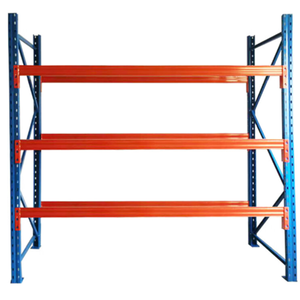
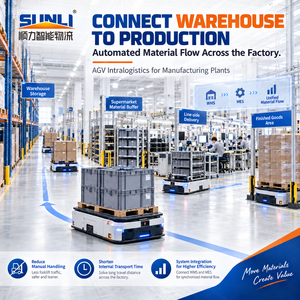
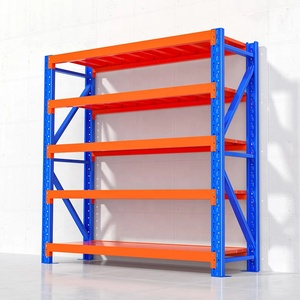
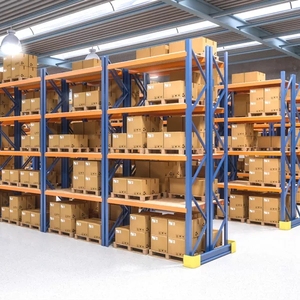
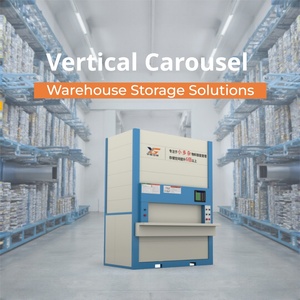
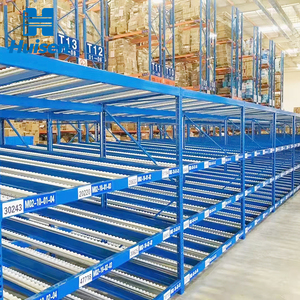
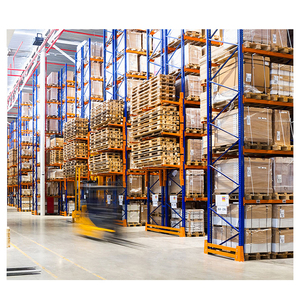
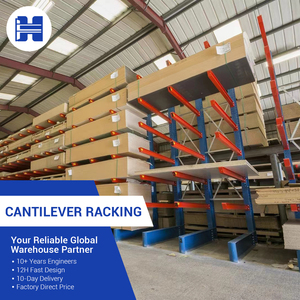
1. Strategic Overview: The Dynamics of Sourcing Warehouse Racking Systems from China
Modern global logistics networks demand unprecedented warehouse efficiency, structural safety, and high-density storage capacity. As global supply chains scale across North America, Europe, Australia, and South America (including seismic hotspots like Chile), industrial buyers, logistics managers, and civil engineers increasingly source structural steel racking systems from top-tier Chinese manufacturers. China currently produces over 60% of the world's commercial structural cold-formed steel racking, driven by advanced metallurgy, continuous roll-forming innovation, and highly integrated manufacturing clusters.
Selecting the optimal China Warehouse Racking System Manufacturer requires evaluating core structural engineering competencies, material traceability, anti-corrosion coating chemistry, and alignment with international building codes. Leading manufacturers operate modern factories equipped with high-precision multi-stage rolling lines, robotic laser-welded beam fabrication, and automated electrostatic powder coating lines. Procurement decisions must extend beyond baseline price-per-tonne considerations to analyze Total Cost of Ownership (TCO), seismic resilience, and multi-tier quality assurance protocols.
2. Structural Steel Metallurgy & Manufacturing Engineering Standards
Industrial pallet racking structural performance depends directly on cold-rolled steel chemical composition, profile geometry, and yield strength. Superior Chinese racking manufacturers utilize premium-grade structural steel—primarily Q235B and Q355B (equivalent to ASTM A36 and ASTM A572 Grade 50, or European S235JR and S355JR). Yield strength ($\sigma_y$) and tensile strength ($\sigma_u$) determine total allowable load capacity, structural safety factors, and frame deflection limits ($L/200$ under FEM recommendations).
Cold-Roll Forming Precision
Continuous 18-to-24-pass rolling mills guarantee sub-millimeter tolerances on frame upright profiles, maintaining column axial stiffness and buckling resistance.
Multi-Claw Beam Connectors
Precision-stamped 3, 4, or 5-hook connector jaws provide high moment-resisting connection capacity, reducing frame sway and increasing sway frame rigidity.
Surface Treatment Excellence
7-stage chemical pre-treatment (degreasing, phosphating, deionized washing) followed by 60-80 micron thermosetting epoxy-polyester powder coating for superior abrasion resistance.
For high-humidity, marine, or sub-zero environments (such as agricultural cold storage facilities operating down to -30°C), manufacturers apply Hot-Dip Galvanization (HDG) complying with ISO 1461. HDG coatings produce a metallurgical zinc-iron alloy barrier with coating thicknesses ranging from 45 µm to 85 µm, offering decades of maintenance-free corrosion prevention.
3. Global Structural Building Codes & Seismic Design Verification
High-density racking systems function as critical structural installations. Leading Chinese racking suppliers design, calculate, and test their products in strict compliance with international structural frameworks:
- RMI (Rack Manufacturers Institute / ANSI MH16.1): The dominant structural design standard across North America, governing structural design, cold-formed steel section calculations, and beam locking safety mechanisms.
- FEM 10.2.02 / EN 15512: The European standard specifying finite element structural modeling, frame sway analysis, horizontal load distribution, and material safety factors.
- AS 4084:2023: Australia’s updated standard regulating steel storage racking, emphasizing stringent beam connector testing, baseplate anchor shear checks, and operational impact protection.
- Seismic Codes (NCh2369 / NCh433 / US FEMA 460): Essential for seismically active regions like Chile, Japan, Peru, and California. Design mandates include oversized baseplates, heavy-duty floor anchor bolts, specialized diagonal bracing profiles, and dynamic response spectrum analysis under maximum considered earthquake (MCE) loads.
System Selection & Engineering Performance Matrix
Selecting the right warehouse racking system requires balancing storage density, selectivity, forklift accessibility, and total capital expenditure. The table below outlines core engineering parameters for modern warehouse configurations:
| Racking Architecture | Volumetric Efficiency (%) | SKU Selectivity (%) | Operational Rotation | Seismic Resistance | Primary Industrial Application |
|---|---|---|---|---|---|
| Selective Pallet Racking | 40% - 50% | 100% | FIFO (First-In, First-Out) | High (Standard Bracing) | FMCG, 3PL, E-Commerce Fulfilment Hubs |
| Drive-In / Drive-Through | 65% - 75% | 15% - 20% | LIFO / FIFO | Medium (Requires Top Bracing) | Cold Storage, Bulk Homogeneous Goods |
| Push-Back Racking | 70% - 80% | 30% - 40% | LIFO | High (Nested Carts) | Cold Stores, Medium SKU Batch Storage |
| Radio Shuttle System | 80% - 88% | 30% - 50% | Flexible FIFO / LIFO | Very High (Rigid Structural Grid) | Food & Beverage, Agricultural Export, Cold Chain |
| Automated AS/RS High-Bay | 85% - 95% | 100% (Automated) | Fully Automated WMS FIFO | Extreme (Custom Heavy Structural Steel) | Pharmaceutical, High-Bay Distribution Centers |
| Heavy Cantilever Racking | N/A (Long Items) | 100% (Linear) | Direct Manual / Side Loader | High (Column Base Design) | Pipes, Extrusions, Timber, Mining Spares |
4. Technology Integration: From Semi-Automated Radio Shuttle to Turnkey AS/RS
The global warehousing industry is rapidly transitioning from passive steel storage frameworks to semi-automated and fully autonomous material handling environments. Leading Chinese suppliers are at the forefront of this integration, embedding smart sensors, wireless connectivity, and robotic technology into structural storage matrixes.
Radio Shuttle Deep-Lane Automation
Self-powered internal shuttle cars run along specialized guide rails within high-density racking channels. Managed via Wi-Fi or RF remote control, shuttle platforms transport heavy pallet loads (up to 1,500 kg) at speeds up to 1.1 m/s, eliminating forklift transit within racking aisles and cutting operational cycles by 40%.
AS/RS Stacker Crane & WMS/WCS Integration
Automated Storage and Retrieval Systems (AS/RS) combine ultra-tall precision racking structural frames (up to 40 meters) with automated stacker cranes, conveyor loops, and Warehouse Management System (WMS) control software. Real-time REST API interfaces synchronize inventory tracking, weight verifications, and automated dispatch.
5. Procurement Framework & Total Cost of Ownership (TCO) Analysis
When procuring industrial racking from China, sophisticated buyers implement a lifecycle cost model rather than focusing solely on upfront FOB component pricing. Total Cost of Ownership comprises four core cost pillars:
- Direct Material & Component Cost: Steel tonnage, profile design efficiency, powder coating specification, and specialized accessories (wire mesh decking, skid bars, column protectors).
- Freight & Logistics Freight Factor: Container packing efficiency (CBU vs. CKD structural knockdown packing), ocean freight rates, customs clearance, and inland transit logistics.
- Civil & Structural Installation Cost: Anchor bolt drilling, slab laser leveling, vertical plumb alignment (+/- 1mm per 1000mm height), overhead sprinkler system integration, and safety compliance certification.
- Operational Lifespan & Maintenance: Resistance to forklift impact damage, availability of localized spare parts, and annual inspection overheads compliant with local workplace safety regulations (e.g., Chilean Decree 594 & Law 16.744).
To mitigate procurement risk, international enterprise buyers should demand third-party factory inspection certificates (SGS, TÜV, Intertek), raw material Mill Test Certificates (MTC EN 10204 3.1), and verified weld inspection reports (non-destructive ultrasonic testing for critical structural load joints).
6. Enterprise Engineering Competencies & Project Support
Our engineering division bridges the gap between raw steel manufacturing and turnkey site installation. We provide global clients with an integrated, end-to-end engineering methodology:
Site Surveying & 3D BIM Layouts
Complete structural modeling utilizing AutoCAD and Revit, accounting for slab expansion joints, building column locations, roof truss clearances, and fire sprinkler clearance envelopes.
Finite Element Structural Calculations
Rigorous FEA stress analysis under dynamic, static, wind, and seismic loads, generating structural validation dossiers for municipal permitting and insurance approval.
Global Field Installation Management
Certified installation supervisors dispatched globally to direct local installation crews, guaranteeing proper anchor torqueing, beam lock engagement, and load signage posting.
7. Frequently Asked Questions (Industrial Procurement FAQ)
Request an Engineering Consultation & Custom Storage Layout
Optimizing your logistics facility begins with precise data modeling. Connect with our senior structural engineers to receive a comprehensive CAD layout design, FEA structural calculation report, and competitive direct-from-factory quotation.
Contact Us