Industrial Warehouse Storage & Racking Systems
Heavy-duty steel rack solutions custom-manufactured for high-bay distribution centers, cold storage facilities, and logistics hubs globally.
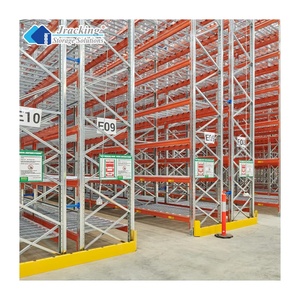
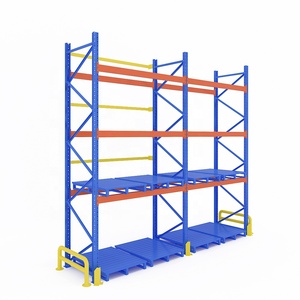
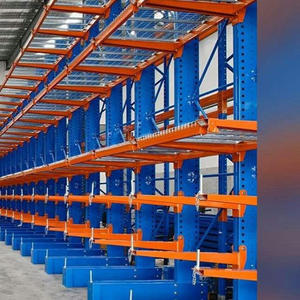
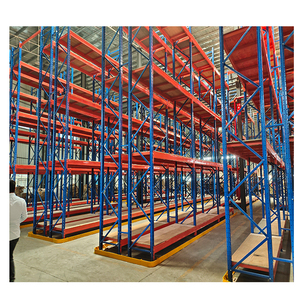
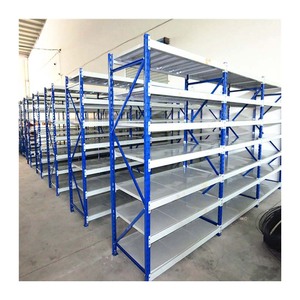
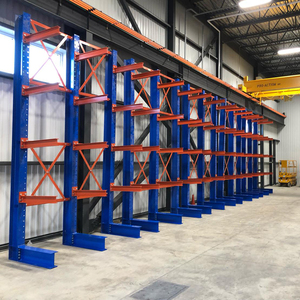
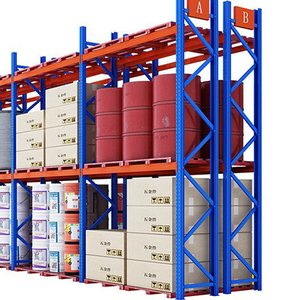
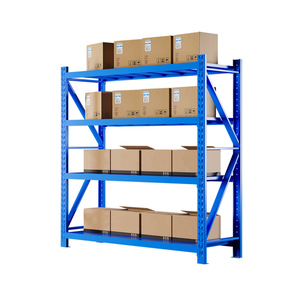
Why Top Global Wholesalers & EPCs Partner with Us
We combine high-grade metallurgical steel sourcing (Baosteel/Shougang Q235B & Q355B) with full automated cold-roll forming and robotic welding lines to deliver certified structural stability at optimal cost.
Seismic & Structural Engineering
Every industrial pallet rack system is engineered using Finite Element Analysis (FEA) to withstand site-specific seismic coefficients ($S_a$), soil classes, and high-bay dynamic load factors.
- Seismic calculation reports aligned with NCh2369, RMI, & EN 15512
- Custom baseplate thickness & heavy anchor embedding design
- Upright bracing profiles engineered for lateral torsional rigidity
End-to-End Quality Control
From spectral steel testing to 60–80 micron electrostatic powder coating line inspections, our ISO 9001 quality system guarantees zero defect tolerance before container loading.
- High-tensile steel raw materials with mill test certificate (MTC)
- Robotic continuous seam welding for connector brackets
- Salt-spray tested epoxy finishes for humid and cold storage environments
Optimized Logistics & Density Packaging
Our export packing engineering maximizes container space utilization up to 98%, drastically cutting sea freight costs per pallet position for global distributors.
- Custom steel-strapped bundle frames to prevent transit warping
- Pre-assembled upright option for rapid jobsite installation
- Complete color-coded hardware kit packaging & digital assembly maps
Industrial Pallet Racking Technical Comparison Matrix
In-depth structural breakdown of major racking typologies manufactured in our China facility.
| Racking Typology | Primary Material Grade | Max Load Capacity / Level | Max Structure Height | Storage Density Rating | Target Application |
|---|---|---|---|---|---|
| Selective Pallet Racking | Cold-Rolled Q235B / Q355B Steel | 1,000 kg – 4,500 kg | Up to 15 Meters | 70% (100% Direct SKU Access) | FMCG, General Warehousing, 3PL Logistics |
| Drive-In / Drive-Thru Racking | High-Tensile Structural Steel | 1,500 kg / Pallet Position | Up to 12 Meters | 85% High Density (LIFO / FIFO) | Cold Storage, Agro-Exports, Seasonal Bulk Goods |
| Heavy-Duty Cantilever Racks | Hot-Rolled H-Beam & C-Profile | 500 kg – 3,000 kg per Arm | Up to 9 Meters | Variable (Continuous Span) | Steel Tubing, Timber, Extrusions, Mining Parts |
| Radio Shuttle High-Density | Precision CNC Formed Rails & Q355B | 2,000 kg / Shuttle Unit | Up to 22 Meters | 90% Semi-Automated Density | Frozen Food (-25°C), Beverage Distribution |
| Mezzanine Rack Platform | Structural Steel Beams & Grating | 300 kg – 1,000 kg / sq.m | Multi-Tier (2-4 Levels) | 200% Floor Area Expansion | E-Commerce Fulfillment, Auto Parts Picking |
Comprehensive Engineering Guide: Navigating Industrial Pallet Racking Procurement from China Suppliers
As global supply chains expand and automated material handling systems become standard across modern logistics infrastructure, selecting the optimal industrial pallet racking system supplier and wholesaler in China has evolved into a strategic engineering decision. Industrial warehouse storage is no longer merely a passive steel framing purchase; it is an active structural asset that directly dictates warehouse throughput efficiency, floor square-meter yield, operational safety, and long-term Total Cost of Ownership (TCO).
Information Gain Insight: Selecting a factory with certified cold-roll forming capability for Q355B steel yields a 18% structural weight reduction while maintaining equivalent frame moment capacity compared to legacy Q235B structural sections, translating directly to lower international sea-freight overhead per pallet position.
1. Metallurgical Excellence & Structural Steel Standards
The core structural integrity of any high-bay pallet racking upright or load-bearing beam resides in raw material selection and cold-forming geometry. Premium Chinese manufacturers utilize certified cold-rolled structural steel coils sourced directly from top-tier state mills such as Baosteel, Shougang, or Ansteel. The structural standard revolves around two dominant material grades:
• Q235B Carbon Structural Steel: Equivalent to ASTM A36 or EN10025 S235JR. Ideal for standard ambient selective racking applications where load profiles remain under 2,500 kg per beam level.
• Q355B High-Strength Low-Alloy Steel: Equivalent to ASTM A572 Grade 50 or EN10025 S355JR. Offering higher yield strength ($\ge 355 \text{ MPa}$), Q355B enables thinner wall profiles with superior flexural rigidity, making it mandatory for drive-in racking, high-bay ASRS installations, and severe cold-storage environments operating down to $-25^\circ\text{C}$.
2. Global Compliance Engineering: AS4084, FEM 10.2.02, and RMI ANSI MH16.1
For international buyers, distributors, and EPC contractors, supplier verification must hinge on rigorous structural compliance testing. Reliable Chinese suppliers engineer their cold-formed rack components to strictly satisfy three major global design codes:
1. AS4084-2012 / AS4084-2023 (Australian Standard): Enforces strict physical safety factors against beam frame deflection ($L/200$), connection hook shear resistance, and mandatory safety lock pin engagement specs.
2. FEM 10.2.02 / EN 15512 (European Code): Utilizes limit state design principles with finite element analysis (FEA) modeling to evaluate pattern loading, sway stability, and non-linear axial beam-column interaction.
3. RMI ANSI MH16.1 (American Standard): Specifies stringent stub-column compression tests and seismic baseplate anchor stress limits tailored for North American seismic zones.
Future Sourcing & Procurement Trends in Industrial Warehouse Storage
The global industrial racking procurement landscape is undergoing seismic shifts driven by automation, sustainability directives, and real-time inventory tracking requirements. Buyers sourcing from China must align their technical RFQs with the following emerging procurement trends:
1. Deep Integration with Automated Radio Shuttles & ASRS Systems
The industrial warehouse market is aggressively moving away from purely manual forklift selective racking toward semi-automated and fully automated high-density storage. Radio shuttle racking systems—combining structural steel racking channels with autonomous battery-powered shuttles—allow warehouse operators to increase pallet storage density by up to 85% while cutting forklift operational travel time by 60%. China suppliers are now delivering integrated rack-and-shuttle packages engineered with sub-millimeter rail straightness tolerances necessary to support high-speed robotic travel.
2. Sustainable Manufacturing & Low-Carbon Eco Finishings
With global corporate ESG mandates taking effect, tier-1 industrial rack manufacturers in China are replacing traditional solvent-based painting lines with zero-emission, fully automated electrostatic powder coating systems. Furthermore, hot-dip galvanizing technology utilizing recycled zinc alloy bath treatments ensures that outdoor cantilever racks and humid-environment cold storage racks achieve a 25+ year maintenance-free lifecycle without releasing volatile organic compounds (VOCs).
3. Seismic Risk Mitigation and Advanced Concrete Anchor Engineering
As logistics hubs expand into seismically active zones (such as the Pacific Ring of Fire across South America, Japan, and Western North America), global warehouse operators require customized seismic rack engineering. Advanced suppliers provide site-specific seismic dynamic calculations, incorporating enlarged footplates with chemical anchor studs, heavy-duty diagonal frame bracing, and anti-collapse rear wire mesh screens to ensure system ductility during earthquake accelerations.
Frequently Asked Questions (FAQ) for Industrial Racking Sourcing
Expert engineering answers to common technical, logistics, and quality assurance queries raised by international buyers.
1. What critical design data is required to obtain an accurate structural quote for pallet racking from China? +
2. How do Chinese racking systems comply with international standards like AS4084 or FEM 10.2.02? +
3. What is the standard lead time for factory production and container shipment from China? +
4. How are pallet rack components surface-treated to prevent rust in humid or cold storage facilities? +
5. What is the difference between Roll-Formed teardrop racking and Structural Steel racking? +
Transform Your Warehouse Efficiency Today
Consult with our senior structural storage engineers. Get a customized 2D/3D warehouse layout design, structural load calculations, and a competitive factory-direct wholesale quotation within 24 hours.