Featured Industrial Storage & Racking Systems
Certified structural integrity, customizable frame geometries, and rapid global deployment.
Engineering Principles of Modern Industrial Rack Storage & Wholesale Procurement
Navigating structural integrity, volumetric efficiency, seismic load calculations, and global supply chain dynamics for high-density warehouse environments.
The Structural Mechanics of High-Density Storage Systems
In modern industrial logistics, the procurement of warehouse storage racks and heavy-duty shelving units has evolved from a basic material handling decision into a sophisticated structural engineering project. Facility managers, supply chain directors, and enterprise buyers face unprecedented challenges: escalating real estate costs per square meter, rapid expansion of SKU profiles driven by omnichannel e-commerce, and stringent safety standards surrounding structural dynamic loads and seismic compliance.
Choosing a premier rack storage shelves supplier & wholesaler requires an exhaustive evaluation of material metallurgy, profile roll-forming physics, and structural connection dynamics. Racks are not static furniture; they are unbraced or semi-braced steel structures that carry live payload weights exceeding several hundred metric tons. The structural stability depends on three primary factors:
- Yield Strength and Steel Metallurgy: The transition from standard Q235 cold-rolled steel to high-tensile Q355B structural grade steel allows lighter profile gauges to sustain higher flexural moments and axial load forces without permanent plastic deformation.
- Beam-to-Column Connection Rigidity: Bolted vs. drop-in connector assemblies alter the frame's operational sway stiffness ($K$-factor). Structural safety relies on multi-claw heavy-gauge connectors equipped with safety locks to prevent accidental forklift dislodgement.
- Foundation Anchor Tension and Baseplate Load Distribution: Sizing baseplates to dissipate vertical column pressures into concrete slab foundations prevents localized floor shear failures, particularly under dynamic braking or seismic shockwaves.
Engineering Matrix: Evaluating Storage Racking Systems
Selecting the optimal wholesale storage racking configuration requires balancing volumetric density against SKU accessibility. The table below outlines key technical parameters for enterprise decision-makers:
| Racking Architecture | Volumetric Density Utilization | Selectivity Rate | Typical Load Capacity | Best Industry Fit |
|---|---|---|---|---|
| Selective Pallet Racking | 40% – 50% | 100% Direct Access | 1,000 – 4,500 kg / Beam Level | 3PL Logistics, General Retail, FMCG Distribution |
| Drive-In / Drive-Through System | 75% – 85% | 20% – 30% (LIFO/FIFO) | 1,000 – 1,500 kg / Pallet Position | Cold Storage, Agro-Export, High-Volume Single SKU |
| Automated Radio Shuttle System | 80% – 90% | Medium High (Semi-Automated) | 1,500 kg / Pallet Position | Beverage Warehouses, Frozen Food, Chemical Plants |
| Heavy-Duty Cantilever Racking | 60% – 70% | 100% (Long Goods) | 500 – 3,000 kg / Cantilever Arm | Lumber, Steel Pipes, Extrusions, Building Materials |
| Multi-Tier Mezzanine Platform | 200% – 300% (Surface Area) | 100% Manual Picking | 300 – 1,000 kg / m² Floor Area | E-Commerce Fulfillment, Automotive Parts, Garments |
Top 10 Industrial Rack Storage & Shelving Architectures
A deep technical breakdown of the industry's primary warehouse racking and shelving designs manufactured by leading wholesale suppliers.
1. Heavy Duty Selective Pallet Racking
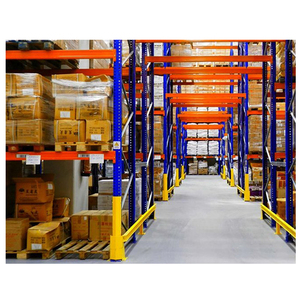
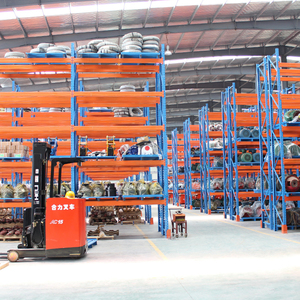
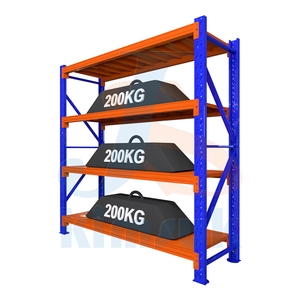
The standard benchmark for global industrial storage. Selective racking provides immediate 100% access to every pallet position. Built with adjustable drop-in beam connectors and teardrop or box-profile uprights, this design accommodates standard reach trucks and counterbalanced forklifts. Essential for high-SKU, high-turnover logistics centers.
2. High-Density Drive-In & Drive-Through Systems
By eliminating aisle space, drive-in systems allow forklifts to drive directly into storage lanes to deposit pallets on continuous support rails. Operating on LIFO (Last-In, First-Out) or FIFO principles, drive-in racking maximizes cubic space utilization up to 85%, making it ideal for seasonal agro-export products and cold storage facilities.
3. Automated Radio Shuttle Racking
Integrating semi-automation into high-density storage, autonomous motorized shuttles carry pallets down deep storage channels along internal rails. Remote-controlled shuttles drastically reduce driver cycle times, eliminate internal rack collision risk, and allow ultra-deep lane storage configuration up to 40 meters deep.
4. Heavy-Duty Cantilever Racking
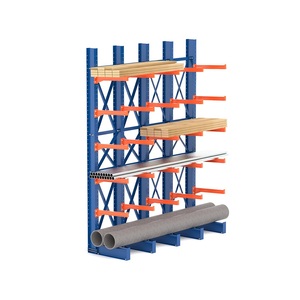
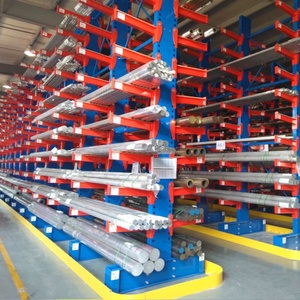
Engineered without front vertical uprights, cantilever racking is designed specifically for un-palletized long and bulky goods. Columns featuring heavy structural steel profiles carry adjustable cantilever arms equipped with safety stops, effortlessly supporting timber, steel tubing, PVC pipes, and sheet metal packs.
5. Multi-Tier Warehouse Mezzanines
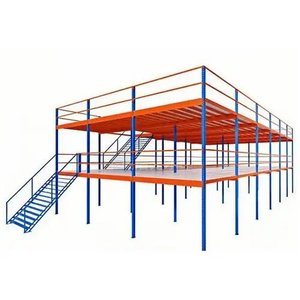
Transforming vertical air space into usable floor surface, heavy-duty mezzanine platforms utilize structural steel beams, cold-formed purlins, and steel mesh or solid floor decking. These platforms multiply effective square footage by 200–300% for manual order picking, staging, or modular office integration without real estate expansion.
6. Boltless Industrial Storage Shelving
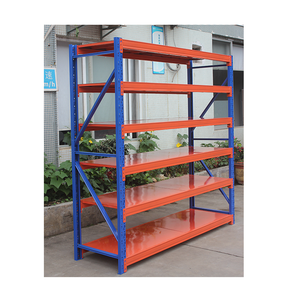
Versatile, modular, and designed for tool-free assembly, boltless steel shelving units are engineered for medium-to-heavy manual bin storage and order picking. Featuring adjustable steel shelf plates or wire mesh decks, boltless shelving is the preferred choice for automotive parts centers, hardware distribution, and light manufacturing.
7. Very Narrow Aisle (VNA) Systems
VNA racking condenses operating aisle widths down to as narrow as 1.5 to 1.8 meters by deploying specialized wire-guided or rail-guided turret trucks. VNA systems reach storage heights exceeding 15 meters, offering maximum cubic storage efficiency while retaining 100% direct pallet selectivity.
8. Smart Vertical Carousel Storage
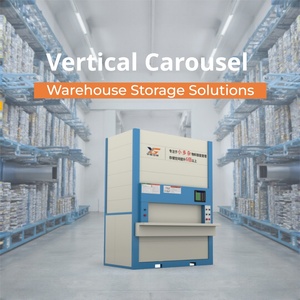
Enclosed automated vertical carousel storage systems operate on the "goods-to-person" principle. Internal motor drives rotate vertical storage carriers along an oval track to deliver requested inventory to an ergonomic retrieval window, dramatically boosting order picking speed and security for high-value components.
9. Dynamic Push-Back Racking
Push-back systems utilize nested wheel carts riding on inclined rails. As a new pallet is loaded from the front, it pushes the previous pallet backward into the lane. Upon unloading, gravity gently feeds the next pallet forward to the front aisle face, serving high-density LIFO operations up to 6 pallets deep.
10. Gravity Pallet & Carton Flow Racking
Utilizing full-width steel or plastic roller beds set on a downward pitch, gravity flow racks automatically roll pallets or cartons from the loading aisle (rear) to the picking aisle (front). Designed strictly for FIFO management, flow systems feature speed controllers and safety brakes for fast-moving consumables.
Proven Engineering Capabilities & Manufacturing Quality
Single-source accountability from initial finite element calculation to site installation and safety compliance.
Seismic-Ready Engineering
Chile and Pacific Rim regions present extreme seismic risk zones. Our engineering design team applies finite element modeling (FEA) calibrated strictly to structural standards such as NCh2369, NCh433, RMI, and FEM 10.2.02. Upright bracing patterns, heavy-duty floor baseplates, dynamic shear anchors, and beam connector tolerances are specifically calculated for high lateral acceleration events.
ISO-Certified Quality & Metallurgy
Every beam, frame, and bracket is produced under rigorous ISO 9001-certified manufacturing protocols. We utilize high-grade certified steel coils with full chemical heat traceability. Advanced automated continuous roll-forming, robotic welding units, and epoxy powder coating or hot-dip galvanizing lines guarantee maximum load stability and long-term corrosion resistance in harsh industrial environments.
Cold Storage & Specialized Applications
Refrigerated warehouse space incurs premium operational power costs. Our specialized cold storage structural racking solutions are engineered for sub-zero operating environments down to -25°C. Specialized steel chemistry prevents cold-temperature embrittlement, while high-density shuttle and drive-in geometries compress footprint and reduce refrigerated air volume requirements.
Future Procurement Trends in Industrial Racking & Wholesale Supply
How logistics operators and B2B procurement leaders are transforming material handling strategies for 2025–2030.
1. Shift Toward Rapid Modular Deployment
Global supply chain volatility has made agility a top procurement metric. Multi-national logistics providers are moving away from permanent custom-welded rack structures in favor of standard, modular boltless racking and knock-down structural frame assemblies. Standardized component dimensions allow enterprises to reconfigure, extend, or relocate racking layouts seamlessly across regional fulfillment hubs in response to shifting consumer demand.
2. Hybrid Racking Designed for AMR & Automation
Warehouse automation is no longer restricted to fully greenfield AS/RS megastructures. Modern procurement strategies favor "Automation-Ready" selective and high-density racking. Racking specifications now mandate integrated guide-rail systems, sensor targets, reflector bracket placements, and tight floor levelness tolerances (FF/FL numbers) that allow smooth navigation for Autonomous Mobile Robots (AMRs) and automated forklifts alongside human operators.
3. Total Cost of Ownership (TCO) vs Steel Weight Metrics
Procurement teams are moving away from evaluating racking suppliers strictly on price-per-kilogram of raw steel. Modern decision models calculate Total Cost of Ownership, factoring in structural longevity, safety compliance, rack protection accessory integration, factory coating performance, and post-installation inspection/repair support. High-grade structural steel that reduces total component weight while maintaining rated strength offers significant freight cost savings and easier assembly.
4. Circular Steel Economy & Re-Certified Pre-Owned Racking
Sustainability and carbon footprint reduction goals are altering industrial purchasing policies. Enterprises are embracing circular economy initiatives by incorporating certified re-manufactured and re-tested racking components alongside new installations. Leading wholesale partners provide rigorous non-destructive testing (NDT), frame re-straightening, and load re-certification, extending the lifecycle of heavy structural steel assets.
Technological Advancements in Storage Rack Manufacturing
How continuous material science innovation and digital monitoring are shaping the next generation of industrial shelving.
IoT Sensor Integration & Smart Racks
Racking structures are becoming intelligent assets. Wireless load cell sensors and strain gauges embedded directly into beam connectors and column bases monitor beam deflection, weight distribution, and unintended forklift impact loads in real time. Smart monitoring alert systems notify safety managers before micro-stresses develop into critical structural failures.
ZAM® & Advanced Corrosion Coatings
Traditional liquid paints and basic powder coatings are increasingly replaced by Zinc-Aluminum-Magnesium (ZAM) alloy coatings and hot-dip galvanizing technology. ZAM offers superior self-healing edge corrosion protection, essential for agricultural chemical storage, fertilizer hubs, coastal port warehouses, and high-humidity cold storage facilities.
Digital Twin Modeling & AI Design
Before cold-roll steel profiles are produced, advanced BIM (Building Information Modeling) and AI-driven structural simulations generate a complete digital twin of the proposed facility layout. Engineers simulate dynamic floor slab flexure, localized forklift loading, and complex seismic wave oscillations to ensure flawless real-world structural performance.
Frequently Asked Questions (FAQ)
Essential insights for procurement managers, structural engineers, and warehouse operations leaders.
Optimize Your Warehouse Storage Capacity Today
Partner with an engineering-led rack storage shelves supplier & wholesaler. Submit your floor plans, clear heights, and load specifications to receive a certified layout design and competitive factory-direct proposal.