Featured Industrial Storage Systems
Engineered for high-density warehouse operations, structural stability, and maximum throughput speed.
Technical Whitepaper: Engineering Criteria for Push Back Racking Systems
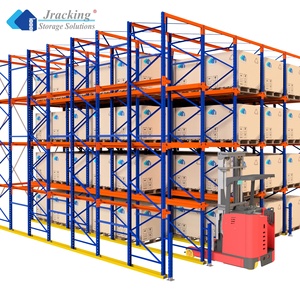
In modern supply chain architecture, Push Back Racking Systems represent the optimal intersection between floor space utilization and SKU selectivity. Operating on a Last-In, First-Out (LIFO) inventory control principle, push back racking utilizes a series of nested, inclined carts that ride on structural steel rails. When a pallet is loaded from the front aisle, it gently pushes the preceding pallet backward into the lane. Upon unloading, gravity smoothly moves the remaining pallets forward to the picking face.
Unlike traditional Drive-In racking, which requires forklift trucks to physically enter the storage structure—introducing substantial risks of structural collision—Push Back racking allows forklift operators to remain safely in the aisle. This dramatically reduces pallet handling time by up to 40% while preserving structural longevity. For enterprise buyers navigating high real-estate values, cold storage facilities, and seismically active regions, selecting the correct supplier requires evaluating mill-certified structural steel specs, cart wheel bearing friction coefficients, dynamic braking systems, and seismic engineering capabilities.
Top 10 Push Back Racking Suppliers & Wholesalers Evaluation
A comprehensive technical analysis of global manufacturers based on engineering compliance, structural steel quality, and total cost of ownership (TCO).
1. ChileShelving SpA
Seismic Engineering LeaderSpecializing in heavy-duty structural steel push-back systems designed for high seismic activity zones. Fully compliant with NCh2369, NCh433, and RMI standards. Integrates low-profile nested carts with high-precision sealed bearings engineered for sub-zero cold stores down to -25°C.
2. Frazier Industrial Company
Structural Channel Steel FocusFamous for exclusively using hot-rolled structural steel C-channels in their push-back systems. Their heavy-duty cart construction is designed to withstand severe forklift impacts in high-throughput distribution hubs.
3. Advance Storage Products
Push-Back Patent PioneerA North American pioneer in push-back technology, known for their Push-Pro system. Offers linked cart designs that eliminate misaligned jam-ups and support 2 to 6 deep pallet configurations.
4. Interlake Mecalux
Global Manufacturing ScaleOperates extensive automated manufacturing lines producing both roll-formed and structural push-back rack modules. Offers excellent software integration with warehouse management systems (WMS).
5. SSI SCHAEFER
Automated System IntegratorIntegrates push-back racks into complex, semi-automated warehouse environments. Focuses on ultra-precise tolerancing, high-grade powder coatings, and heavy-duty kinetic safety mechanisms.
6. Jracking Group
Export & Wholesaling GiantProvides modular EURO Standard and American teardrop push-back systems. A major global wholesaler providing cost-effective Q235B steel racking components to international distributors.
7. Stow Group
European Racking SpecialistLeading European manufacturer with advanced automated rolling mills. Stow’s push-back systems excel in space utilization efficiency, featuring ultra-flat inclination profiles.
8. Dexion
Custom Storage ArchitectureDelivers customized material handling infrastructure across Europe and Asia-Pacific. Strong emphasis on heavy-duty safety guards, safety mesh, and custom pallet sizes.
9. Ridg-U-Rak
High-Capacity Heavy IndustryConsistently produces some of the highest load-capacity push-back systems in North America. Features heavy-gauge steel columns and patented spring-loaded safety stops.
10. Constructor Group
Cold Chain Logistics SpecialistFocuses on high-density cold storage implementations. Products utilize hot-dip galvanizing and specialized synthetic lubricants designed to prevent track icing.
Future Development & Global Procurement Trends
The industrial logistics landscape is undergoing a profound transformation driven by urban land scarcity, rising energy costs in refrigerated warehousing, and stricter occupational health and safety (OHS) regulations. Procurement managers evaluating push back racking systems over the next decade must account for four decisive technological and market trends:
1. Smart Cart Monitoring & Magnetic Speed Decelerators
Traditional push back systems rely purely on gravity and mechanical impact absorption. Next-generation systems are incorporating eddy-current magnetic braking tracks and IoT strain gauges within the nested carts. These innovations dynamically control descent velocity regardless of pallet weight variations (e.g., a 500 kg pallet vs. a 1,500 kg pallet), eliminating destructive velocity spikes and telemetric structural fatigue.
2. Seismic Resilience & Site-Specific Finite Element Analysis (FEA)
With major industrial distribution hubs expanding across seismically volatile regions (such as the Pacific Rim and Andean logistics corridors), structural certification can no longer rely on static load formulas. Top suppliers now utilize non-linear dynamic FEA modeling under standards like NCh2369 and RMI MH16.1 to ensure cart-rail assemblies do not derail during peak spectral acceleration events ($A_0$).
3. Circular Steel & Decarbonized Manufacturing
Corporate ESG mandates are reshaping procurement scoring models. Enterprise buyers are requiring suppliers to provide Environmental Product Declarations (EPDs). Leading manufacturers are transitioning to electric arc furnace (EAF) steel production utilizing certified recycled scrap steel (such as Q235B and Q355 structural grades), reducing embodied carbon by up to 45% per pallet position without sacrificing yield strength.
4. Hybrid High-Density Automation Integration
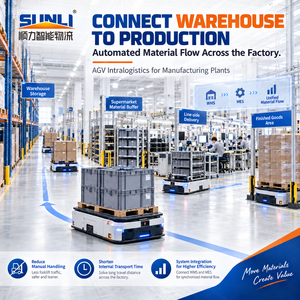
Rather than choosing strictly between manual push-back and full AS/RS systems, warehouses are increasingly deploying hybrid models. Automated Guided Vehicles (AGVs) equipped with 3D LiDAR vision systems are taking over forklift loading operations in push-back lanes, requiring standard push-back cart tolerances to tighten from $\pm3\text{mm}$ to $\pm0.8\text{mm}$.
Enterprise Strengths: ChileShelving Engineering Benchmarks
Why leading global distribution centers and industrial operators trust our structural manufacturing.
| Engineering Dimension | Standard Industry Market Offerings | ChileShelving Engineered Benchmark |
|---|---|---|
| Steel Grade & Quality | Standard commercial grade steel; varied structural consistency. | Certified Q235B / Q355 high-tensile structural steel with traceable mill test certificates. |
| Seismic Compliance | Generic gravity-based calculations; optional bracing. | Designed explicitly for extreme earthquake zones following NCh2369 / NCh433 standards. |
| Cold Storage Efficiency | Standard cart lubricants; prone to freeze-sticking below 0°C. | Specialized stainless-steel sealed bearings with anti-freeze synthetic lubricants rated to -25°C. |
| Cart Rail Tolerance | Roll-formed light tracks; prone to deflection under heavy loads. | Heavy-duty reinforced structural rail guide system preventing cart derailment and binding. |
| Service Lifecycle | Supply-only component sales; limited post-installation support. | Full lifecycle partner: CAD/3D Layout, FEA Analysis, Turnkey Installation, and Annual Inspections. |
By combining rigorous structural calculation, localized seismic mitigation, and high-precision cart geometry, ChileShelving Industrial Systems SpA delivers an engineered high-density storage framework that guarantees maximum ROI, operational safety, and uninterrupted supply chain continuity.
Frequently Asked Questions (FAQ) - Push Back Racking Procurement
Technical guidance for warehouse managers, industrial architects, and procurement teams.
Engineered High-Density Storage Solutions
Optimize your warehouse floor plan, maximize pallet storage density, and ensure total seismic safety with our certified structural steel engineers.
Send an Inquiry