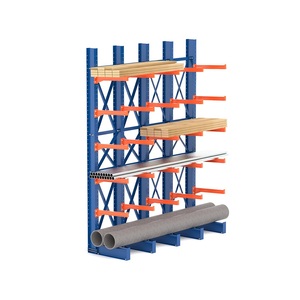
Featured High-Capacity Industrial Racking Systems
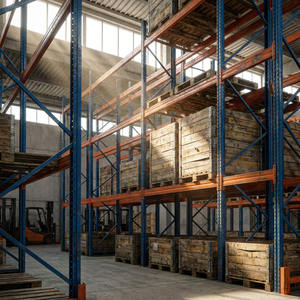
Engineering-tested, heavy-duty racking hardware manufactured using Q235B/Q355B cold-rolled structural steel. Certified for seismic zones and ultra-low cold room environments.
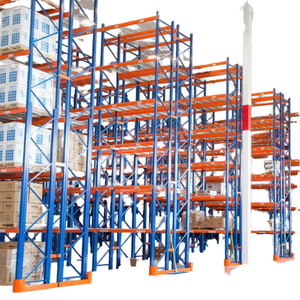
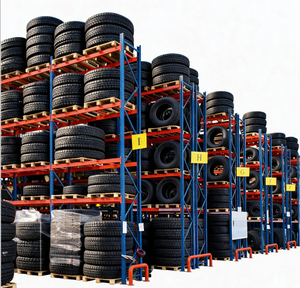
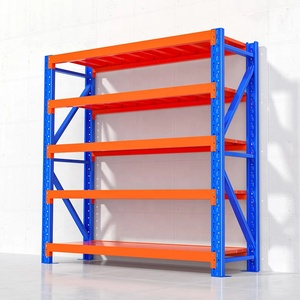
Navigating Global Industrial Storage Rack Sourcing
Modern supply chains are facing unprecedented vertical density requirements, stringent seismic safety mandates, and increasing pressure for warehouse automation integration. Selecting an industrial storage rack supplier is no longer a simple hardware purchase—it is a critical structural engineering decision.
In high-throughput distribution hubs across the globe—from the bustling port logistics of Santiago, Valparaíso, and Antofagasta to North American e-commerce fulfillment centers—warehouse operators must balance cubic space utilization against structural safety. A single pallet rack collapse can result in hundreds of thousands of dollars in stock loss, facility downtime, and severe regulatory penalties under workplace safety regulations (such as Chilean Decree 594 and Law 16.744 or OSHA standards).
Information Gain Insight: Structural integrity in high-density storage is governed by dynamic elastic response rather than static load capacity alone. Industrial racking must be specified using site-specific soil coefficients, finite element modeling (FEM), and traceable structural steel grades (such as Q235B or Q355B), ensuring stability under emergency seismic excitation or forklift impact.
Evaluating the Top 10 Industrial Storage Racks Suppliers & Wholesalers
To streamline global procurement requests (RFQs) for warehouse developers, third-party logistics (3PL) providers, and industrial plant managers, our engineering team evaluated leading industrial racking manufacturers across key criteria: steel metallurgy, structural design certification, cold-chain adaptation, and automated shuttle integration.
| Supplier / OEM Tier | Primary Specialties | Seismic & Safety Certifications | Cold Chain Suitability | Custom Engineering (OEM/ODM) |
|---|---|---|---|---|
| ChileShelving Industrial Systems | Seismic-Ready Selective, Drive-In, Cantilever & Shuttle Systems | NCh2369, NCh433, FEM 10.2.02, ISO 9001 | Excellence (-25°C Hot-Dip Galvanized) | Full Turnkey & Custom CAD/FEM |
| Interlake Mecalux | Automated Warehouses & Selective Pallet Racking | RMI, ANSI MH16.1, ISO 14001 | High (Automated Cold Stores) | Standardized Modular Systems |
| SSI SCHAEFER | AS/RS Vertical Carousels, Automated Pallet Systems | FEM, EN 15512, DIN EN ISO 9001 | High (Robotic Cold Rooms) | Proprietary Integrated Tech |
| Jungheinrich AG | VNA (Very Narrow Aisle) & Automated Racking | FEM European Standards, CE Certified | High (Refrigerated Logistics) | System-Matched Equipment |
| Dexion Storage Solutions | Industrial Shelving, Mezzanines & Pallet Flow Racks | AS4084 (Australian Standard), FEM | Medium to High | Modular Configurations |
| Stow Group | Heavy-Duty Pallet Racking & Silo Rack Structures | EN 15512, ISO 9001, FEM 10.2.02 | High (Deep Freezing Racks) | Custom Structural Steel |
| Fraraz Metal Storage | Boltless Shelving & Medium Duty Storage Racks | ISO 9001, Local Industrial Codes | Medium (Ambient & Chilled) | OEM Wholesale Production |
| AR Racking | High-Density Drive-In & Mobile Pallet Racking | EN 15512, ISO 3834-2 (Welding) | High (Anti-Corrosion Finishes) | Engineering Layout Design |
| Redirack Logistics | Heavy Duty Welded Frame Pallet Racks | RMI, CSA A344 (Canadian Code) | Medium | Standard Heavy-Duty Pallets |
| Kingmore Racking | Export-Grade Wholesale Pallet & Cantilever Racks | RMI, AS4084, ISO 9001, CE | High (Galvanized Options) | Large-Scale Wholesale OEM |
*Note: Data aggregated based on global manufacturing audits, structural load compliance, and cross-border installation track records.
Engineering Rigor: Why Tier-1 Logistics Trust Our Racking
Our manufacturing and engineering framework combines structural steel precision with localized compliance, guaranteeing long-term operational resilience.
Seismic Mitigation Engineering
Chile and the Pacific Rim are located on intense tectonic boundaries. Standard off-the-shelf racking designed for low-seismic zones suffers from premature joint shear and frame buckling under lateral shaking. Our design pipeline incorporates site-specific accelerograms, NCh2369 / NCh433 standards, heavy base plates, and custom cross-bracing profiles.
High-Grade Metallurgical Traceability
We exclusively utilize certified Q235B and Q355B cold-rolled steel coils, subjected to rigorous tensile testing and yield stress analysis. Beams undergo robotically welded 3-hook and 4-hook connector attachment, providing superior moment-resistance and preventing dislodgement even under violent forklift strikes.
Cold Chain & Corrosion Resistance
Operating at -25°C introduces severe thermal contraction, moisture condensation, and steel embrittlement. Our hot-dip galvanizing options and specialized epoxy powder coatings prevent oxidation in fruit, salmon cold stores, and humid coastal distribution facilities without structural degradation.
Future Procurement Trends & Technological Evolution (2025–2030)
As land costs rise near urban consumption zones (such as Greater Santiago and regional capitals), warehouse developers are turning toward vertical expansion and semi-automated high-density storage. Procurement directors must anticipate several structural micro-trends when specifying racking infrastructure:
1. Integration of Automated Shuttle Systems & AS/RS
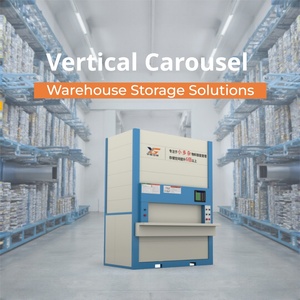
Traditional drive-in racking is rapidly evolving into semi-automated Radioshuttle™ and Vertical Carousel systems. By replacing forklift travel inside racks with self-propelled shuttle carts, warehouses achieve up to 85% volumetric utilization while reducing forklift collision damage by over 90%.
- LIFO to FIFO Flexibility: Multi-deep lanes mapped for real-time inventory rotation.
- Energy Efficiency: Reduced refrigerated room volume needing cooling.
2. IoT-Enabled Structural Health Monitoring
Next-generation heavy-duty pallet racks are being retrofitted with strain gauges, tilt sensors, and impact accelerometers. These IoT nodes communicate wirelessly with Warehouse Management Systems (WMS) to alert safety managers immediately if an upright suffers an over-capacity deflection or a forklift impact exceeding dynamic stress thresholds.
- Predictive Maintenance: Replaces reactive repairs with targeted beam replacements.
- Audit Trail: Provides immutable inspection logs for insurance compliance.
3. Green Steel & Circular Remanufacturing
Corporate ESG mandates are elevating the value of certified second-hand and circular steel racking. Factory-reinspected and re-rated used racking components offer budget-conscious enterprises a 30–40% capital reduction while eliminating embodied carbon associated with raw iron ore smelting.
- Certified Load Re-Rating: Non-destructive ultrasonic thickness testing.
- Decarbonized Supply Chains: Reusable upright frames and load beams.
4. Multi-Tier Pick Modules for E-Commerce
The explosive growth of direct-to-consumer e-commerce requires fast piece-picking operations. Integrated rack-supported mezzanines and multi-tier pick modules combine carton flow beds, belt conveyors, and heavy-duty pallet bases into a single space-saving structure.
- Vertical Density: Multiplies usable floor area 2x to 4x within existing building footprints.
- Safety Mesh Enclosures: Anti-fall netting and integrated fire sprinkler channels.
Industrial Storage Racking Procurement FAQ
Expert answers to technical procurement, safety compliance, and structural design questions frequently raised by facility operations and HSE directors.
Is pallet racking in seismic countries required to be designed for earthquakes?
Yes. Regions located on active seismic zones (such as Chile, Peru, Japan, and the US West Coast) strictly enforce seismic engineering standards for industrial storage systems. In Chile, rack design must comply with NCh2369 (Seismic Design of Industrial Structures and Equipment) and NCh433 (Seismic Design of Buildings), combined with international standards like FEM 10.2.02 and ANSI MH16.1. Seismic compliance requires specific frame bracing patterns, enlarged base plates, dynamic anchor bolt calculations, and restricted maximum beam deflection limits to prevent progressive collapse during an earthquake.
What is the key structural difference between structural steel racking and roll-formed racking?
Roll-formed racking is manufactured from cold-rolled sheet steel into open C-channel profiles with tear-drop or teardrop-style beam connectors. It is cost-effective, quick to adjust, and ideal for standard retail/3PL warehousing. Structural steel racking is fabricated from hot-rolled structural steel channels (I-beams/C-channels) with heavy bolted beam connections. Structural racking offers substantially higher impact resistance against forklift abuse, superior load capacity (up to 4,000kg+ per beam level), and is highly recommended for cold storage, heavy manufacturing, and harsh industrial environments.
Which high-density storage system delivers the lowest cost per pallet position in cold storage?
For refrigerated and deep-freeze warehouses (-18°C to -25°C), cold space is extremely expensive to build and operate. High-density systems such as Drive-In Racking, Push-Back Racking, and Radioshuttle™ Automated Systems yield the lowest operational cost per pallet position. Drive-In racking maximizes space for low-SKU bulk products, while Radioshuttle systems eliminate internal forklift aisles altogether, maximizing storage cube utilization while protecting refrigerated air circulation pathways.
How often should warehouse pallet racking undergo professional inspection?
Industrial best practices and occupational health & safety regulations (including Chilean Decree 594 and Law 16.744, as well as European EN 15635 standards) require a formal, documented expert rack inspection at least once every 12 months. Additionally, internal visual inspections should be performed weekly or monthly by trained warehouse safety personnel. An immediate structural assessment is mandatory following any notable forklift impact, structural beam displacement, or seismic event.
What custom information is needed to request an accurate racking CAD & cost proposal?
To generate a precise engineering calculation and CAD layout proposal, our engineering team requires:
- Building architectural layout drawings (dwg or pdf) showing clear height under truss, column grids, and floor slab thickness/concrete strength.
- Pallet dimensions (Length x Width x Height including cargo overhang) and maximum gross pallet weight.
- Forklift operational specs (turning radius, maximum lift height, and mast height).
- Environmental conditions (ambient, chilled, frozen, or outdoor coastal location).
- Required stock turnover logic (FIFO - First-In-First-Out vs. LIFO - Last-In-First-Out).
Optimize Your Warehouse Storage Capacity & Safety
Connect directly with our senior racking engineering team. We provide custom CAD floorplan design, seismic calculation reports, and factory-direct wholesale quotes tailored to your operating requirements.