High-Performance Storage Racking Systems
Precision-engineered structural steel and cold-rolled pallet racking manufactured to rigorous international load and seismic standards.
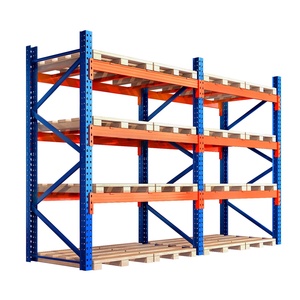
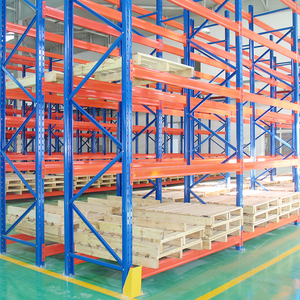
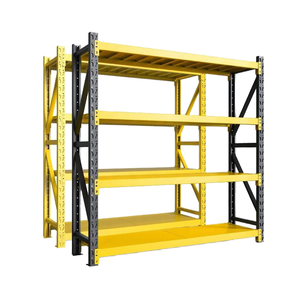
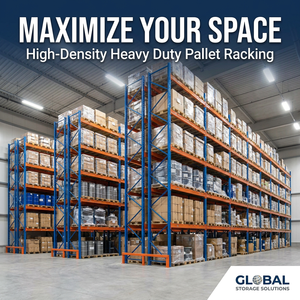
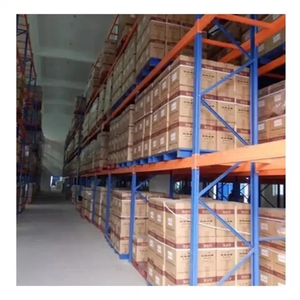
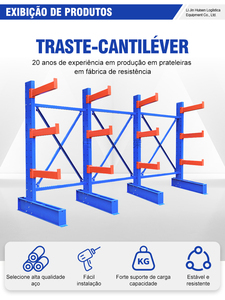
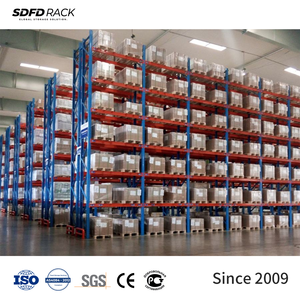
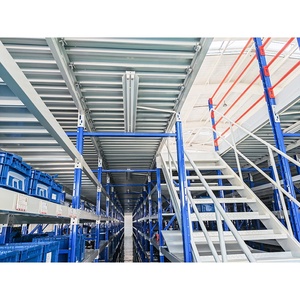
OEM/ODM Structural Capabilities & Enterprise Competency
As a tier-one OEM/ODM manufacturing facility, we engineer custom racking systems configured to precise warehouse geometry, floor load thresholds, and extreme operational dynamics.
Custom OEM/ODM Engineering
Custom structural engineering adapted to non-standard unit loads, cold-storage footprints, high-bay clearance, and specific material handling vehicles.
- Bespoke upright profiles (Q235B & High-Yield Q355B Steel)
- Custom beam connector tooth configurations & locking pins
- Adjustable beam pitch profiles (50mm, 75mm, 76.2mm pitch)
Advanced Seismic Design Compliance
Engineering-backed static and dynamic stress analysis complying with international seismic standards including ANSI MH16.1, FEM 10.2.02, EN 15512, and Chilean NCh2369 / NCh433 codes.
- Heavy-duty enlarged base plates and chemical anchor studs
- Integrated horizontal and diagonal frame bracing geometry
- Finite Element Analysis (FEA) safety report certification
Automated Production & Surface Protection
Precision cold roll-forming lines, automated robotic continuous welding, and ultra-durable surface finishes designed for long-life industrial operation.
- Electrostatic epoxy-polyester powder coating (80-100µm)
- Hot-dip galvanizing for harsh outdoor/cold-chain environments
- Strict ISO 9001 quality audit with mill test certificate traceability
Industrial Whitepaper: The Strategic Evolution of Heavy-Duty Pallet Racks in Modern Intralogistics
In modern industrial logistics, storage systems have evolved from static storage metal frames into dynamic structural assets critical to supply chain velocity, workplace safety, and spatial ROI. Global warehouse footprints face acute cost pressures per square meter, requiring structural engineering that maximizes cubic volume utilization while ensuring complete operational resilience against mechanical impact and seismic disturbances.
Key Strategic Takeaway: Procurement leaders who shift focus from initial price-per-kilogram to Total Cost of Ownership (TCO)—prioritizing structural steel grade, certified load safety factors, and modular expansion capability—reduce long-term maintenance overhead by up to 34% over a 10-year operational lifecycle.
1. Technical Steel Metallurgical Selection & Structural Integrity
The foundation of any high-capacity pallet racking system rests on raw material purity and structural section engineering. As a specialized OEM/ODM factory, we utilize high-tensile structural steel alloys, primarily Q235B and Q355B (equivalent to SS400 and S355JR under European EN 10025 standards). Cold-rolled structural profiles are formed using multi-station automated continuous roll-forming mills to guarantee zero internal micro-cracking along bend radii.
Under heavy loading conditions (typically 1,000 kg to 4,000 kg per beam level), the structural cross-section profile of upright columns and box beams dictates deflection parameters. International design mandates (such as RMI ANSI MH16.1 and EN 15512) dictate that maximum beam deflection must not exceed L/200 of the clear span. Our engineered box beams utilize double-C profile interlocked seam welding, delivering high torsional stiffness and minimizing horizontal displacement during heavy forklift loading.
2. Seismic Engineering and Site-Specific Load Calculation
Geographical regions subject to high seismic activity—such as the Pacific Rim of Fire, western South America, East Asia, and Southern Europe—demand custom-engineered rack bracing logic. Racks in seismic zones behave as un-braced or semi-braced flexible steel frames where top-heavy pallet mass induces multi-axis dynamic sway forces during seismic excitation.
Our engineering design methodology integrates ground acceleration coefficients, soil site classifications, and rack ductility factors into Finite Element Analysis (FEA) software. Structural adjustments for seismic-ready OEM projects include:
- Thicker Gauge Base Plates: Expanding the footprint plate to distribute concentrated column load over a broader concrete slab area, preventing slab punch-through.
- High-Tensile Anchor Studs: Utilizing heavy-duty expansion or chemical anchors embedded up to 150mm into reinforced concrete floors.
- Reinforced Frame Bracing Layouts: Adjusting K-bracing or X-bracing node patterns to effectively transfer horizontal shear forces down to floor foundations.
- Safety Connector Locks: Multi-prong beam end connectors featuring automatic visual locking pins that resist accidental vertical dislodgement caused by dynamic earthquake uplift.
3. Specialized Applications: Cold Chain Logistics & Chemical Plant Environments
Standard indoor powder-coated racking degrades rapidly when exposed to sub-zero temperatures down to -30°C in food freezing facilities, or corrosive airborne vapors in chemical storage hubs. Cold storage environments require specialized structural consideration because steel becomes brittle at low temperatures (reduced notch toughness).
For cold-chain OEM solutions, our factory applies low-temperature impact-resistant steel grades combined with heavy hot-dip galvanizing (HDG) conforming to ISO 1461. Hot-dip galvanizing creates a multi-layered zinc-iron alloy coating that physically bonds to steel, providing self-healing cathodic protection against corrosion caused by humidity condensation during defrost cycles.
Future Procurement Trends for Industrial Pallet Racking
Navigating global supply chain shifts, sustainability mandates, and technological integration in warehouse infrastructure acquisition.
Direct Factory OEM Sourcing & Nearshoring
Enterprise procurement managers are increasingly bypassing trading intermediaries, contracting directly with certified manufacturing plants to secure custom CAD adaptation, strict material certification, and transparent project lead times.
Standardized Modular Architecture
Global buyers are favoring standardized rack component geometry. Modular designs allow seamless integration of aftermarket accessories—such as wire mesh decking, pallet support bars, drop-in dividers, and frame protectors—without structural re-engineering.
E-Commerce & High-Density Integration
Rapid expansion of omnichannel e-commerce drives demand away from basic low-density selective racking toward high-density Multi-Tier Mezzanines, Drive-In, Push-Back, and Radio Shuttle automation systems capable of handling fast-moving SKUs.
Future Development Trends: Smart & Automated Racking
How physical racking infrastructure is evolving to seamlessly interface with automated material handling systems.
The global storage equipment industry is undergoing a structural shift driven by robotics, warehouse management software (WMS), and automated guided vehicles (AGVs). Physical pallet racking is no longer merely static steel; it is the structural skeleton for complex automated ecosystems.
1. Autonomous Mobile Robots (AMR) & Radio Shuttle Compatibility
High-density radio shuttle racking systems represent the bridge between traditional manual storage and fully automated warehouses. Semi-automated shuttles travel on custom-profiled internal rails inside storage tunnels to retrieve and deposit pallets. Future racking procurement demands tighter manufacturing tolerances (+/- 1.0mm tolerance across beam lengths) to ensure smooth robot navigation and sensor alignment.
2. AS/RS (Automated Storage and Retrieval Systems) High-Bay Integration
High-bay rack-clad buildings—where the storage rack system itself forms the structural framework supporting wall cladding and roofs—are replacing conventional warehouse buildings. These super-tall structures (reaching heights of 25m to 45m) require millimeter-accurate manufacturing, high-tolerance beam deflection parameters, and integrated guide rails for high-speed automated crane operations.
3. IoT Structural Health Monitoring and Smart Safety Sensors
Emerging structural health monitoring leverages IoT vibration and strain sensors embedded into heavy-duty upright profiles. These sensors detect micro-impacts caused by forklift operations or subtle structural displacements from floor settling, transmitting real-time alerts to safety managers before structural failure can occur.
Frequently Asked Procurement Questions
Essential guidance for logistics engineers, project managers, and sourcing directors evaluating enterprise OEM/ODM pallet racking suppliers.
What is the difference between OEM and ODM pallet rack manufacturing?
ODM (Original Design Manufacturer): Our engineering team takes your raw operational data (building dimensions, pallet weights, forklift clear height, throughput requirements, seismic zone) and develops full CAD layouts, structural calculations, and bespoke rack specifications from scratch prior to manufacturing.
How do structural steel racking and roll-formed racking compare in heavy-duty applications?
Structural steel racking utilizes hot-rolled structural C-channel profiles assembled with structural bolt connections. It offers significantly superior resistance to forklift impact, higher load capacity under extreme duty cycles, and superior durability in harsh freezing or industrial manufacturing environments.
Which international quality standards should industrial pallet racks comply with?
- ANSI MH16.1: Specification for the Design, Testing and Utilization of Industrial Steel Storage Racking (United States / RMI).
- EN 15512 / EN 15635: Steel static storage systems - Adjustable pallet racking systems (Europe).
- FEM 10.2.02: European Federation of Materials Handling racking design codes.
- ISO 9001: Quality management system covering manufacturing, welding, and structural steel processing.
How do you ensure seismic compliance for international warehouse projects?
What surface treatment is best for cold storage and corrosive chemical plants?
What is the standard manufacturing lead time for custom OEM/ODM racking orders?
How often should industrial pallet racking undergo safety inspection?
Can custom racking systems be integrated with existing warehouse automation?
Partner with a Certified OEM/ODM Racking Manufacturer
Consult with our senior structural engineers today. Receive custom CAD layouts, seismic load calculations, and competitive factory-direct pricing for your warehouse project.
Contact Us