Heavy-Duty Storage Racking Systems
Explore our precision-engineered OEM/ODM industrial pallet racks, designed for maximum load capacity, seismic safety compliance, and long-term durability.
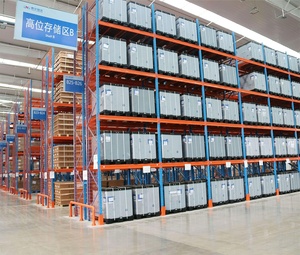
China Manufacturer Adjustable Storage Shelf Racking Warehouse Storage Steel Selective Pallet Rack
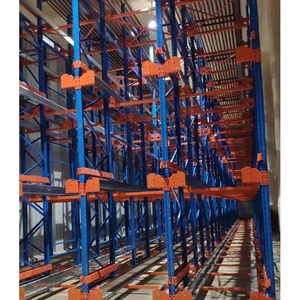
Customized Steel Pallet Rack Stacking Racks & Shelves Warehouse Storage Rack Heavy Duty Shuttle Racking

Adjustable Heavy Duty Pallet Rack Shelf Two Levels Custom High Load Capacity Racking System
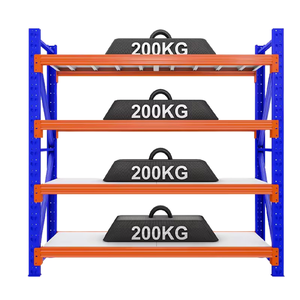
Industrial Heavy Duty Pallet Rack Selective Storage System 1000-5000kg Capacity Corrosion-Resistant
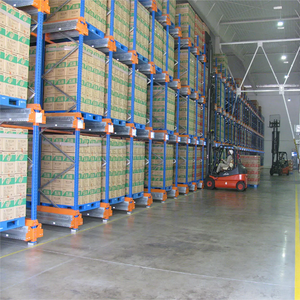
Save Labor Heavy Duty Warehouse Adjustable Radio Pallet Shuttle Racking System 1000-1500kg Load
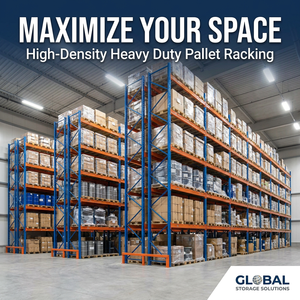
Customized Heavy Duty Racking System for Large Scale E-commerce Logistics Warehouse
Industrial Pallet Storage Rack Heavy Duty Steel Warehouse Equipment Supplier
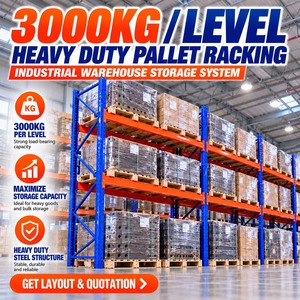
3000kg Per Level Heavy Duty Warehouse Pallet Racking System
Engineering Principles & Metallurgical Integrity in OEM/ODM Racking
An in-depth analysis of cold-formed vs. structural steel engineering, load-bearing capacities, dynamic stresses, and safety margins in high-bay logistics operations.
Structural Steel Grade Selection & Yield Strength Dynamics
In modern industrial logistics, structural integrity is paramount. OEM/ODM manufacturing of industrial shelf racks requires stringent raw material selection. High-tensile structural steel grades such as Q235B, Q355B (equivalent to SS540/ASTM A572 Grade 50) are cold-rolled into continuous upright profiles. The yield strength of Q355B steel allows racking frames to absorb extreme vertical compression loads reaching up to 25,000 kg per bay, while maintaining an elastic response under dynamic forklift impact.
Our OEM manufacturing process incorporates continuous roll-forming lines equipped with real-time laser alignment and automated punching heads. Upright profiles feature complex geometry with multiple stiffening ribs along the web and flanges, drastically increasing the moment of inertia ($I_x$ and $I_y$) and resisting torsional-flexural buckling under localized load imbalances.
Moment-Resisting Connectors & Safety Locking Systems
The connector beam-to-upright joint acts as a critical structural hinge in selective and high-density pallet racking systems. OEM customization allows for multi-tooth connector claws engineered with precision press-stamping dies. These heavy-duty connectors engage into teardrop, diamond, or trapezoidal upright pitch slots, creating a rigid moment-resisting joint that restricts frame sway.
Safety is further reinforced via automatic spring-lock mechanisms or grade 8.8 structural locking pins. These components prevent accidental beam dislodgement caused by upward forklift mast snagging, ensuring complete operational safety across multi-tier order picking modules and high-turnover distribution centers.
Why Global Enterprises Partner With Our OEM/ODM Facility
From site-specific seismic simulation to cold-chain anti-corrosion treatments, we provide end-to-end industrial racking manufacturing tailored to site geography and logistics workflows.
Seismic Engineering & Finite Element Analysis (FEA)
Every warehouse rack design undergoes rigorous 3D FEA stress simulation. We customize baseplates, anchor bolting layouts, and frame diagonal bracing according to localized seismic codes, including NCh2369, NCh433, and US RMI guidelines.
Automated Radio Shuttle & ASRS Compatibility
As a specialized OEM/ODM manufacturer, our racking components feature ultra-precise dimensional tolerances (±0.5mm) critical for automated radio shuttle systems, VNA (Very Narrow Aisle) turrets, and stacker crane integration.
Corrosion Protection & Cold Storage Finishing
We supply specialized surface treatments including thermosetting epoxy-polyester powder coating and hot-dip galvanizing (HDG) rated for sub-zero cold storage operations down to -30°C and aggressive coastal environments.
Future Procurement & Technological Trends in Industrial Racking
Key industry shifts shaping global supply chain procurement strategies for the next decade.
1. The Transition from Static Storage to Autonomous High-Density Ecosystems
Global warehouse procurement is undergoing a paradigm shift. Rising real estate acquisition costs and urban industrial land scarcity have accelerated the phase-out of traditional low-density static racking. Procurement officers are increasingly specifying semi-automated Radio Shuttle systems, Push-Back racks, and Automated Storage and Retrieval Systems (ASRS).
Shuttle racking systems maximize volumetric cube utilization by up to 85%, significantly reducing energy consumption per pallet position in temperature-controlled cold rooms. OEM manufacturing now emphasizes modular track integration, sensor-reflective beam coatings, and standardized shuttle landing docks.
2. IoT-Enabled "Smart" Racking and Structural Health Monitoring (SHM)
Future industrial racking installations will incorporate embedded strain gauges, piezoelectric sensors, and RFID impact detectors. Real-time structural health monitoring provides immediate alerts when a forklift impacts an upright column or when overloading occurs on upper beam levels. This technological evolution allows facility managers to shift from reactive repairs to predictive maintenance, fulfilling strict occupational safety regulations.
3. Sustainable Carbon-Neutral Steel Procurement & Lifecycle Circularity
Environmental, Social, and Governance (ESG) compliance now heavily influences wholesale racking tenders. Major logistics operators require environmental product declarations (EPDs) for steel components. Green steel manufacturing—utilizing Electric Arc Furnaces (EAF) powered by renewable energy and zero-VOC electrostatic powder lines—is rapidly becoming a prerequisite for global supply chain partners.
Frequently Asked Questions (FAQ) for Global Racking Sourcing
Detailed answers to critical technical and logistical questions faced by warehouse buyers, structural engineers, and procurement managers.
What customization parameters are available for OEM/ODM industrial shelf rack orders?
How are structural load capacities calculated and certified for heavy-duty racking?
Is seismic engineering required for warehouse racking installations?
What surface treatment is recommended for sub-zero cold room environments?
What is the typical lead time for wholesale factory direct racking orders?
How do Radio Shuttle racking systems improve operational cost efficiency?
Request Custom OEM/ODM Engineering & Factory Pricing
Send your warehouse floor plans, clear height specifications, and pallet payload requirements to our engineering team for a full CAD layout design and competitive wholesale quotation.