Comprehensive Engineering Guide: OEM/ODM Industrial Cantilever Racking
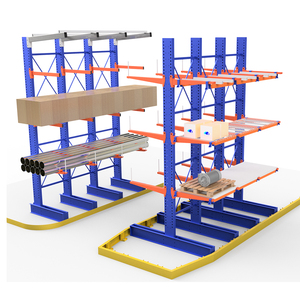
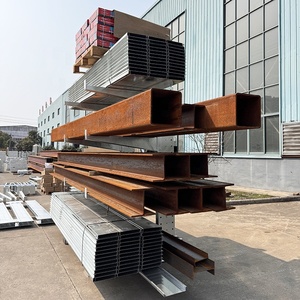
In modern warehousing, industrial manufacturing, and raw material logistics, managing non-standard, long-length payloads—such as steel pipes, aluminum extrusions, timber packs, plastic conduits, and automotive chassis—presents severe operational hurdles for standard selective pallet racking. Conventional pallet racking relies on front vertical columns that restrict horizontal loading, creating severe space inefficiencies and hazardous forklift handling conditions.
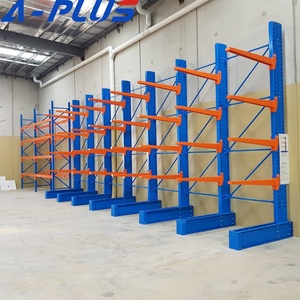
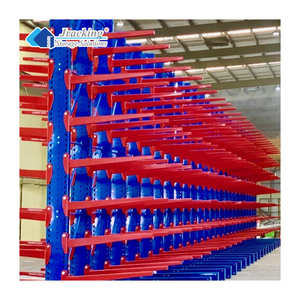
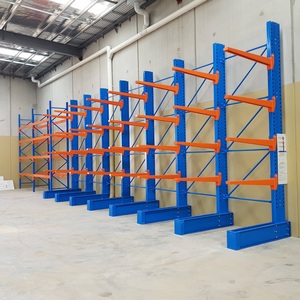
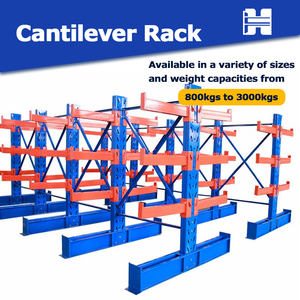
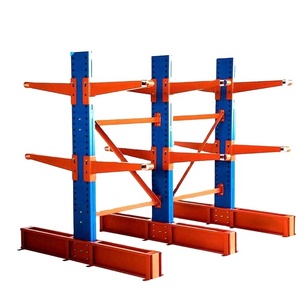
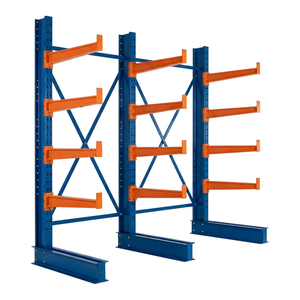
As a premiere OEM/ODM Cantilever Racking Manufacturer & Exporters, our engineered cantilever storage systems eliminate front vertical column obstructions entirely. By utilizing a continuous structural spine—comprising heavy-gauge upright columns, heavy-duty base supports, and cantilevered load arms—our systems provide unobstructed horizontal access, maximizing cubic storage density while minimizing material damage during loading and retrieval.
1. Structural Architecture: Roll-Formed C-Section vs. Heavy Structural Hot-Rolled H-Beam
Determining the optimal cantilever engineering specification requires a rigorous evaluation of load parameters, operational cycles, and environmental dynamics. We offer two distinct architectural categories:
| Structural Parameter |
Roll-Formed Cantilever Racking |
Heavy-Duty Structural H-Beam Racking |
| Steel Material Grade |
Cold-Rolled Steel (Q235B / S275JR) |
Structural Hot-Rolled I-Beam/H-Beam (Q355B / S355JR) |
| Load Capacity Range |
Light to Medium Duty (500kg – 1,500kg per arm) |
Extra Heavy Duty (1,500kg – 6,000kg+ per arm) |
| Impact Resistance |
Moderate (Ideal for light timber, plastic tubing) |
Maximum (Built for steel coils, pipes, salvage cars) |
| Arm Adjustment Pitch |
75mm / 76.2mm slotted column pitch |
100mm / 101.6mm bolted or heavy pin connection pitch |
| System Height Limits |
Up to 6.0 Meters |
Up to 12.0+ Meters (AS/RS & Crane Integration) |
| Primary Applications |
Lumber yards, light PVC, retail hardware, HVAC ducts |
Steel service centers, automotive scrap, heavy machinery |
2. Mechanics of Cantilever Arm Connections and Deflection Control
The operational integrity of a cantilever storage system hinges on the mechanical connection between the cantilever arm and vertical column. In cantilever engineering, Arm Deflection is tightly regulated to prevent load slippage, column twist, and forklift snagging.
Our OEM/ODM engineering teams utilize specialized arm designs to accommodate varying handling criteria:
- Pin-Lock Incline Arms: Designed with a 2° to 4° upward pitch. As weight is applied, the arm deflects toward horizontal without dropping below 0°, ensuring heavy pipes or round stock cannot roll off the tip.
- Heavy-Duty Bolted Arms: Utilizes high-tensile Grade 8.8 or Grade 10.9 structural bolts anchored into 16mm thick connection plates, providing rigid moment resistance for massive uniform loads.
- Pivot / Articulated Safety Arms: Engineered to swing upward and sideways if struck accidentally by an elevating forklift mast, absorbing impact energy and preventing structural column buckling.
3. Seismic Load Calculation & Anchor Design Standards
Cantilever racking systems exhibit distinct dynamic performance characteristics during seismic events due to their asymmetrical load distribution. Unlike pallet racking, which benefits from cross-aisle beam tie bars, cantilever columns act as pure cantilever structural members under lateral shear and moment forces.
Our engineering division models every project according to site-specific seismic parameters, including ground acceleration ($S_s, S_1$), soil site class, and importance factors in compliance with NCh2369, RMI MH16.2, and Eurocode 8. We engineer oversized base plates with chemically bonded anchor studs or wedge expansion anchors calculated for maximum tension uplift and base shear forces.
1. Integration with Automated Stacker Cranes & AS/RS
Procurement teams are rapidly transitioning away from manual side-loader forklifts toward Automated Storage and Retrieval Systems (AS/RS) tailored for long loads. Modern cantilever designs incorporate specialized sensor mounts, rack alignment reflectors, and ultra-tight tolerance arm profiles compatible with automated telescopic forks.
2. Advanced Weatherproofing & ISO 1461 Hot-Dip Galvanizing
With industrial land costs soaring, outdoor storage yards for steel profiles, pipes, and raw timber are expanding. Modern procurement guidelines mandate Hot-Dip Galvanizing (HDG) per ISO 1461 standards—providing a zinc coating thickness exceeding 85 µm for 30+ years of zero-maintenance corrosion protection in harsh coastal or saline environments.
3. IoT Structural Strain & Deflection Monitoring
Industry 4.0 smart warehouse standards are driving the integration of wireless strain sensors into heavy-duty cantilever arms. These IoT sensors provide real-time telemetry to warehouse management software (WMS), alerting operators immediately if an arm experiences asymmetrical overloading or excessive plastic deformation.
4. High-Yield Ultra-Light Steel Alloys (Q355B / Q460)
To reduce global ocean freight shipping costs without compromising load bearing capabilities, OEM manufacturers are adopting high-yield structural micro-alloyed steels. This yields up to a 20% reduction in tare steel weight while maintaining identical stiffness and ultimate tensile strength specifications.
What critical structural parameters are required to request a custom OEM/ODM cantilever racking quote?
+
To provide an accurate FEA-calculated engineering layout and quotation, our structural design team requires: (1) Total length, width, height, and unit weight of the item being stored; (2) Maximum required arm length and desired load per arm; (3) Number of storage levels per column; (4) Total available warehouse clear height and floor slab thickness/concrete PSI; (5) Environmental conditions (indoor dry, outdoor galvanizing required, or cold storage sub-zero temperatures); (6) Site seismic zone details.
How do you calculate the correct spacing (pitch) between cantilever columns?
+
Column spacing is determined by the flexural rigidity of the stored material. The rule of thumb dictates that the stored load should overhang the outer cantilever arms by half the distance between the columns ($1/2 \times \text{Column Pitch}$). For example, if storing 6-meter steel pipes using a 2-column system, the columns should be spaced 3 meters apart, allowing a 1.5-meter overhang on each side. Flexible materials like thin plastic conduit require 3 or 4 columns to prevent material sagging between arms.
What is the difference between single-sided and double-sided cantilever columns?
+
Single-sided cantilever racking features arms extending from only one side of the vertical column and is designed to sit flush against warehouse walls. Double-sided cantilever racking features a central structural column with arms extending in both directions. Double-sided systems offer superior structural stability due to balanced moment forces and provide significantly higher storage density when placed in central warehouse aisles.
Why is Hot-Dip Galvanizing (HDG) preferred over standard powder coating for outdoor cantilever storage?
+
Electrostatic powder coating provides excellent interior aesthetic protection, but exposed outdoor environments suffer from moisture entrapment, UV degradation, and temperature cycling that causes micro-cracking in paint. Hot-Dip Galvanizing per ISO 1461 immerses the fabricated steel profiles into molten zinc ($450^\circ\text{C}$), forming a metallurgical zinc-iron alloy bond that acts as a sacrificial anode, providing decades of maintenance-free rust resistance even if scratched.
Are your cantilever racking systems certified under international seismic standards?
+
Yes. Our engineering division conducts structural calculations compliant with ANSI/RMI MH16.2 (USA), FEM 10.2.09 (Europe), EN 15668, and Chilean NCh2369 / NCh433 seismic safety guidelines. We supply stamped structural engineer calculation reports for facility permitting and commercial insurance approvals upon request.
What safety accessories can be added to cantilever arms to prevent material rolling or damage?
+
We manufacture a full range of heavy-duty safety accessories, including: removable vertical steel arm stops (pins) to keep round pipes from rolling off; welded end-caps; continuous wire mesh decks or grating supported across arms for short items; rubber arm liners to prevent scratching delicate finished aluminum profiles; and heavy-duty structural column guards to absorb forklift base chassis impacts.
Global OEM/ODM Engineering & Export Workflow
As a leading exporter of industrial storage rack systems, we ensure complete transparency and quality verification at every milestone of your procurement order:
01. Consult & Layout
Detailed requirements gathering, floor plan DWG analysis, clear height studies, and material loading profile assessment.
02. FEA Calculation
Finite Element Modeling, steel grade selection, anchor bolt stress analysis, and structural calculation sign-off.
03. Precision Production
CNC laser cutting, robotic seam welding, shot blasting to Sa 2.5, automated powder coating, or hot-dip galvanizing.
04. QC & Global Shipping
NDT weld testing, coat thickness verification, steel strapping bundle packaging, container optimization, and shipping export dossiers.