Industrial OEM/ODM Beam Pallet Racking Systems
Heavy-duty cold-rolled steel pallet rack configurations engineered for high-density logistics, cold storage, VNA environments, and global compliance standards.
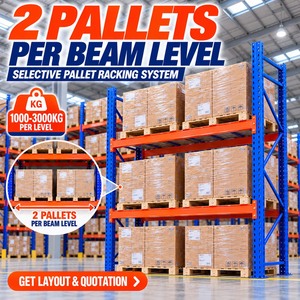
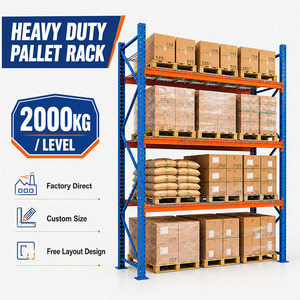
Heavy Duty Steel Beam Pallet Racking System with High Load Capacity for Industrial Warehouse Storage
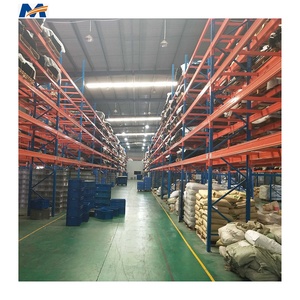
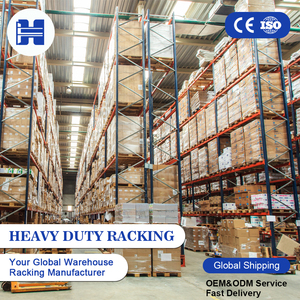
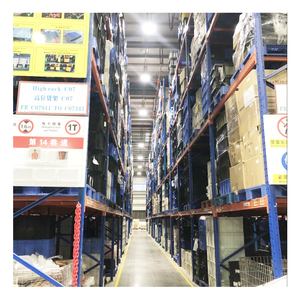
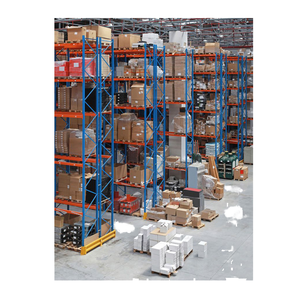
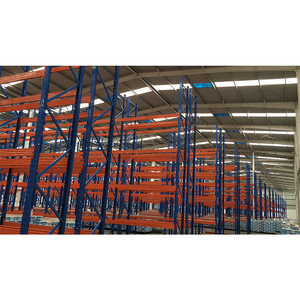
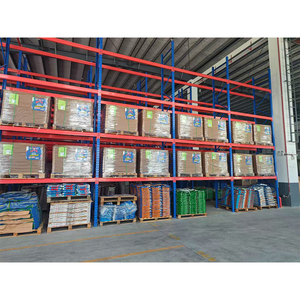
High-Load Beam Pallet Racking Architectural Frameworks: OEM/ODM Technical Insights for Global Wholesalers
In modern supply chain infrastructures, the structural reliability of industrial storage racking dictates both operational safety and volumetric density. As global procurement shifts toward highly tailored, seismic-ready, and automated warehouse environments, the demand for certified OEM/ODM Beam Pallet Racking Exporters & Wholesalers has reached an all-time high. Storage systems are no longer generic static steel frames; they are precision-engineered dynamic structures built to endure extreme static load limits, cyclic forklift stress, thermal contraction in cold chains, and lateral seismic accelerations.
This whitepaper synthesizes structural steel metallurgy, international regulatory compliance (FEM 10.2.02, RMI, EN 15512, NCh2369), custom roll-forming manufacturing methodologies, and advanced procurement strategies. It provides B2B buyers, supply chain executives, and project engineers with the requisite information gain to evaluate, source, and deploy high-performance beam pallet racking solutions globally.
Metallurgical Foundations & Precision Cold-Formed Beam Engineering
The structural cornerstone of heavy-duty beam pallet racking lies in cold-formed steel engineering. Premium OEM/ODM manufacturers utilize hot-rolled structural coil steel (typically Q235B and high-strength Q355B or equivalent ASTM A1011 Grade 50) passed through continuous multi-stage automatic cold roll-forming lines. This process increases yield strength via work hardening while maintaining essential ductility for impact energy absorption.
1. Box Beam vs. Step Beam Structural Dynamics
Two distinct beam profiles dominate the international industrial storage landscape. Understanding their structural mechanics is critical for precise ODM specification:
- Closed Box Beams (C-Profile Interlock): Formed by seam-welding two identical C-channels face-to-face. Box beams exhibit superior torsional rigidity and symmetrical moment of inertia ($I_x$ and $I_y$), making them the preferred configuration for heavy unit loads (1,500 kg to 5,000 kg per beam level) and standard pallet loading using conventional forklifts.
- Step Beams: Featuring an internal 'step' ledge along the upper inner edge, designed to hold flush-fit wire mesh decking, drop-in pallet supports, or shelf panels. Common in retail distribution hubs and combination hand-pick/pallet staging bays.
2. Connector Claw Geometry & Shear Pin Dynamics
The connection between the horizontal rack beam and vertical upright frame is a non-linear semi-rigid joint. Premium OEM manufacturing utilizes 3-hook, 4-hook, or 5-hook heavy-duty welded connector claws stamped from high-strength structural steel plates (up to 4.0mm thickness). These claws feature taper-fit engagement tabs that lock into column teardrop or omega ($\Omega$) profile slots under gravity and load, virtually eliminating joint slop.
| Beam Profile Height | Steel Thickness (mm) | Standard Clear Span (mm) | Uniformly Distributed Load (UDL) | Deflection Ratio Limit |
|---|---|---|---|---|
| 80 mm Box Beam | 1.5 mm / 1.8 mm | 2,300 mm / 2,700 mm | 1,000 kg - 1,800 kg / level | Better than L/200 |
| 100 mm Box Beam | 1.5 mm / 2.0 mm | 2,700 mm / 3,300 mm | 2,000 kg - 2,800 kg / level | Better than L/200 |
| 120 mm Box Beam | 1.8 mm / 2.0 mm | 2,700 mm / 3,600 mm | 3,000 kg - 3,800 kg / level | Better than L/200 |
| 140 mm Heavy Box Beam | 2.0 mm / 2.5 mm | 3,300 mm / 3,900 mm | 4,000 kg - 5,000 kg / level | Better than L/200 |
Why Global Distributors & Wholesalers Partner With Our Factory
From custom structural calculation reports to fully automated robotic production lines, our factory delivers comprehensive OEM/ODM solutions tailored for competitive B2B channels.
Custom OEM/ODM Profiling
Full engineering flexibility to match regional teardrop, speedrack, or European pitch (50mm, 75mm, 76.2mm) perforations and specialized beam connectors.
Seismic Engineering Compliance
Finite Element Analysis (FEA) verified beam racking structures compliant with seismic criteria including Chilean NCh2369, US RMI, and European EN 15512.
Robotic Plasma & Welding
Automated robotic arms guarantee 100% full-penetration welds between connector claws and box beams, preventing fatigue cracking under heavy operational cycles.
Thermosetting Powder Coating
Swiss Gema automated powder lines apply 60-80μm electrostatic epoxy-polyester coatings pre-treated with 9-stage phosphate wash for high scratch and chemical resistance.
Pre-Galvanized & HDG Finish
Hot-Dip Galvanized (HDG) coating options (up to 275 g/m² zinc) engineered specifically for sub-zero cold storage facilities down to -30°C and coastal salt-spray zones.
Container Loading Optimization
Custom protective steel bundling, wooden skids, and automated CAD loading schedules maximize 40ft High Cube container volumetric utilization up to 26.5 metric tons.
Future Procurement & Technology Trends in Industrial Storage Racking
Procurement directors and warehouse architects must anticipate technological shifts when making capital equipment investments. Over the next decade, global supply chains are pivoting toward high-density automation, smart structural monitoring, and sustainable circular steel sourcing.
1. Radio Shuttle & AS/RS Beam Profile Standardisation
Traditional selective pallet racking is increasingly integrated into semi-automated Radio Shuttle systems or fully automated AS/RS crane corridors. This evolution demands ultra-strict manufacturing tolerances ($\pm 0.5\text{mm}$ beam straightness along full spans) to ensure smooth sensor tracking of automated shuttles along structural support rails.
2. Nearshoring & Modular Structural Component Standardization
Global supply chain disruptions have accelerated nearshoring, prompting regional distributors to stock standardized modular racking components. OEM factories that provide multi-functional punching patterns compatible with universal beam connectors allow wholesalers to respond quickly to custom client installation deadlines.
3. Structural IoT Sensors & Real-Time Impact Monitoring
The integration of micro-electromechanical (MEMS) strain gauges and wireless impact sensors into critical beam-column connections allows logistics operations to record MHE (Material Handling Equipment) collisions in real time, triggering preventive maintenance alerts before structural collapse occurs.
4. Decarbonization & Low-Carbon Steel Supply Chains
ESG mandates across Europe and North America require full carbon footprint traceability. Future B2B procurement agreements favor racking exporters utilizing EAF (Electric Arc Furnace) recycled steel and environmentally compliant powder coating formulations.
Frequently Asked Questions (FAQ) for OEM/ODM Buyers
Answers to common engineering, ordering, and logistical queries from international racking importers and project engineers.
What is the minimum order quantity (MOQ) for custom OEM/ODM beam profiles? +
How do you calculate structural load capacities and deflection compliance? +
Can your factory engineer seismic-resistant beam rack configurations? +
What surface treatments are recommended for sub-zero cold storage facilities? +
How are racking components packed to prevent transport damage during ocean transit? +
Accelerate Your Warehouse Storage Supply Chain Today
Partner with an established OEM/ODM Beam Pallet Racking exporter. Contact our engineering team to request structural CAD layouts, factory-direct wholesale pricing, or customized FEA calculation reports.