Heavy-Duty Industrial Storage & OEM Racking Systems
Direct-from-factory custom warehouse storage solutions manufactured to ISO 9001, CE, and international seismic standards.
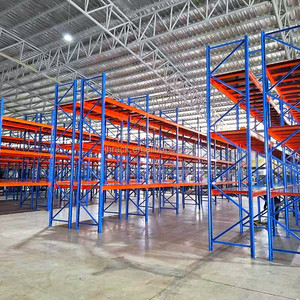
ODM Adjustable Beam Rack Industrial Heavy Duty Storage Shelves System Stacking Units Metal Rack Warehouse Steel Pallet Racking
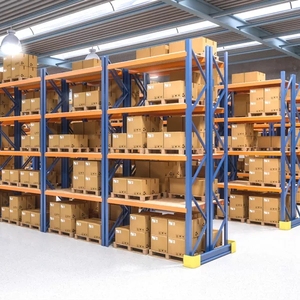
Racks Steel Storage Shelf Industrial Factory Stacking Rack Shelving Heavy Duty Warehouse Pallet Racking System
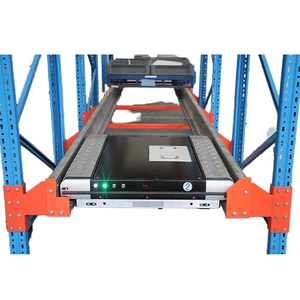
For CE Certified Steel Powder Coated Intelligent Warehouse Rack High Density River-type Radio Shuttle Racking System for
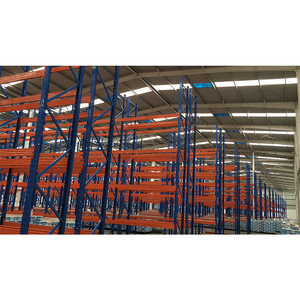
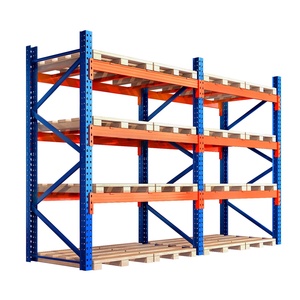
Industrial Heavy Duty Storage Shelves system Stacking Units Metal Rack Warehouse Steel Pallet Racking
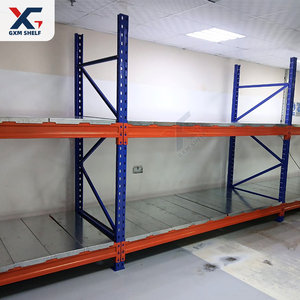
GXM Adjustable Stainless Steel Pallet Rack System Boltless Rack Storage Warehouse Heavy Duty Shelving
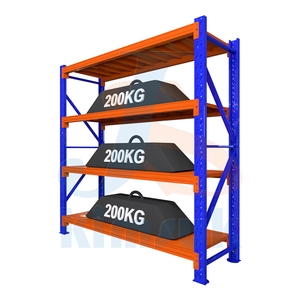
Boltless Adjustable Industrial Garage Heavy Duty Racking System Warehouse Metal Rack Storage Racks Shelving Units Steel Shelf
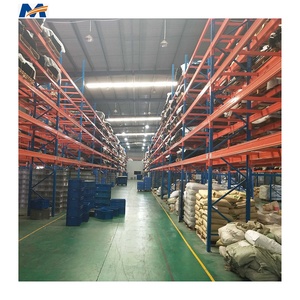
China Estantes Metalicos Heavy Duty Pallet Rack Beams Store Steel Shelving for Warehouse
Custom OEM Push Back Racking Systems: Architecture, Structural Kinematics & Global Export Standards
Modern supply chain infrastructure demands unprecedented vertical space optimization, faster pallet turnaround times, and strict structural compliance under severe dynamic and seismic loading conditions. As a premier global Custom OEM Rack Push Back Exporter, our manufacturing and engineering matrix addresses the core operational limitations of conventional selective pallet racking by integrating precision-engineered nested cart assemblies operating on low-profile inclined steel tracks.
Push back racking systems operate on a Last-In, First-Out (LIFO) inventory management logic. Unlike standard drive-in systems where forklift trucks must physically enter the racking structure—increasing structural damage risks and slowing down cycle times—push back racking allows forklift operators to deposit pallets directly onto nested, wheel-supported steel carts from a single aisle. Each incoming pallet pushes back the previously loaded pallet along an engineered incline gradient (typically calibrated at 2.5% to 3.0%). When a pallet is retrieved, gravity smoothly moves the remaining carts forward to the front aisle picking face.
Core Mechanical Engineering: Nested Cart Systems vs. Flow Track Kinetics
The structural integrity of a custom OEM push back rack system relies heavily on cart-to-rail tolerance, steel gauge uniformity, and bearing resilience. Standard off-the-shelf market solutions frequently suffer from cart jamming, wheel flange wear, or misalignment caused by frame deflection under full loading. Our custom OEM/ODM manufacturing processes implement three crucial technical advancements:
- Low-Profile Heavy-Duty Carts: Fabricated from structural Q355B hot-rolled steel or reinforced Q235B cold-rolled steel, engineered to minimize total system height stackup, thereby preserving vertical warehouse clear height.
- Precision Sealed Ball Bearings & Stainless Flanged Wheels: Rated for ambient, chilled, and sub-zero cold store environments down to -30°C without lubrication freezing or synthetic ring decay.
- Integrated Anti-Lift & Push-Through Safety Catches: Mechanical safety stops welded directly into the rail profile to prevent accidental cart dislodgement during aggressive forklift insertion or seismic tremors.
Deep-Dive System Architecture: 2-Deep to 6-Deep Configurations
Choosing the optimal depth configuration is a critical design phase during technical procurement. As a specialized OEM exporter, we customize structural upright profiles, beam box sections, and slope angles according to customer pallet dimensions (e.g., 1200mm x 1000mm GMA/Euro pallets, 1100mm x 1100mm Asian standard, or custom industrial steel skids).
2-Deep Push Back Racks
Ideal for moderate SKU volumes with high rotation rates. Utilizes a single cart nested on top of the flow track, providing up to 50% storage density gains over standard selective racking while retaining high accessibility.
3 to 4-Deep Push Back Racks
The standard benchmark for manufacturing staging, FMCG, and cold storage facilities. Employs 2 to 3 nested carts operating telescopically over the inclination rail. Delivers maximum ROI on floor area utilization.
5 to 6-Deep Heavy-Duty Systems
Ultra-high-density storage engineered for high-volume, homogenous batch manufacturing. Requires customized structural beam profiles and specialized high-torque forklift interface alignment protection.
Warehouse Density & Throughput Comparison Matrix
When evaluating high-density storage architectures, supply chain engineers must balance space utilization against selectivity and labor throughput efficiency. Below is an engineering benchmark dataset:
| Racking Architecture | Storage Density % | Pallet Selectivity | LIFO / FIFO | Forklift Damage Risk | Cold Chain Space Efficiency |
|---|---|---|---|---|---|
| Selective Pallet Rack | 100% (Baseline) | 100% Immediate | FIFO / LIFO | Moderate | Low (High Air Space Waste) |
| OEM Push Back System | 165% - 180% | High (per lane aisle) | LIFO | Very Low (No entry into rack) | Exceptional (Lower BTU per pallet) |
| Drive-In Racking | 150% - 170% | Very Low (per bay) | LIFO | High (Forklift drives inside) | High |
| Radio Shuttle System | 185% - 200% | Medium (Automated) | FIFO / LIFO | Very Low | Maximum (Requires Power/Battery) |
Enterprise Engineering & Global Export Advantages
As a vertically integrated exporter, our structural design capabilities are grounded in rigorous global standards, including RMI (Rack Manufacturers Institute ANSI MH16.1), European EN 15512, Australian AS 4084, and seismic requirements like Chilean NCh2369 / NCh433 standards.
Countries situated along major seismic fault zones—such as Chile, Peru, Mexico, Japan, and the US West Coast—require specialized rack engineering calculations. A loaded 5-tier push back rack carrying 1,500 kg per pallet position represents an immense dynamic mass during a seismic event. Standard structural frames imported from non-seismic manufacturers often fail under lateral shear stress.
Site-Specific Seismic Calculation
Every exported system undergoes Finite Element Analysis (FEA) to determine column baseplate thickness, anchor bolt shear ratings, and heavy-duty frame bracing patterns customized to regional peak ground acceleration (PGA) factors.
Corrosion Protection & Finishes
We provide ISO 12944-compliant surface treatments, including automated electro-static epoxy powder coatings (minimum 80–100 microns) and continuous pre-galvanized or hot-dip galvanized finishes designed for humid coastal ports and mining dust conditions.
Optimized Export Container Packaging
Components are manufactured in knock-down (CKD/SKD) modules with customized steel bundling, protective plastic wrapping, and corner guards to maximize 40ft HQ container loading yields and prevent transit abrasion damage during ocean freight.
Future Procurement & Technological Trends (2025–2030)
As logistics real estate costs rise globally, warehouse operators are moving away from traditional single-selective storage in favor of hybrid high-density infrastructure. Several key technological trends are reshaping how procurement managers buy and spec Push Back Racking systems:
- Integration with Automated AGVs & AMR Forklifts: Next-generation push back systems are incorporating sensor reflectors and mechanical guide funnels to allow Autonomous Guided Vehicles (AGVs) to perform push-and-pull pallet placements with millimeter accuracy.
- Hybrid Shuttle & Gravity Cart Systems: Combining radio shuttle automated carts on upper levels for long-term storage with lower-tier push back lanes for active fast-moving LIFO picking face buffers.
- Smart Load Sensing & Maintenance Telematics: Embedding micro-sensors inside nested cart rail channels to track load cycles, monitor bearing vibrations, and alert maintenance teams before mechanical failure occurs.
- Sustainable Low-Carbon Steel Sourcing: OEM suppliers are increasingly leveraging recycled scrap steel (EAF process) with validated Environmental Product Declarations (EPD) to support global carbon-neutral warehouse supply chain mandates.
Frequently Asked Questions (FAQ)
Expert answers to standard structural, logistical, and operational questions regarding OEM push back export contracts.
Q: What is the primary difference between Push Back Racking and Pallet Flow Racking?
Push back racking operates on a Last-In, First-Out (LIFO) model using nested carts on a single aisle. Pallet flow racking operates on a First-In, First-Out (FIFO) principle using full-length gravity roller lanes loaded from the rear loading aisle and picked from the front picking aisle.
Q: Can custom OEM push back racks be deployed in cold storage freezer environments?
Yes. Custom OEM push back systems are widely used in cold storage down to -30°C. They require specialized synthetic low-temperature wheel bearings, rust-resistant galvanizing or specialized powder coatings, and specific clearance tolerances to account for thermal metal contraction.
Q: How do you ensure the system meets seismic compliance for specific destination countries?
Our engineering division evaluates site-specific geotechnical parameters, building slab specifications, and country standards (e.g., US RMI, European EN 15512, Chilean NCh2369). We provide signed structural calculation packages verifying anchor shear strength, upright bracing, and beam connector safety locks.
Q: What specialized forklift trucks are required to operate a push back rack?
Standard counterbalanced trucks, reach trucks, or deep-reach forklifts are suitable. No specialized mast attachments are required; however, the forklift must possess sufficient pushing torque to overcome the gravity gradient when pushing back loaded carts.
Q: What is the standard lead time for an OEM export racking order?
Standard manufacturing lead times range from 3 to 5 weeks depending on custom engineering requirements, surface finish selection, and container volume. Ocean freight transit varies by destination port (e.g., 15–25 days for major global routes).
Q: Can damaged components be individually replaced without dismantling the entire bay?
Yes. Our structural components feature modular teardrop or keyhole upright punching with bolted frame bracing. Individual cart assemblies, track sections, or upright column guards can be isolated and replaced cleanly during routine maintenance.
Accelerate Your Warehouse Capacity with Direct OEM Export Solutions
Consult directly with our senior structural engineering team. We provide complete CAD layout design, structural calculations, budget estimations, and custom manufacturing samples for your global logistics projects.