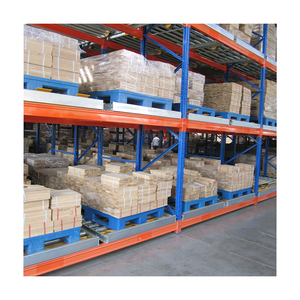
Wholesale & OEM Product Portfolio
High-Performance Industrial Racking & Push-Back Storage Systems
Explore our engineering-led storage solutions designed for heavy-duty logistics, cold-chain environments, and high-density industrial staging.
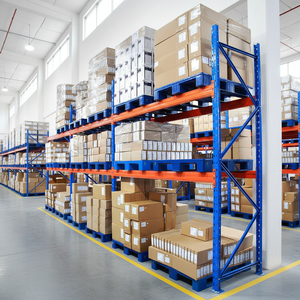
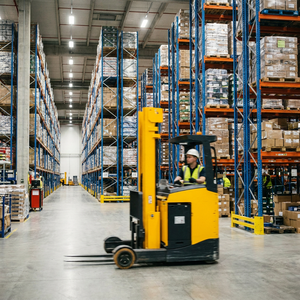
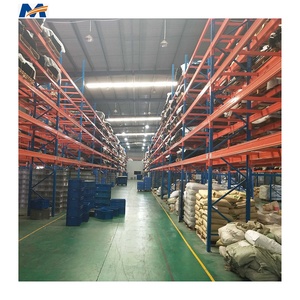
Executive Technical Whitepaper: OEM Push-Back Racks Architecture & Engineering Dynamics
In contemporary industrial warehousing and high-volume fulfillment, optimizing spatial velocity while maximizing cubic storage density remains the core engineering benchmark. As global supply chain networks encounter soaring real estate costs and constrained warehouse footprints, Custom OEM Push-Back Racks have emerged as the premier structural storage methodology. Combining the operational speed of selective racking with the high-density footprint of drive-in systems, push-back racking provides an optimal balance for mid-to-high SKU diversity and high pallet volume management.
1. Kinematic Principles & Mechanical Physics of Push-Back Racking
Push-back racking systems operate on a Last-In, First-Out (LIFO) inventory control dynamic utilizing a series of nested, inclined carts that glide along structural steel rails attached to heavy-duty rack beams. The structural pitch is engineered at an inclined pitch of approximately 2° to 3° (gradient calibrated precisely based on pallet gross weights and friction coefficients).
When loading, the forklift operator places the initial pallet onto the top nested cart. To load subsequent pallets, the operator gently pushes the previously deposited pallet backward using the next pallet being introduced, revealing the secondary nested cart underneath. Upon retrieval, gravity automatically propels the trailing pallets forward to the pick face at a controlled speed when the front pallet is disengaged. This mechanical automation eliminates the need for forklifts to enter the rack structure, virtually reducing collision damage risks to zero while drastically cutting picking cycle times.
2. OEM Metallurgical Standards & FEA Stress Analysis
As a leading OEM Push-Back Rack Manufacturer & Wholesaler, structural safety is governed by rigorous metallurgical criteria and Finite Element Analysis (FEA). We manufacture upright frames and nested carts using high-tensile cold-rolled structural steel, primarily Q235B and Q355B grades (equivalent to ASTM A1011 Grade 50). Beam connectors feature multi-claw drop-in locking lugs engineered to withstand high shear stress and cyclic fatigue resulting from repetitive load pushes.
To ensure structural integrity under seismic conditions (such as the high-seismic active zones governed by Chilean standard NCh2369 and international RMI / ANSI MH16.1 specifications), dynamic seismic modeling is performed. Upright column section profiles, heavy-duty footplates, and chemical anchor bolt configurations are calculated based on site-specific soil classifications and peak ground acceleration parameters.
| Racking Architecture | Storage Density Index | SKU Selectivity Rate | Forklift Travel Velocity | Seismic Resistance Index | Ideal Inventory Rotation |
|---|---|---|---|---|---|
| OEM Push-Back Racks | High (up to 75% gain) | Medium-High (per lane) | Fast (No aisle entry) | Superior (Low center mass) | LIFO (Batch Processing) |
| Selective Pallet Racking | Low (Standard Baseline) | 100% Direct Access | Standard | Standard Base Sizing | FIFO / LIFO Flexible |
| Drive-In Racking | Very High (up to 85% gain) | Low (Single SKU lane) | Slow (In-rack driver travel) | Requires Top/Rear Bracing | LIFO Strict |
| Radio Shuttle System | Ultra-High (up to 90% gain) | Medium (Automated) | Automated High Speed | Advanced Rigid Frame | FIFO / LIFO Hybrid |
3. Cold Storage & Extreme Environmental Customization
One of the key technical applications for wholesale push-back systems is cold-chain storage (temperature regimes ranging from -25°C to -30°C in frozen seafood, meat, and agro-export facilities). At sub-zero temperatures, standard structural steel is prone to hydrogen embrittlement and coating failure. Our custom OEM cold-storage push racks utilize low-temperature impact-resistant steel alloys combined with heavy-duty galvanized structural components and sealed stainless-steel precision ball bearings within the cart assembly. Special low-temperature synthetic lubricants ensure zero cart binding or freeze-up during continuous heavy-cycle operations.
Core Capabilities
Why Tier-1 Buyers Partner With Us
End-to-end manufacturing power, structural engineering oversight, and global compliance.
Custom OEM & ODM Engineering
We tailor nest cart profiles, rail slopes, beam spans, and load capacities precisely according to client floor plans, pallet dimensions, and weight specs.
- Custom 2, 3, 4, 5, and 6-deep pallet configurations
- 3D CAD layout modelling & structural load certification
- Custom color matching & powder coating (RAL specs)
Seismic Safety & Structural Compliance
Engineered specifically for seismically active regions. Compliant with Chilean standards NCh2369 / NCh433, European EN 15512, and US RMI codes.
- Finite Element Analysis (FEA) dynamic strain testing
- Heavier gauge cold-rolled profiles & seismic footplates
- Anchor bolt shear calculations for high-zone stability
Wholesale Manufacturing Scale
State-of-the-art automated roll-forming production lines, robotic welding stations, and continuous electrostatic powder coating chambers.
- ISO 9001:2015 certified factory quality management
- Traceable steel mill certificates (MTC) with every shipment
- High throughput capacity for large-scale logistics hub projects
Future Procurement & Technological Trends in High-Density Storage (2025–2030)
As logistics real estate grows increasingly premium and warehouse automation accelerates, procurement directors and supply chain engineers must anticipate key structural shifts in racking procurement:
1. Hybrid Integration with Semi-Automated AGVs and AMR Fleet
Future push-back rack systems are increasingly being specified with smart optical sensors and low-profile cart designs to facilitate interaction with Autonomous Mobile Robots (AMRs) and Automated Guided Vehicles (AGVs). OEM custom designs now incorporate precision-machined cart positioning stops and laser alignment targets on outer rack beams to enable seamless robotic handling without human driver intervention.
2. IoT-Enabled Structural Health Monitoring (SHM)
With warehouse safety legislation tightening globally (such as Chilean Decree 594 and Law 16.744 obligations, alongside OSHA standardizations), smart racking systems are incorporating embedded strain-gauge sensors and IoT vibration monitors. These sensors detect unintended forklift impacts or structural deflections caused by micro-seismic events in real time, alerting facilities managers before structural failure occurs.
3. Sustainable Steel Sourcing & Decarbonized Manufacturing
Global logistics operators are actively tracking Scope 3 embodied carbon emissions across their supply chains. Tomorrow's OEM procurement requires low-carbon, circular steel sourcing. Our manufacturing facilities utilize recycled scrap steel processed through Electric Arc Furnaces (EAF), coupled with VOC-free powder coatings, reducing the total lifecycle carbon footprint of warehouse racking installations by up to 35%.
Procurement Guidance
Frequently Asked Questions (FAQ) for Wholesalers & Project Buyers
In-depth technical answers addressing structural integrity, OEM capabilities, and procurement logistics.
What is the structural weight capacity limit for custom OEM push-back cart systems?
Our custom OEM push-back racking systems are engineered to handle load capacities ranging from 1,000 kg (2,200 lbs) up to 2,500 kg (5,500 lbs) per pallet position. Cart frames are fabricated using structural steel tubing and heavy-duty steel wheels equipped with sealed precision bearings. For extra-heavy industrial loads, custom multi-wheel cart chassis and reinforced support rails can be designed via FEA analysis to ensure smooth push-and-slide dynamics without structural rail binding.
How does push-back racking compare to drive-in racking in terms of operational efficiency and damage prevention?
While drive-in racking offers high density, it requires forklift trucks to physically enter the rack structure, leading to significantly higher driver cycle times and frequent rack upright collisions. Push-back racking keeps the forklift strictly in the main aisle. Pallets are loaded and retrieved from the front face only, which reduces pallet handling times by up to 50% and dramatically cuts down rack repair and maintenance costs caused by equipment impacts.
Can push-back systems be installed in seismic zones like Chile or California?
Yes. In fact, push-back racking performs exceptionally well under seismic stress when properly engineered. Because nested carts rest at a low center of gravity along inclined rails, lateral restraint is inherently higher than loose stacking. We customize column profiles, increase footplate thickness, upgrade floor anchoring specs, and add heavy-duty structural bracing aligned with seismic standards such as Chilean NCh2369 / NCh433 and US RMI ANSI MH16.1.
What specifications are needed from the buyer to receive a complete OEM custom quotation?
To provide an accurate engineering design and OEM wholesale quote, we require: (1) Warehouse CAD floor plan with clear ceiling height under beams/sprinklers; (2) Pallet dimensions (Length x Width x Height including cargo overhang); (3) Maximum and average pallet gross weight; (4) Required lane depth (2, 3, 4, 5, or 6 deep); (5) Operating temperature range (ambient, chilled, or -30°C freezing); and (6) Forklift reach height and mast clearance metrics.
What rust prevention and surface finishes are available for high-humidity or cold storage environments?
For standard ambient warehouses, we apply an electrostatic thermosetting powder coat finish (60–80 microns thickness) offering excellent impact and scratch resistance. For high-humidity, marine, or cold-chain frozen environments (-25°C to -30°C), we recommend Hot-Dip Galvanizing (HDG) per ISO 1461 standards or zinc-rich epoxy priming, which provides decades of cathodic corrosion protection against condensation and oxidation.
How are OEM wholesale orders packaged and loaded for international ocean freight container shipping?
Components are bundled using heavy-duty steel strapping, edge protectors, and waterproof plastic shrink wrapping. Upright frames and beams are nested on wooden skids tailored for forklift unloading at destination ports. Push carts and hardware are packed into reinforced ocean-worthy plywood crates. Our logistics team optimizes container volume loading (using 40ft High Cube containers) to maximize steel tonnage per shipment and minimize freight cost per pallet position.
Optimize Your Facility With Custom OEM Push Racking
Connect directly with our structural storage engineers to review your warehouse layout, compute load calculations, and request a factory-direct wholesale quotation.