Featured Industrial Racking & Shelving Portfolio
Explore our custom OEM engineered storage systems designed for high-density warehousing, logistics hubs, and heavy-duty structural loading requirements.
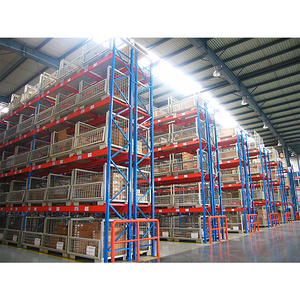
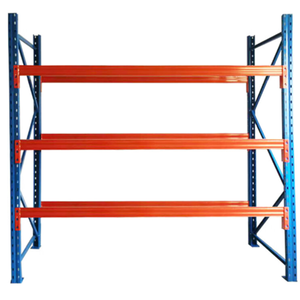
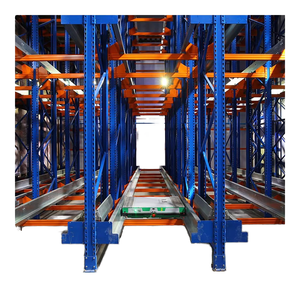
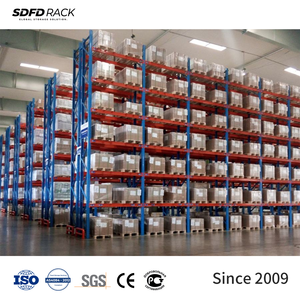
Technical White Paper: The Architecture of Custom OEM Longspan Racking Systems
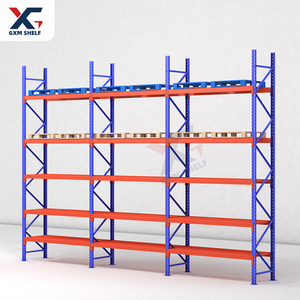
Modern supply chain dynamics require industrial facilities to optimize every vertical meter of storage space while maintaining structural integrity, operational safety, and rapid inventory access. As a premier custom OEM longspan racking manufacturer and global exporter, our engineering philosophy bridges cold-rolled structural metallurgy with advanced finite element analysis (FEA). Longspan racking represents the critical operational middle-ground between lightweight boltless shelving and heavy-duty selective pallet racking—delivering unmatched flexibility for manual hand-loading, carton picking, and medium-to-heavy bulky SKU management.
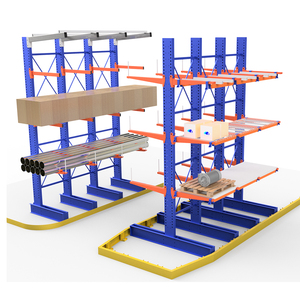
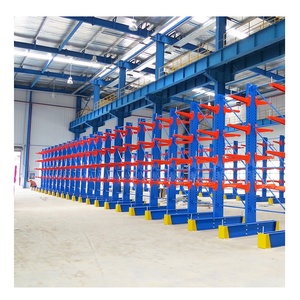
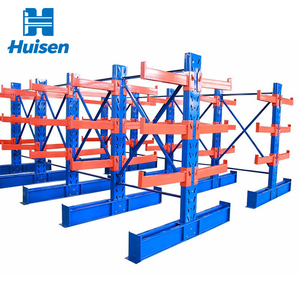
Unlike standard off-the-shelf shelving units, engineered OEM longspan racking systems utilize high-yield strength steel profiles (typically Q235B to Q355B structural grade) designed to withstand rigorous dynamic loading cycles, accidental forklift side-impacts, and localized seismic activity. The system consists of upright frames, step or Z-shaped load beams, safety locking pins, and modular decking options—ranging from zinc-plated wire mesh and drop-in steel panels to high-density structural particle boards.
1. Structural Anatomy & Metallurgical Integrity
The structural backbone of an OEM longspan racking system lies in its upright profile roll-forming geometry. Utilizing continuous multi-stage roll-forming lines, the upright columns feature complex multi-ribbed cross-sections. These multi-bend profiles dramatically elevate the moment of inertia, counteracting torsional buckling under extreme axial load conditions.
Beam-to-frame connections are engineered with multi-claw heavy-duty connectors. These connectors utilize a tapered wedge-lock action: as load weight increases, the mechanical interlock between the beam claw and the upright teardrop/diamond punching tightens, eliminating beam rotation and lateral deflection. All components are manufactured under strict ISO 9001 quality protocols, fulfilling stringent European FEM 10.2.02 and American ANSI MH16.1 specifications.
High-Grade Cold-Rolled Steel
Exclusively fabricated from certified Q235B and high-yield Q355B steel coils, ensuring superior tensile strength and ductility under maximum deflection limits (L/200).
Adjustable 50mm / 75mm Pitch
Uprights feature continuous precision-punched slots allowing 50mm or 75mm vertical level adjustments, maximizing storage cube utilization based on changing SKU heights.
Surface Finish & Anti-Corrosion
Automated 9-stage pre-treatment wash combined with thermosetting epoxy polyester powder coating (60–80 microns), or hot-dip galvanizing for coastal and cold storage facilities.
2. Engineering Specifications & Load Capacity Matrix
To assist global procurement managers, EPC contractors, and facility engineers in specifying customized OEM longspan racking configurations, the technical parameter matrix below outlines standard structural thresholds:
| System Parameter | Light-Medium Longspan | Heavy-Duty OEM Longspan | Structural Extra Longspan |
|---|---|---|---|
| Load Rating per Level | 200 kg – 500 kg | 500 kg – 1,000 kg | 1,000 kg – 1,800 kg |
| Standard Span Widths | 1,200 mm – 1,800 mm | 1,800 mm – 2,500 mm | 2,500 mm – 3,300 mm |
| Frame Depth Options | 400 mm – 600 mm | 600 mm – 1,000 mm | 800 mm – 1,200 mm |
| Standard System Height | 2,000 mm – 3,500 mm | 3,000 mm – 6,000 mm | Up to 12,000 mm (Multi-Tier) |
| Beam Profiles | Step Beam (50x30 mm) | Z-Beam / Box Beam (60x40 to 80x50 mm) | Structural C-Channel / Heavy Box |
| Decking Surface Types | Steel Panels / Mesh Deck | Pre-Galvanized Steel / Mesh / HDF | Heavy Bar Grating / Reinforced Steel |
| Seismic Standard Compliance | NCh433 / FEM 10.2.02 | NCh2369 / RMI ANSI MH16.1 | Zone 4 High-Seismic Anchor Specifications |
Enterprise Superiority: OEM Manufacturing & Global Export Execution
Operating as an international industrial OEM enterprise, our manufacturing infrastructure is built upon single-source accountability. From metallurgical procurement and CAD layout design to FEA stress calculations, automated cold-roll forming, robotic laser welding, and global export container loading—we maintain strict end-to-end quality control.
Facilities across South America (including seismic hotbeds like Chile), North America, Europe, and Australia demand storage engineering tailored to local geographical constraints. Our engineering teams specialize in site-specific structural modeling, ensuring that racking installations fully comply with Chilean NCh2369 (Industrial Seismic Design) and NCh433 standards, as well as international building codes.
Seismic-Ready Anchoring & Footplates
Engineered baseplates with heavy-duty chemical or mechanical expansion anchors, calculating concrete slab shear stress and ground acceleration metrics to prevent post-earthquake rack collapses.
Custom OEM/ODM Modular Tooling
Full support for OEM branding, specialized beam profile rolling, custom color matching (RAL system), private label packaging, and bespoke component punching based on client drawings.
Turnkey Export & Logistics Control
Optimized container bundling reduces shipping volumetric space by up to 25%. Includes complete export documentation, mill test certificates (MTC), and step-by-step installation manuals.
Future Sourcing Trends in Longspan Racking & Industrial Storage (2025–2035)
The global warehousing landscape is undergoing a structural paradigm shift driven by e-commerce micro-fulfillment, rapid SKUs proliferation, automated internal logistics, and strict corporate sustainability targets. Procurement managers and supply chain directors must evaluate the following structural trends when planning capital expenditure (CAPEX) for racking infrastructure:
1. Hybrid Integration: Longspan Racking Meets AMR & Pick Modules
Traditional manual hand-pick longspan shelving is increasingly transformed into multi-tier pick modules integrated with Autonomous Mobile Robots (AMRs) and automated conveyor loops. OEM manufacturers must design longspan framework profiles capable of supporting mezzanine floor decks, localized dynamic loads, cat-walk structures, and integrated wire mesh drop-zones.
2. Green Steel & Sustainable Supply Chains (ESG Alignment)
Decarbonization policies across Europe and the Americas require industrial equipment suppliers to provide transparent Environmental Product Declarations (EPDs). Future racking procurement prioritizes manufacturers utilizing green electric-arc furnace (EAF) steel, eco-friendly zero-VOC powder coatings, and recyclable steel components, ensuring compliance with global scope 3 emission goals.
3. Cold Chain & Harsh Environment Specialization
With rapid expansion in agricultural exports, seafood processing, and pharmaceutical logistics, high-density longspan shelving must withstand sub-zero temperatures (down to -30°C) without suffering thermal embrittlement. Pre-galvanized structural members and hot-dip galvanized coating processes ensure immunity against moisture condensation and chemical washdowns.
Frequently Asked Questions (FAQ) for Industrial Procurement
Clear, authoritative answers to common engineering, OEM sourcing, and structural design questions regarding customized longspan racking systems.
What is the fundamental difference between Longspan Racking and Pallet Racking?
How do you ensure structural compliance in seismically active regions like Chile or California?
Can custom OEM dimensions and profile gauges be produced for specific warehouse layouts?
Which decking material is recommended: Steel Panels, Wire Mesh, or Particle Board?
- Steel Panels (Powder-Coated or Galvanized): Best for smooth hand-sliding of cartons, hygienic environments, and high durability against liquid spills.
- Wire Mesh Decking: Required by fire safety codes in sprinkler-equipped facilities to allow water penetration and lighting airflow.
- High-Density Particle Board / HDF: Cost-effective solution for dry, ambient archive storage and light industrial non-corrosive hand-picking.
What is the standard manufacturing lead time and global export packaging standard?
How often should longspan racking systems be inspected for structural health?
Request an Engineered Custom OEM Longspan Racking Quotation
Connect directly with our senior structural engineers and global trade team. Send us your facility floorplan, load requirements, and spatial constraints for a free CAD layout proposal and factory-direct pricing.