Featured Industrial Storage Racking Systems
Precision-engineered cold-rolled steel racking engineered to AS4084, FEM 10.2.02, ANSI MH16.1, and RMI standards.
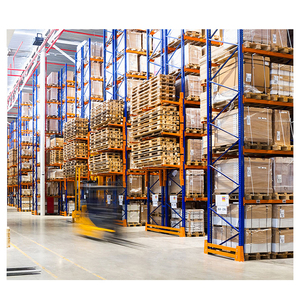
Adjustable Heavy Duty Pallet Rack System Selective Steel Beam Racking for Industrial Warehouse Storage Management
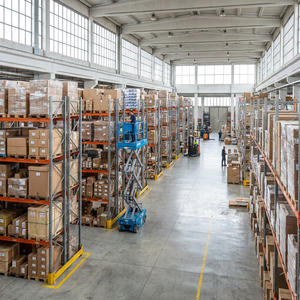
Selective Pallet Storage Rack Steel Warehouse Racking System High Load Capacity
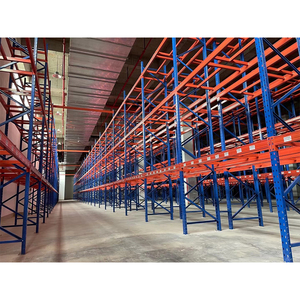
Heavy Duty Warehouse Steel Pallet Racking System With Galvanized Steel Panel Rack
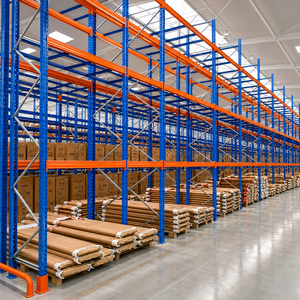
Warehouse Storage Rack System High Density Porta Pallet 1000kg Q235B Cold Rolled Steel Heavy Duty Pallet Rack Warehouse
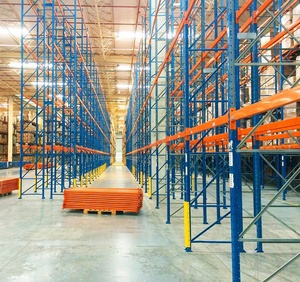
Warehouse Storage Racking System Industrial Metal Racks Heavy Duty Selective Pallet Racking
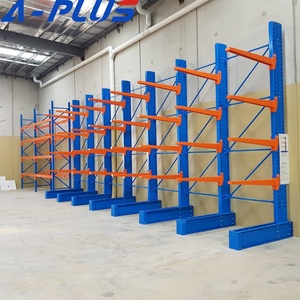
Heavy Duty 5-Layer Industrial Warehouse Shelving Steel Cantilever Rack for Pallet Storage Metal Stacking Rack
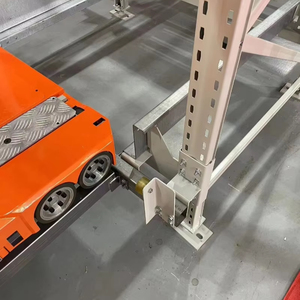
Four Way Radio Shuttle Rack Smart Pallet Rack System Shuttle Pallet Racking Warehouse ASRS Shuttle Racking System
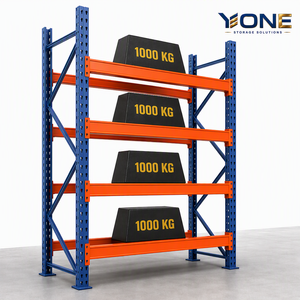
Durable Steel Storage Rack Heavy Duty Pallet Racking for Industrial Warehouse Storage with Safety Accessories
Structural Mechanics & Material Standards in Wholesale Industrial Storage Racks
An expert analysis on yield strength selection, seismic dynamic loading calculations, and surface metallurgy for modern distribution hubs.
Selecting structural storage infrastructure for modern logistics centers is no longer merely a purchasing decision; it is a critical structural engineering endeavor. As global supply chains demand higher cubic storage density, faster inventory turnover, and integration with autonomous material handling equipment, the structural integrity of industrial warehouse racks dictates operational safety and financial efficiency. As a leading China wholesale industrial storage shelves racks manufacturer and factory, our engineering methodologies are grounded in rigorous structural mechanics, finite element analysis (FEA), and stringent global quality compliance.
1. Raw Material Grade Science: Q235B vs. Q355B Cold-Rolled Structural Steel
The structural reliability of heavy-duty warehouse racking begins at the steel coil level. Primary structural uprights (columns) and load-bearing beams are manufactured from high-tensile structural carbon steel coils certified under GB/T 700 or GB/T 1591 specifications, corresponding precisely to international standards ASTM A1011 SS Grade 36 and Grade 50, or European EN 10025 S235JR and S355JR.
- Q235B Cold-Rolled Steel: Exhibits a yield strength ($\sigma_y$) of $\ge 235 \text{ MPa}$ and ultimate tensile strength ($\sigma_u$) ranging from $370 \text{ to } 500 \text{ MPa}$. Ideal for standard selective pallet racking, light-to-medium longspan shelving, and mezzanine secondary support structures where uniform weight distribution allows cost-effective spatial loading.
- Q355B Low-Alloy High-Strength Steel: Engineered with a yield strength ($\sigma_y$) of $\ge 355 \text{ MPa}$ and tensile strength of $470 \text{ to } 630 \text{ MPa}$. Specified for high-bay racking systems exceeding 10 meters in height, heavy-duty drive-in systems, and automated radio shuttle channels subject to concentrated point loads exceeding 1,500 kg per pallet position. Using Q355B reduces overall steel profile deadweight while delivering a 51% increase in elastic deformation resistance.
2. Upright Profile Geometry & Moment-Resisting Beam Connectors
Column cross-sectional geometry dictates resistance to flexural-torsional buckling. Modern automated roll-forming lines execute multi-stage continuous cold-bending (up to 20-24 rolling passes) to form complex omega ($\Omega$) open profiles with return flanges. Standard profile pitches of 50mm, 75mm, or 76.2mm (3 inches) provide vertical height adjustment flexibility.
The connection between the horizontal beam and the vertical upright represents a critical structural hinge. Our factory utilizes multi-claw (3 to 5 claw) drop-forged or heavy-gauge stamped steel connectors equipped with automated spring-loaded safety locks. Under transverse shear and bending moment loads, these semi-rigid joints distribute kinetic energy away from the column web, restricting vertical beam deflection to well below the maximum allowable limit of $L/200$ (where $L$ is the clear beam span length).
3. Surface Finishing Technology: Salt Spray & Environmental Protection
Industrial storage racks are subjected to aggressive operating environments—from sub-zero humidity inside cold storage freezers ($-25^\circ\text{C}$ to $-30^\circ\text{C}$) to coastal salt air and chemical processing plants. Our factory executes a standardized 9-stage surface preparation and thermosetting epoxy-polyester powder coating workflow:
- Pre-treatment: Automatic online degreasing, multi-stage water rinsing, zinc phosphating, and deionized water sealing to create an anti-corrosive micro-crystalline conversion layer.
- Electrostatic Powder Coating: Application of premium resin powders (60 to 80 microns thickness) cured at $190^\circ\text{C} \text{ to } 200^\circ\text{C}$, yielding surface hardness $\ge 2H$ (Pencil Test) and passing 500-hour ASTM B117 neutral salt spray corrosion resistance testing.
- Hot-Dip Galvanizing (HDG): For outdoor pallet racking, coastal port logistics hubs, and chemical stores, structural components undergo hot-dip galvanization conforming to ISO 1461 / ASTM A123, applying a zinc coating exceeding $65 \mu\text{m}$ ($450 \text{ g/m}^2$) for an operational service life exceeding 25 years without maintenance coating.
Why Direct Sourcing from China Manufacturing Hubs Yields Strategic Advantage
Evaluating OEM/ODM infrastructure, structural certification capabilities, and end-to-end quality assurance control.
Automated Roll-Forming Lines
Our facility operates over 28 continuous automated cold roll-forming production lines equipped with real-time laser measurement sensors, ensuring dimensional hole-pitch tolerances within $\pm 0.1\text{mm}$ across a 12-meter continuous upright length.
Robotic Arc Welding Precision
Beam connectors and heavy-duty structural baseplates are joined using Japanese Yaskawa & ABB 6-axis robotic welding stations utilizing shielded gas arc welding (CO2/Argon mix), eliminating human welding flaws and ensuring 100% weld root penetration.
Certified Structural Compliance
All structural design calculations undergo Finite Element Method (FEM) analysis. Complete system designs comply with AS4084-2012 (Australia), FEM 10.2.02 (Europe), RMI ANSI MH16.1 (USA), and ISO 9001:2015 quality control directives.
End-to-End OEM/ODM Flexibility
From initial CAD floor layout optimization and 3D BIM modeling to customized beam color coding, special wire mesh deck configurations, and custom packaging for containerized sea transport, we offer complete global procurement support.
Industrial Warehouse Storage Racks Engineering Matrix
Compare structural racking configurations based on floor space utilization, SKU selectivity, and operational ROI.
| Storage Racking System Type | Selectivity (SKU Access) | Storage Density (%) | Max Load Capacity per Level | Recommended Warehouse Application |
|---|---|---|---|---|
| Heavy Duty Selective Pallet Racking | 100% Immediate Access | 40% - 50% | 1,000 kg – 4,500 kg | FMCG, 3PL distribution centers, high SKU variety logistics hubs. |
| High-Density Drive-In Racking | LIFO (Last-In, First-Out) | 65% - 75% | 1,000 kg – 1,500 kg | Cold storage facilities, seasonal goods, low SKU count bulk inventory. |
| Four-Way Radio Shuttle ASRS Racking | FIFO / LIFO Automated | 80% - 85% | 1,500 kg per Shuttle unit | Smart automated warehouses, high-volume food & beverage, pharmaceutical. |
| Heavy-Duty Cantilever Racking | 100% Linear Access | 50% - 60% | 500 kg – 3,000 kg per Arm | Extruded aluminum profiles, steel pipes, timber, building materials. |
| Multi-Tier Mezzanine Rack Floors | 100% Manual / Bin Picking | Double/Triple Floor Surface | 300 kg – 1,000 kg / sq.m | E-commerce fulfillment centers, automotive spare parts, small item storage. |
Future Procurement Trends in Wholesale Industrial Storage Infrastructure
Key technological, environmental, and automated paradigm shifts transforming global warehouse architecture over the next decade.
1. Transition Toward Automated & High-Density Shuttle Storage (ASRS)
Skyrocketing industrial real estate costs and chronic warehouse labor shortages worldwide are driving massive capital migration from standard manual selective pallet racking to semi-automated and fully automated storage systems. The adoption of 4-Way Radio Shuttle systems and Stackers Cranes (ASRS) is expanding at a CAGR exceeding 14.5% globally. Modern supply chain procurement strategies prioritize vertical spatial cube utilization up to 30+ meters high, where structural racking acts not only as static storage but as the structural frame for rack-clad buildings (Self-Supporting Warehouse Systems).
2. Structural Seismic Resilience & Dynamic Load Compliance
Following major global seismic events across the Pacific Rim (Chile, USA West Coast, Japan, New Zealand), municipal building code authorities and multinational insurance underwriters now demand documented seismic engineering proof for industrial rack installations. Future procurement contracts explicitly require dynamic response spectrum calculations using Finite Element Analysis (FEA) software. Baseplates are now engineered with energy-dissipating anchor assemblies, thicker cold-rolled heavy base flanges, and localized upright column guards to withstand lateral acceleration forces without structural collapse.
3. Green Steel, Carbon Auditing & ESG Procurement Metrics
As global corporate sustainability regulations (such as EU CBAM - Carbon Border Adjustment Mechanism) take full effect, international enterprise buyers are mandating carbon footprint disclosure for industrial steel goods. Future-ready Chinese rack manufacturers are integrating electric arc furnace (EAF) green steel coil procurement, low-VOC solvent-free powder coatings, and solar-powered factory production lines. Sourcing from factories with verifiable ISO 14001 Environmental Management certification and Environmental Product Declarations (EPD) is rapidly becoming a mandatory metric in enterprise RFPs.
4. Smart IoT Integration & Real-Time Structural Health Monitoring
The incorporation of IoT sensors directly into critical upright columns and heavy beam profiles represents the next milestone in industrial rack design. Strain gauges, tilt sensors, and wireless impact detectors mounted on column protectors transmit real-time stress telemetry to warehouse management software (WMS). Operators are instantly alerted to minor forklift collisions, localized overload conditions, or structural deflection over time—transforming preventative maintenance into data-driven predictive asset management.
Industrial Storage Racking Procurement FAQ
Addressing critical technical, regulatory, and logistics queries for international procurement directors and structural engineers.
What structural calculation standards does your factory follow for wholesale export orders?
How do I choose between Q235B and Q355B steel for my warehouse racking project?
What surface coating is recommended for cold storage warehouses operating below -20°C?
What is the lead time for containerized wholesale OEM/ODM manufacturing orders?
Can your factory manufacture custom upright profiles and beam connector designs for existing rack expansions?
How are seismic safety and anti-collapse protection engineered into heavy-duty storage racks?
Optimize Your Warehouse Capacity with Direct Factory Engineering
Request a comprehensive factory direct quote, custom CAD floor layout, and structural calculation report from our senior technical engineering team today.
Send an Inquiry