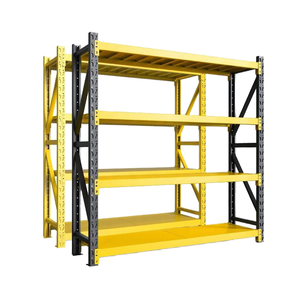
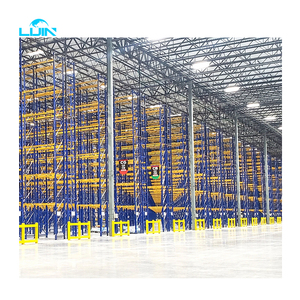
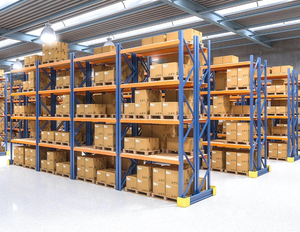
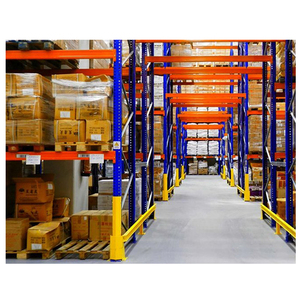
China Top Warehouse Racking Beams Suppliers & Wholesalers
Engineering-grade structural analysis, cold-roll beam physics, OEM manufacturing trends, and global supply chain strategies.
Catalog Overview
High-Performance Warehouse Racking Systems & Beams
Explore heavy-duty, CE-certified selective racking, step beams, box beams, and high-density radio shuttle systems directly from certified Chinese OEM manufacturers.
An in-depth analysis for procurement heads, warehouse operations directors, and structural engineers evaluating Chinese steel rack beam manufacturers.
1. The Physics of Horizontal Load-Bearing Members in Pallet Racking
Warehouse racking beams are the primary horizontal load-bearing components of any industrial storage matrix. They transfer structural live loads—including palletized merchandise, dynamic impact during forklift placement, and localized point loads—directly to the vertical upright frames. The engineering integrity of a beam is dictated by its flexural rigidity, yield strength ($\sigma_y$), section modulus ($Z$), and resistance to lateral-torsional buckling (LTB).
When evaluating suppliers from China, global buyers must scrutinize the raw material steel specification. High-tier Chinese manufacturers utilize prime cold-rolled structural steel, predominantly Q235B ($\sigma_y \ge 235 \text{ MPa}$) and high-strength Q355B / Q355D ($\sigma_y \ge 355 \text{ MPa}$, equivalent to European S355 grade). The adoption of micro-alloyed steel grades allows for thinner wall profiles without compromising load-bearing performance, effectively reducing dead weight while maintaining a safety factor of 1.50 to 1.65 under FEM 10.2.02 and RMI (Rack Manufacturers Institute) standards.
Information Gain Insight: The structural reliability of a racking beam does not rely solely on steel thickness. The mechanical geometry—specifically the depth of the top step ledge, the corner radius profile during cold-forming, and the continuous seam weld penetration—accounts for up to 42% of the beam's flexural moment of inertia ($I_x$).
2. Comparative Analysis of Racking Beam Profiles
Modern warehouse logistics utilizes three core beam geometry profiles depending on the decking substrate and load distribution requirements:
Box Beams (Twin C-Section)
Engineered by interlocking and continuously welding two cold-formed C-channels face-to-face. Offers exceptional torsional resistance and symmetrical moment of inertia. Ideal for standard pallets and heavy unit loads up to 5,000 kg per level.
Step Beams
Feature a recessed 1/2-inch or 7/8-inch internal ledge along the upper inner edge. Designed specifically to flush-mount wire mesh decking, cross bars, and steel shelf panels without increasing overall beam height stackup.
Structural Channel Beams
Fabricated from hot-rolled structural steel C-channels. Exceptional resistance to forklift impact and abusive environments. Specified for heavy manufacturing plants, freezer rooms, and outdoor high-load operations.
The following engineering baseline represents standard OEM specifications for cold-rolled box beams manufactured in major Chinese production hubs (Nanjing, Jiangsu, and Shandong regions):
Beam-to-column connection is a critical node for frame stability. Top-tier Chinese manufacturers utilize cold-stamped end connectors with precision-machined connector claws (3-hook, 4-hook, or 5-hook configurations). The key failure mode in warehouse impacts is beam dislodgement caused by upward forklift force during pallet retrieval.
To prevent catastrophic upward dislodgement, modern designs integrate automatic gravity safety locks or zinc-plated spring-steel lock pins. Under AS4084-2012 and EN 15512 standards, beam connectors must withstand an upward vertical shear force of at least 5.0 kN without shearing or disengaging from the upright perforations.
Factory Competence
Why Partner with Leading Chinese Racking Beam Wholesalers?
Combining automated robotic production lines with rigorous international quality control standards.
Automated Continuous Roll-Forming
State-of-the-art 24-station automated roll-forming mills guarantee dimensional tolerance within ±0.5mm across 4-meter beam lengths, ensuring seamless assembly on site.
Robotic Seam Welding (ISO 3834)
Dual-station ABB and Fanuc robotic welding cells perform full-length continuous seam welding along the channel joint, eliminating manual operator variance and micro-porosity.
Electrostatic Powder Coating
Automated 9-stage pre-treatment wash (degreasing, phosphating, deionized rinse) followed by thermosetting epoxy-polyester powder coating cured at 200°C for superior impact and salt-spray resistance.
Strategic Foresight
Future Procurement Trends in Industrial Storage Racking
Key technological shifts shaping global procurement decisions for the next decade.
1. Integration with Automated Storage and Retrieval Systems (AS/RS)
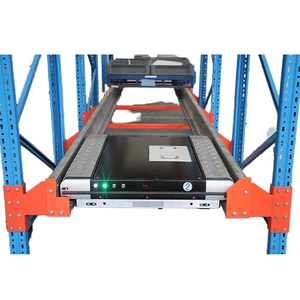
As logistics shifts toward fully automated dark warehouses, structural beam tolerances are becoming radically tighter. Standard manual forklift racking allows for flexural deflection of $L/200$. However, AS/RS and Radio Shuttle systems require ultra-rigid beams rated for $L/300$ or $L/400$ deflection limits to prevent sensor misalignment on automated cranes and shuttles.
2. Decarbonization & Green Steel (CBAM Readiness)
European and North American buyers are increasingly subjected to carbon border adjustment mechanisms (such as the EU CBAM). Top Chinese racking wholesalers are pivoting to green steel inputs, utilizing Electric Arc Furnace (EAF) steelmaking coupled with solar-powered coating lines to significantly reduce Scope 1 and Scope 2 carbon footprints per metric ton of finished rack.
3. High-Ductility Cold-Chain Coatings
With the explosive growth of global cold-chain logistics for pharmaceuticals and frozen perishables, standard powder coatings face micro-fracturing at sub-zero temperatures (below -20°C). Chinese R&D labs have developed modified cold-resilient polymer coatings and continuous hot-dip galvanizing options ($Z275$ zinc coating) that maintain flexibility and prevent steel oxidation in high-humidity ambient-to-freezer transition zones.
Clear answers to engineering, quality compliance, shipping, and custom manufacturing queries.
What is the standard deflection limit for warehouse racking beams under full load?
Under international standard FEM 10.2.02 and RMI specifications, the maximum allowable vertical deflection ($\delta$) for selective pallet rack beams is $L/200$, where $L$ represents the clear span of the beam between upright posts. For example, a 2700mm beam under maximum rated capacity must not deflect vertically by more than 13.5mm. For automated shuttle or VNA systems, tighter deflection limits ($L/300$ or $L/400$) are specified.
How do I determine whether to choose Box Beams or Step Beams for my facility?
Choose Step Beams if your warehouse relies on drop-in wire mesh decking, solid steel shelf panels, or specialized cardboard pick modules, as the internal step holds accessories flush with the top edge. Choose Box Beams if you store heavy standard pallets directly on structural steel without decking, as box profiles offer higher torsional stiffness per kilogram of steel.
Are Chinese structural racking beams compliant with local seismic codes (e.g., US RMI, Chilean NCh2369, European EN 15512)?
Yes. Leading Chinese manufacturers perform site-specific structural calculations and finite element analysis (FEA) to ensure compliance with regional seismic codes. This includes custom end-connector weld configurations, enlarged base plates, heavy-duty frame bracing, and certified yield strength testing reports (EN 10204 3.1 certification).
What is the typical manufacturing lead time and container packing efficiency for bulk beam orders?
Standard production lead time for OEM custom racking beams ranges from 14 to 25 days depending on tonnage. Beams are bundled with protective steel strapping, plastic film wrapping, and wooden skids to prevent transit friction. A standard 40ft High Cube container can accommodate approximately 22 to 26 metric tons of pallet rack beams.
Can Chinese racking factories manufacture custom beam connector pitches to fit existing rack brands?
Yes. Most premier OEM suppliers maintain custom stamping tooling for major global hole pitches, including 50mm, 75mm, 76.2mm (3-inch), and teardrop style patterns, allowing seamless beam replacements or facility expansions for existing installations.
Optimize Your Warehouse Infrastructure Today
Download our complete 2025 Product Catalog, engineering dynamic load tables, and factory price list directly from our technical sales team.