High-Performance Storage Racking Systems
Explore our export-grade, structural steel racking portfolio manufactured to international ISO 9001, FEM, RMI, and NCh2369 seismic compliance standards.
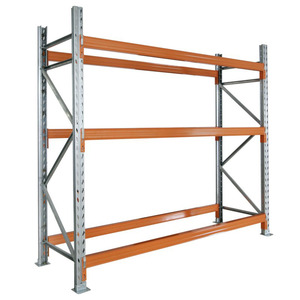
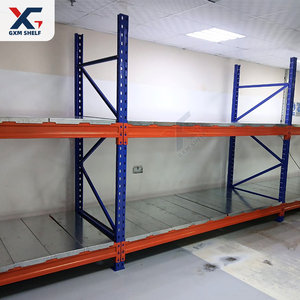
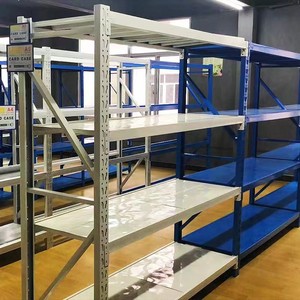
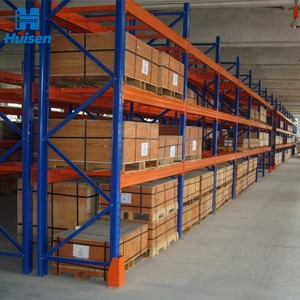
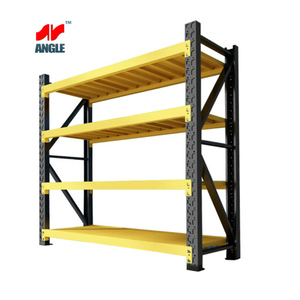
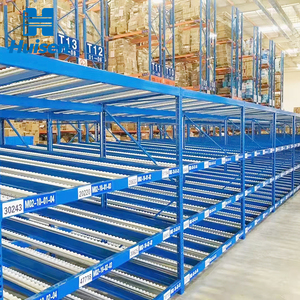
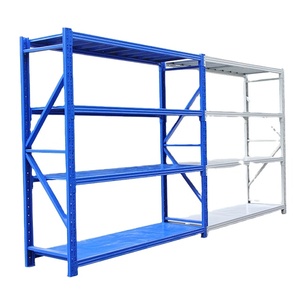
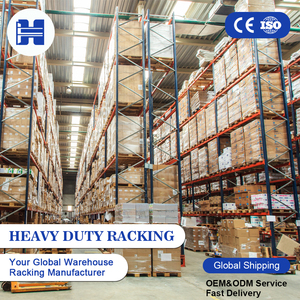
Manufacturing Capabilities & Engineering Rigor
From metallurgical selection to finite element stress analysis, we provide end-to-end industrial storage engineering tailored to regional building safety codes and operational demands.
Structural Steel Integrity
Utilizing certified high-tensile cold-rolled steel (Q235B and Q355B grades), our racking profiles feature engineered geometry designed for maximum load-to-weight ratios, ensuring exceptional structural rigidity under full vertical loads.
Seismic-Ready Calculations
Engineered to withstand high dynamic seismic accelerations in active fault zones worldwide. Every project includes site-specific load calculations adhering strictly to NCh2369, NCh433, RMI, and EN 15512 standards.
Automated Manufacturing
Equipped with 20+ automated continuous roll-forming lines, robotic welding stations, and an advanced 18-stage epoxy powder coating line ensuring high corrosion resistance for harsh chemical or cold storage environments.
Comprehensive Strategic Guide: Industrial Warehouse Racking Engineering & Global Procurement
As modern global supply chains shift toward high-density automation, accelerated throughput, and rigorous workplace safety compliance, selecting a qualified China rack storage warehouse manufacturer and wholesaler requires looking far beyond basic price per kilogram metrics. Storage racking systems represent the structural backbone of physical logistics infrastructure—directly influencing warehouse footprint efficiency, labor productivity, insurance premiums, and operational continuity in the event of natural seismic disturbances.
1. Structural Metallurgy and Finite Element Analysis (FEA) in Modern Racking
Industrial pallet racking is subjected to complex stress states, including static gravity loads, dynamic forklift impacts, torsional twisting during loading cycles, and horizontal lateral shear during seismic events. Leading Chinese racking manufacturers utilize sophisticated Finite Element Analysis (FEA) software to simulate dynamic stress distribution across beam-to-upright connectors, baseplates, and bracing trusses before physical roll-forming begins.
Key technical benchmarks for premium OEM racking include:
- Steel Material Traceability: Exclusive sourcing of prime structural steel coils (Q235B, Q355B, SS400, or high-yield S355JR) with mill test certificates guaranteeing mechanical yield strength exceeding 235–355 MPa.
- Hook-and-Slot Connector Precision: 3-to-5-hook teardrop or diamond connector lugs stamped to tight tolerances (±0.1mm), creating self-locking mechanical connections that resist beam rotation and deflection under maximum bending moments.
- Safety Factor Ratios: Engineering design safety margins exceeding structural load capacity thresholds by at least 1.55 to 1.95 times, complying with European FEM 10.2.02 and American RMI specifications.
2. Cold Chain Storage Engineering & Environmental Resilience
Refrigerated and sub-zero frozen fulfillment centers (operating between -25°C and -30°C) introduce extreme structural challenges, including thermal expansion/contraction stresses, severe humidity condensation, and ice-induced surface slipperiness. Standard painted steel profiles degrade rapidly in cold-chain environments, leading to subsurface oxidation and structural embrittlement.
To mitigate cold-storage failures, heavy-duty racking design mandates specialized surface treatment protocols:
- Hot-Dip Galvanizing (HDG): Immersion of fabricated steel components into molten zinc at 450°C, producing a zinc-iron alloy coating exceeding 65–85 microns in thickness that provides cathodic protection against severe atmospheric humidity.
- High-Ductility Low-Temperature Steel: Micro-alloyed steel formulations maintaining Charpy V-notch impact toughness at sub-zero temperatures to eliminate brittle fracture risks under heavy forklift loading.
- Thermal Isolation Baseplates: High-density polymer insulating pads placed beneath steel baseplates to prevent frost-heave forces from damaging structural concrete slabs.
3. Global Seismic Compliance: Engineering for High-Risk Earthquake Zones
Warehouses located along tectonic plate boundaries—such as the Pacific Ring of Fire encompassing South America (Chile, Peru), North America (West Coast US/Mexico), and Asia-Pacific—require custom structural rack engineering. Under severe ground motion acceleration ($a_g$), unanchored or inadequately braced racking structures risk progressive collapse, triggering catastrophic inventory destruction and life safety threats.
Seismic-ready racking installations manufactured in China incorporate key design enhancements:
- Enlarged Baseplates & Heavy-Duty Mechanical/Chemical Anchors: Baseplates with increased surface area and dual-anchor bolt patterns engineered to distribute tension uplift and base shear directly into structural concrete foundation slabs.
- Dynamic Bracing Trusses: Reinforced diagonal and horizontal frame bracing profiles utilizing structural tubular sections instead of light-gauge open channels to increase lateral stiffness.
- Top-Tie Portals & Over-Aisle Ties: Overhead portal frames interconnecting single and double rack rows across forklift access aisles, transforming isolated rack columns into unified three-dimensional structural grids.
Future Procurement Trends in Industrial Warehouse Racking
Anticipate structural industry shifts and align your capital equipment expenditure with emerging global logistics automation and environmental mandates.
1. Deep Integration with AS/RS & Radio Shuttles
Procurement is rapidly transitioning from manual forklift selective racking to high-density semi-automated and fully automated systems. Pallet Radio Shuttle racking and AS/RS crane structures require manufacturing tolerances up to ±1.0mm across 30-meter vertical heights to ensure smooth sensor navigation.
2. Low-Carbon Steel & Eco-Coating Mandates
International enterprise buyers are scrutinizing Scope 3 supply chain emissions. Chinese manufacturers are adopting scrap-recycled electric arc furnace (EAF) steel and zero-VOC heavy-metal-free powder coatings to assist clients in achieving ESG certification targets.
3. IoT Structural Health Monitoring (Smart Racks)
Next-generation industrial racking incorporates integrated load cells, strain gauges, and wireless impact sensors. Modern smart racks detect real-time beam overload, unexpected forklift collisions, and floor slab tilt, preventing catastrophic failures before they occur.
Global Development Trends Shaping Warehouse Storage Manufacturing
The industrial warehouse equipment industry is undergoing unprecedented technological convergence. Driven by e-commerce expansion, soaring commercial real estate land costs, and acute logistics labor shortages, warehouse racking is evolving from static storage shelving into highly intelligent, dynamic structural matrix platforms.
A. Cubic Foot Maximization Over Square Foot Footprint
Building footprint costs in major logistics hubs near ports and metropolitan centers have escalated significantly. Consequently, greenfield distribution center designs prioritize high-bay vertical storage. High-bay racking reaching heights of 15 to 40 meters demands ultra-flat floor tolerances and specialized cold-rolled steel column profiles engineered to withstand enormous cumulative vertical compressive loads without buckling.
B. Modular Scalability and Reconfigurable Architecture
Modern supply chain velocity demands flexible infrastructure capable of scaling rapidly to accommodate changing SKU volumes and seasonal peak fulfillment demands. Boltless adjustability, modular beam level pitching (typically 50mm, 75mm, or 76.2mm increments), and standardized structural components allow fulfillment managers to reconfigure pallet bays or integrate carton flow pick modules without discarding core structural steel investments.
C. Comprehensive Lifecycle Safety Standards & Mandatory Audits
Workplace health and safety enforcement agencies globally (such as OSHA in North America and EU Health and Safety Directives) are enforcing stricter operational regulations regarding rack integrity. Annual documented third-party rack inspections, mandatory load capacity signage, operator impact protection barriers, and rapid damaged-component replacement protocols have become baseline requirements for institutional warehouse operations.
Frequently Asked Questions (FAQ) for Global Buyers
Get authoritative answers regarding structural compliance, custom engineering, seismic design, and logistics planning for warehouse racking projects.
Is pallet racking required to be designed specifically for seismic earthquake loads?
What steel grades are used in heavy-duty China warehouse racking manufacturing?
What is the optimal racking system for high-density cold storage facilities?
How often should warehouse pallet racking undergo safety inspections?
How do Chinese manufacturers ensure international shipping and protective packaging quality?
What information is needed to request an accurate CAD layout and engineering quote?
Ready to Optimize Your Warehouse Capacity & Safety?
Submit your warehouse floor plans, ceiling clear heights, and load specifications. Our senior engineering team will design a customized, high-density storage layout engineered for your operational throughput and safety compliance.
Inquire Now