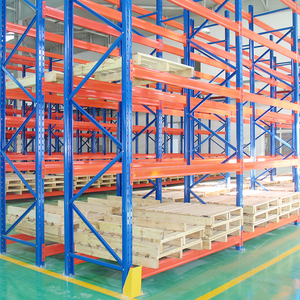
Factory-Direct Catalog
Featured Heavy-Duty Industrial Racking Systems
Explore our certified engineering pallet storage systems engineered for maximum load capacities, seismic safety, and spatial efficiency across global distribution centers.
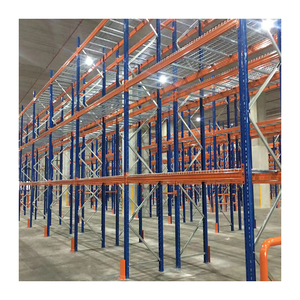
Heavy Duty Industrial Storage Warehouse Rack Selective Pallet Racking Shelves
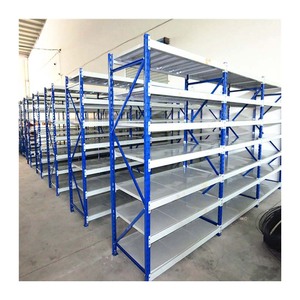
Mracking Light Duty Warehouse Selective Shelf Metal Steel Customized Warehouse Rack Warehouse Storage System Boltless Racking
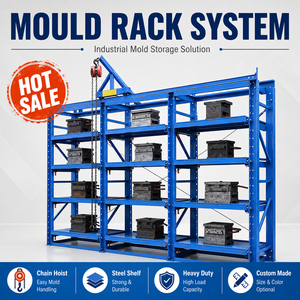
Competitive Price Durable High Density Steel Heavy Duty Mold Storage Racking System with Corrosion Protection for Warehouse Use
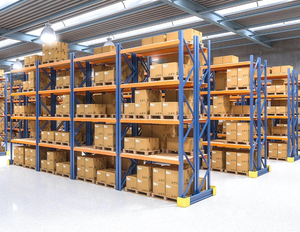
Industrial Warehouse Storage Racking System Corrosion Protection Heavy Duty 3Tons Pallet Racking
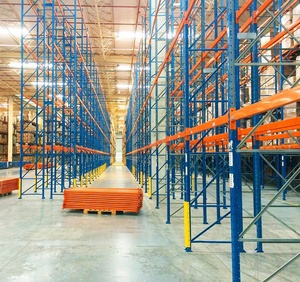
Warehouse Storage Racking System Industrial Metal Racks Heavy Duty Selective Pallet Racking
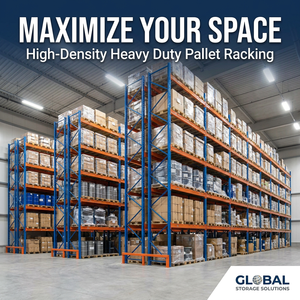
Top Rated Heavy Duty Steel Rack Customized Heavy Duty Racking System for Large Scale E-commerce Logistics Warehouse
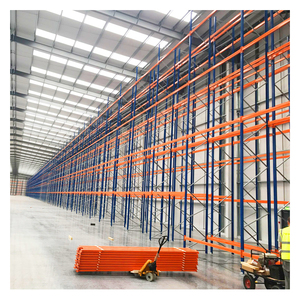
Industrial Storage Rack Pallet Shelving for Sale Heavy Duty Metal Shelf
150,000+
Metric Tons Annual Output
85+
Export Markets Served
Q355B
Certified Structural Steel
0.00%
Seismic Deflection Rate
Industry Technical Whitepaper
Engineering Excellence in High-Density Industrial Storage Infrastructure
As global supply chains face unprecedented pressure to optimize volumetric cube efficiency, shorten order cycle times, and adapt to high-velocity e-commerce fulfillment, industrial warehouse racking systems have evolved from passive structural steel components into highly sophisticated, load-engineered logistics assets. Operating as China's premier industrial warehouse racking manufacturer and factory, our engineering methodology bridges raw metallurgical performance with automated materials handling system integration.
Industrial racking compliance demands strict adherence to rigorous global structural codes. Whether executing installations across high-seismic zones in South America (complying with Chilean NCh2369 and NCh433 codes), meeting European FEM 10.2.02 and EN 15512 safety standards, or building under North American ANSI/RMI MH16.1 specifications, our structural engineering team utilizes advanced Finite Element Analysis (FEA) to simulate complex axial stresses, torsional moment distributions, dynamic forklift impact loads, and lateral seismic accelerations prior to rolling a single structural profile.
Metallurgical Superiority and Manufacturing Precision
The baseline of structural safety in heavy-duty industrial storage resides in steel grade selection. Unlike low-cost localized fabricators utilizing inconsistent commercial-grade mild steel, our manufacturing infrastructure utilizes premium cold-rolled Q235B and high-yield Q355B structural steel supplied exclusively by top-tier state metallurgy mills. The tensile strength, yield point consistency, and elongation ductility of Q355B steel allow our column uprights to deliver significantly higher section moduli while minimizing frame tare weight, lowering ocean freight costs and optimizing structural foundation floor loadings.
Our manufacturing plant integrates continuous automated cold roll-forming production lines featuring inline optical laser punch technology. This guarantees pitch accuracy along the full height of upright columns (with hole pitch tolerances held under ±0.1mm across 12-meter single-section profiles). Every beam connector claw is robotically welded utilizing multi-pass MAG/MIG processes under continuous real-time ultrasonic weld inspection, ensuring structural frame rigidity under cyclic beam flexure.
Technical Advantage
Structural Features Engineering Modern Supply Chains
Seismic-Ready Frame Engineering
Engineered with oversized heavy-duty footplates, high-tensile anchor bolts, and custom horizontal/diagonal frame bracing patterns capable of dissipating lateral shear forces during seismic events up to Zone 4 acceleration factors.
Automated Radio Shuttle & AS/RS Ready
High-precision guide rails with microscopic deflection tolerances integrated into high-density storage cubes, supporting semi-automated pallet shuttles and full AS/RS stacker crane integrations.
18-Stage Electrostatic Surface Finish
Pre-treated with zinc phosphate and thermosetting epoxy powder coating cured at 200°C. Delivers superior scratch resistance, chemical inertness, and salt-spray protection exceeding 500 hours for humid or cold-storage environments.
Circular Steel & Modular Upgrades
Modular teardrop and structural bolted connector profiles designed for infinite reconfigurability, enabling low-cost rack expansion, beam height adjustment, and painless damaged component replacement.
High-Velocity Throughput Configurations
Custom-engineered VNA (Very Narrow Aisle) and dynamic Pallet Flow gravity systems designed to eliminate aisle bottlenecks and increase forklift operational productivity by up to 40%.
Comprehensive Engineering Documentation
Every project includes dynamic 3D CAD layouts, structural calculation dossiers, slab loading verification, certified load signage, and complete operation & safety compliance manuals.
Decision Framework
Industrial Storage System Engineering Comparison Matrix
Selecting the optimal warehouse racking configuration requires balancing SKU density, selectivity percentage, floor footprint utilization, and equipment capital expenditure.
| Racking System Type | Selectivity (%) | Floor Utilization | SKU Rotation Type | Ideal Industry Application | Relative CapEx Index |
|---|---|---|---|---|---|
| Selective Pallet Racking | 100% Direct Access | 40% - 50% | FIFO (First-In, First-Out) | General Logistics, E-commerce, 3PL, FMCG | Low (Baseline) |
| Drive-In / Drive-Thru | 20% - 30% Low Access | 70% - 80% | LIFO / FIFO Option | Cold Storage, Agricultural Exports, Bulk Beverage | Medium |
| Radio Shuttle System | 30% - 50% Semi-Selective | 80% - 85% | FIFO or LIFO Automated | Frozen Food, High-Volume FMCG, Distribution Hubs | High (Automated) |
| Push-Back Racking | 25% - 40% Selective | 65% - 75% | LIFO (Last-In, First-Out) | Medium SKU Count, Commercial Distribution | Medium-High |
| VNA (Very Narrow Aisle) | 100% Direct Access | 60% - 70% | FIFO High Velocity | High-Bay Distribution Centers, Pharmaceuticals | Medium |
| Heavy Mold Drawer Racks | 100% Selective Drawer | 50% Space Efficiency | Direct Crane Access | Heavy Industry, Tooling, Automotive Manufacturing | Custom Engineering |
Strategic Procurement Trends
Future Trends Shaping Industrial Racking Procurement (2025–2030)
1. Transition from Manual Selective Racking to Semi-Automated Dense Cubes
Skyrocketing industrial real estate prices and urban logistics land scarcity are forcing warehouse operators to transition away from traditional wide-aisle selective racking. The future of industrial procurement centers around vertical cube optimization. Multi-deep Radio Shuttle systems and Automated Storage and Retrieval Systems (AS/RS) allow facilities to increase storage density by up to 80% within the exact same structural footprint. Modern supply chain managers now evaluate cost per pallet position over a 10-year total lifecycle rather than initial steel purchase price.
2. Stringent ESG Mandates & Low-Carbon Green Steel Sourcing
Multinational enterprise buyers operating under strict Scope 3 carbon emission reduction mandates now demand complete environmental transparency from their China manufacturing partners. Modern factory operations require carbon-neutral powder coating lines, recycling of all structural steel offcuts, and verified Environmental Product Declarations (EPD). Utilizing high-tensile steel grades (such as Q355B and Q460) reduces raw structural weight while maintaining structural safety margins, directly shrinking the embodied carbon footprint of large distribution center builds.
3. Seismic Resiliency & Severe Weather Environment Adaptation
Global supply chain disruptions caused by extreme weather events and natural disasters have highlighted structural vulnerabilities in standard racking designs. International procurement standards now strictly mandate dynamic seismic analysis, specialized baseplate anchoring on post-tensioned concrete slabs, and advanced corrosion protection. Cold-chain storage facilities operating at -25°C or coastal port facilities facing high saline humidity are rapidly adopting heavy-duty hot-dip galvanized (HDG) structural racking to prevent stress corrosion cracking and structural failure.
4. AI-Driven Slotting & Smart Racking Health Monitoring
The integration of Industrial Internet of Things (IIoT) sensors directly into rack columns represents the next frontier in warehouse safety. Structural strain gauges and forklift impact sensors transmit real-time deflection data to Warehouse Management Systems (WMS). When a forklift striking event occurs, the system automatically alerts safety officers and flags the damaged frame for immediate inspection in accordance with EN 15635 standards, mitigating catastrophic collapse risks before they occur.
Buyer Intelligence
Frequently Asked Questions for Global Racking Procurement
In-depth technical and commercial answers addressing common engineering inquiries from project engineers, procurement heads, and logistics managers.
Why choose a China direct industrial warehouse racking manufacturer over regional distributors?
Sourcing directly from a top-tier Chinese manufacturing facility provides significant cost efficiencies (typically 30% to 45% savings compared to localized resellers), direct access to custom structural engineering teams, complete material traceability, and tailored OEM/ODM modifications. Direct factory procurement ensures your racking system is fabricated using exact steel profiles engineered for your specific building parameters rather than compromised modular off-the-shelf inventory.
How do you guarantee racking structural safety in active seismic zones?
Our structural engineering department performs site-specific dynamic structural calculations taking into account local peak ground acceleration (PGA), soil profile classifications, and facility building codes (including Chilean NCh2369, US RMI/IBC, and European Eurocode 3). We increase frame seismic resilience by applying heavy-gauge diagonal bracing, double-sided heavy-duty footplates, chemical anchor studs, and stiffened beam-to-column connector locks designed to absorb seismic energy without unhooking.
What certifications and quality control standards do your factory products carry?
Our manufacturing operations are fully certified under ISO 9001 (Quality Management Systems), ISO 14001 (Environmental Management), and ISO 45001 (Occupational Health and Safety). Our product designs undergo rigorous structural load testing verifying compliance with European FEM 10.2.02, EN 15512, Australian AS4084-2012, and North American RMI (ANSI MH16.1) standards. Complete mill test certificates (MTC) detailing steel yield and tensile strength are provided with every shipment.
What is the typical lead time for custom heavy-duty warehouse racking manufacturing?
Standard manufacturing production turnaround for custom container-load projects ranges from 14 to 25 calendar days following final CAD layout approval and structural sign-off. High-volume automated projects (exceeding 500 metric tons) are produced in scheduled phased deliveries to match warehouse civil floor construction and site installation schedules.
How do surface coating options perform in cold storage and high-humidity environments?
For ambient indoor warehouses, our premium electrostatic epoxy powder coating provides exceptional scratch resistance and durability. For cold storage facilities (-25°C), specialized low-temperature powder formulations prevent finish embrittlement and micro-cracking. For extreme corrosive environments, chemical storage, or humid coastal locations, we recommend our hot-dip galvanizing (HDG) process, which bonds a thick zinc layer (>65µm) directly to the steel profile, providing decades of maintenance-free rust protection.
Can your structural engineers assist with warehouse CAD layouts and capacity planning?
Yes. We offer complete complimentary engineering design services. By submitting your warehouse architectural layout drawings, clear ceiling heights, floor slab load capacities, pallet dimensions, unit weight, and forklift operating specs, our logistics engineers will generate optimized 2D CAD floor plans and 3D elevation drawings designed to maximize storage density and throughput velocity.
Optimize Your Warehouse Storage Capacity Today
Partner directly with China's leading industrial racking factory. Contact our engineering support team to receive custom CAD layout designs, structural calculations, and competitive direct factory pricing.