Engineering-Grade Pallet Racking & Storage Systems
Precision-manufactured utilizing premium Q235B & Q355B structural steel, engineered to strict ISO, CE, FEM, and RMI compliance benchmarks.
Navigating Industrial Pallet Racking Procurement: Metallurgy, Engineering Standards, and Global Sourcing Optimization
In modern intra-logistics, supply chain efficiency relies heavily on structural integrity, high-density space utilization, and seismic resilience within distribution centers. As global trade expands across e-commerce, cold-chain food storage, retail logistics, and heavy manufacturing, selecting the right China pallet shelving manufacturer & suppliers has transitioned from a routine purchasing activity to a strategic engineering decision. Facilities are no longer designed merely to store static loads; they must withstand complex dynamic forces, seismic accelerations, high-frequency forklift operations, and automated material handling cycles.
China has established itself as the global epicenter for industrial racking manufacturing. This position is supported by fully integrated steel supply chains, cold-roll forming automation, and continuous metallurgical research. However, for procurement directors, logistics engineers, and warehouse operations specialists, evaluating suppliers requires a technical approach. Sourcing success depends on understanding steel grade yield strength, structural deflection limits, dynamic load distribution, automated welding certifications, and surface treatment longevity under harsh environmental conditions.
Comprehensive Structural Steel Grade Comparison & Matrix
The mechanical performance of warehouse racking relies directly on raw material selection. Leading Chinese manufacturers primarily utilize cold-rolled coil steel grades Q235B and Q355B (equivalent to ASTM A36 and ASTM A572 Grade 50). The matrix below illustrates critical engineering parameters that govern load-bearing safety margins:
| Steel Grade Standard | Yield Strength (MPa) | Tensile Strength (MPa) | Elongation (%) | Primary Application in Racks | Seismic Performance Factor |
|---|---|---|---|---|---|
| Q235B (SS400 / ASTM A36) | ≥ 235 MPa | 370 - 500 MPa | ≥ 26% | Standard load beams, step beams, medium duty uprights | Moderate ductile absorption |
| Q355B (S355 / ASTM A572 Gr 50) | ≥ 355 MPa | 470 - 630 MPa | ≥ 22% | Heavy-duty upright frames, high-bay VNA columns, seismic bracing | Superior strain capability & high yield response |
| Pre-Galvanized Cold Coil (SGCC) | ≥ 280 MPa | 340 - 420 MPa | ≥ 20% | Wire mesh decking, rack support bars, pallet flow rails | Corrosion resistant surface finish |
| Structural Channel Steel (Q235/Q355) | ≥ 235 - 355 MPa | 370 - 630 MPa | ≥ 24% | Structural pallet racks, drive-in upright base plates, heavy guards | Maximum impact absorption against forklift strikes |
Why Top Global Brands Partner with China Sourcing Leaders
Delivering engineering accuracy, seismic compliance, and full-lifecycle project support from structural layout to installation inspection.
Custom Engineering & CAD Modeling
Every facility has unique operational requirements. Advanced engineering teams utilize 2D layout optimization, 3D BIM integration, and structural finite element analysis (FEA) to maximize floor space utilization while ensuring building load compliance.
Seismic-Ready Structural Engineering
Incorporating international seismic calculation methods—such as Chilean NCh2369 / NCh433, US RMI, and European EN 15512 specifications. Frame bracing patterns, heavy-duty base plates, and anchor bolt shear metrics are tailored to local site conditions.
Automated Manufacturing & Quality Control
Automated CNC continuous roll-forming lines, laser punching systems, and robotic welding stations deliver high dimensional accuracy. ISO 9001 quality frameworks ensure strict traceability for raw materials, weld integrity, and coating thickness.
Industrial Storage System Architectures & Application Matrices
Choosing the correct storage system requires balancing SKU velocity, storage density, budget considerations, and material handling equipment (MHE) accessibility. Below is an engineering overview of key storage architectures manufactured by top Chinese suppliers:
1. Selective Pallet Racking (100% Direct Accessibility)
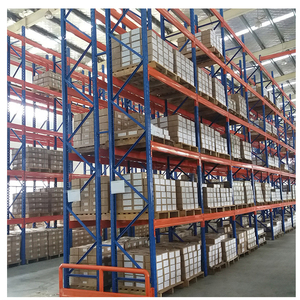
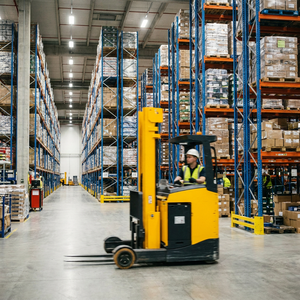
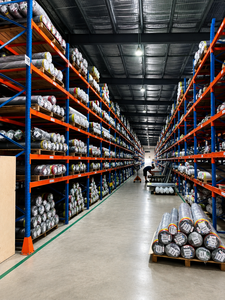
Selective pallet racking remains the most widely deployed system worldwide due to its flexibility and low capital expenditure per pallet position. Configured with adjustable beam levels connected via tear-drop or diamond connection slots, selective systems offer 100% direct access to every SKU. They accommodate reach trucks, counterbalanced forklifts, and VNA (Very Narrow Aisle) equipment.
2. High-Density Drive-In & Push-Back Racking Systems
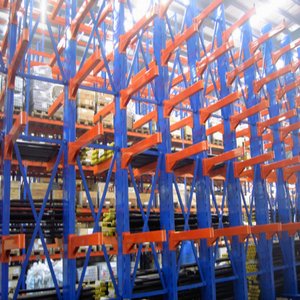
For operations prioritizing maximum volumetric utilization over individual SKU access—such as cold storage facilities, beverage distributors, and bulk raw material warehouses—high-density systems cut down on aisle space:
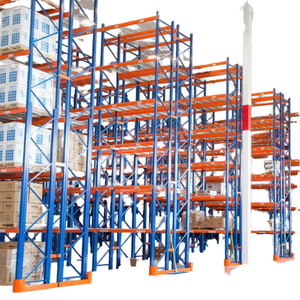
- Drive-In Racking (LIFO): Forklifts drive directly into storage bays supported by continuous side rails. Eliminates dedicated service aisles, achieving up to 85% cubic space utilization.
- Push-Back Racking (LIFO): Pallets are placed on nested wheeled carts riding on inclined structural rails. When a new pallet is loaded, it pushes existing pallets back. Unloading uses gravity to feed the next pallet forward.
- Gravity Pallet Flow (FIFO): Utilizes full-width roller tracks fitted with speed controllers and safety separators. Enables strict First-In, First-Out stock rotation ideal for perishable goods.
3. Semi-Automated Radio Shuttle Racking Systems
Representing the transition between manual racking and full AS/RS automation, Radio Shuttle systems utilize self-propelled internal shuttles controlled via Wi-Fi or RF remotes. The shuttle carries pallets along channel rails deep within the rack matrix. This reduces forklift travel times, protects rack columns from collision damage, and optimizes cold room thermal efficiency down to -30°C.
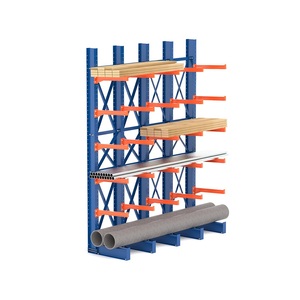
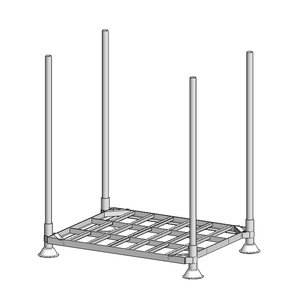
4. Structural Cantilever Racks & Stackable Post Pallet Manuracks
Standard pallet racks are unsuited for long, awkward, or non-palletized items such as steel pipes, timber, aluminium extrusions, and fabric rolls:
- Heavy-Duty Cantilever Racking: Built with central vertical columns and extended cantilever arms. Available in roll-formed and heavy structural C-channel profiles with arm capacities exceeding 2,000 kg.
- Stackable Post Pallet Manuracks: Modular, portable racking frames that stack vertically up to 4–5 tiers high. Ideal for seasonal demand spikes, tire storage, and textile rolls without consuming permanent aisle space.
Future Sourcing & Technology Trends in Warehouse Storage (2025–2030)
The global warehousing and logistics ecosystem is undergoing a rapid technological transformation. Sourcing teams must consider how current racking investments will align with future automation and environmental standards over a 15-to-20-year service life:
AS/RS & Autonomous Mobile Robot (AMR) Integration
Future-ready racking designs feature tight manufacturing tolerances (±0.5mm per upright meter) to accommodate automated guided vehicles (AGVs) and high-speed AS/RS crane guidance rails.
Low-Carbon & Green Steel Manufacturing
Leading Chinese manufacturers are incorporating recycled steel stock, electric arc furnace (EAF) smelting processes, and zero-VOC electrostatic powder coatings to help clients achieve Scope 3 supply chain carbon reduction goals.
IoT Sensor-Embedded Smart Racks
Integrating strain gauges, tilt sensors, and wireless impact monitors directly into rack columns provides real-time telemetry on structural overloading, forklift impacts, and seismic movement.
Frequently Asked Questions: Sourcing Pallet Racking from China
Addressing key considerations regarding quality standards, engineering compliance, delivery timelines, and installation.
Optimize Your Warehouse Capacity & Structural Integrity
Partner with a trusted China pallet shelving manufacturer. Contact our structural engineers today to request custom CAD layout design, structural calculations, or a comprehensive factory quotation.