Featured Industrial Racking & Storage Systems
Direct-from-factory high-yield steel racking systems engineered to international FEM, RMI, and ISO standards.
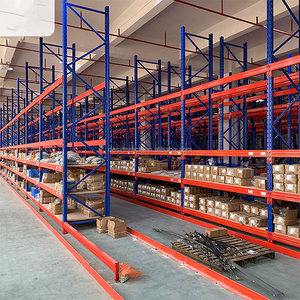
Commercial Heavy Duty Boltless Steel Shelving System Warehouse Storage Rack
View Details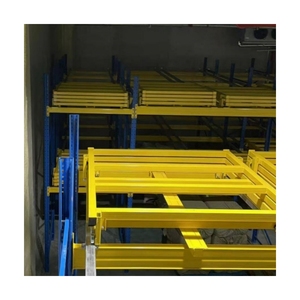
Heavy Duty Warehouse Push Back Pallet Racks Storage System
View Details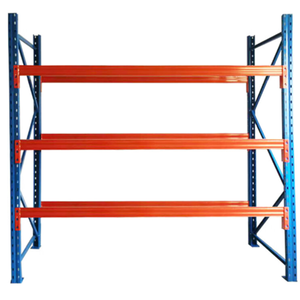
Mracking Industrial Warehouse Pallet Racking & Shelving System
View Details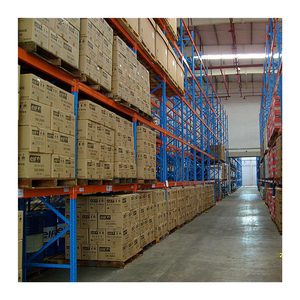
Customized Heavy Duty Steel Warehouse Storage Shelf Rack Pallet System
View Details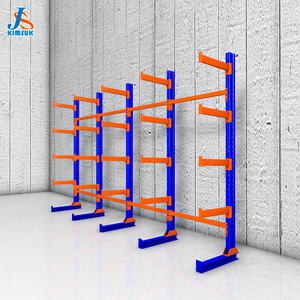
Electric Telescopic Cantilever Rack Heavy Duty Industrial Warehouse Storage
View Details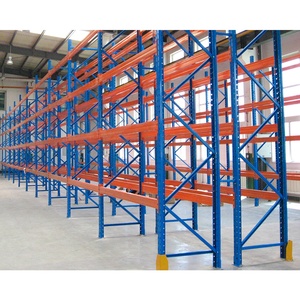
Customized Pallet Rack for Warehouse with Integrated Rack Safety Systems
View Details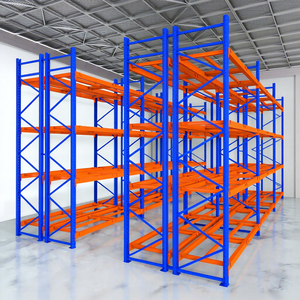
Wholesale Cold Rolled Steel Industrial Pallet Rack Multi Level Stacking System
View Details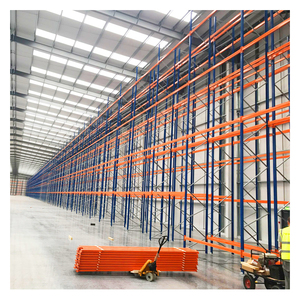
Industrial Storage Rack Pallet Shelving Heavy Duty Metal Storage Shelf
View DetailsWhitepaper Analysis: Structural Integrity & Strategic Procurement of Industrial Racking from China
In modern intra-logistics, supply chain resilience hinges on structural reliability, volumetric efficiency, and lifecycle durability. As global supply chain managers, EPC contractors, and warehouse operations leads seek optimal ROI, selecting a certified industrial racking supplier in China requires moving beyond superficial price comparisons to evaluate metallurgical composition, manufacturing tolerances, finite element analysis (FEA) modeling, and international seismic compliance standards.
Industrial storage systems are not commodities; they are dynamic, load-bearing mechanical assets subjected to repetitive static stresses, kinetic forklift strikes, environmental thermal cycles (in cold-chain storage), and seismic accelerations. Standard cold-rolled structural profiles fabricated without standardized stress-relief processes or accurate yield strength verification present grave catastrophic failure risks.
High-Yield Raw Steel Metallurgy
Our heavy-duty pallet racking systems utilize certified Q235B and high-strength Q355B structural steel (equivalent to SS400 and ASTM A572 Grade 50). Q355B provides a yield strength of $\ge 355 \text{ MPa}$, allowing thinner profile gauges to achieve greater load capacities while mitigating building dead-weight load stresses.
International Code Compliance
Engineered strictly to match RMI (ANSI MH16.1) specifications in the Americas, EN 15512 / FEM 10.2.02 across Europe, and AS 4084-2012 in Australasia. Every upright frame profile undergoes physical destructive testing and ANSYS FEA computer simulation.
Surface Treatment & Corrosion Resistance
Pre-treated via a 9-stage automatic chemical wash, iron-phosphate bath, and thermosetting epoxy-polyester powder coat ($60\text{–}80 \ \mu\text{m}$ thickness). For marine humidity and cold storage down to $-30^\circ\text{C}$, hot-dip galvanizing per EN ISO 1461 ensures zero rust degradation over a 25-year lifespan.
Engineering Selection Matrix: Racking Systems & Volumetric Efficiency
Selecting the correct racking architecture is dictated by SKU diversity, stock rotation speeds (FIFO vs. LIFO), floor space cost, clear height ceiling availability, and material handling equipment (MHE) specs. Below is an engineering overview of the primary systems exported to international distribution centers.
| Racking System Type | Storage Density | Selectivity (Access Rate) | Rotation Principle | Optimal Application & SKU Profile | Relative Cost / Pallet |
|---|---|---|---|---|---|
| Selective Pallet Racking | Standard (40%–50% Floor Util.) | 100% Direct Access | FIFO (First-In, First-Out) | High SKU counts, fast-moving consumer goods (FMCG), third-party logistics (3PL). | Low / Baseline |
| Push Back Racking | High (up to 75% Floor Util.) | Filtered (per lane) | LIFO (Last-In, First-Out) | 2 to 6 deep pallet lanes, medium-turn SKUs, cold storage where space is premium. | Moderate to High |
| Radio Shuttle High-Density | Ultra-High (up to 85% Floor Util.) | Automated per channel | FIFO or LIFO | Bulk storage, high-volume production plants, automated cold-chain logistics facilities. | High (Quick ROI) |
| Electric Telescopic Cantilever | Specialized High Density | 100% Overhead Crane Access | Independent Access | Long profiles, steel pipes, aluminum extrusions, timber packs, heavy machinery molds. | Customized Grade |
| Multi-Tier Mezzanine / Pick Module | Vertical Space Maximized | 100% Hand-Pick Access | FIFO / Flow Rack Enabled | E-commerce fulfillment centers, automotive spare parts, apparel sorting operations. | Moderate (Saves Building Expansion) |
Technical Deep Dive: Architectural Features & Structural Performance
1. Heavy Duty Selective Pallet Racking Units
Selective racking remains the backbone of global material storage. Our system features cold-formed omega upright profiles with teardrop or 75mm/50mm pitch hook connectors. Beam connectors feature 3 to 5 claw hooks with dynamic safety drop-locks that prevent accidental beam dislodgement caused by operator forklift misjudgments.
- Beam Deflection Limit: Engineered strictly to $L/200$ under maximum load capacity, well within FEM 10.2.02 tolerances.
- Frame Column Profiles: Ranging from 80mm to 140mm face width, with material thickness options from $1.8\text{mm}$ to $3.0\text{mm}$ cold-rolled Q355B steel.
- Baseplates & Anchoring: Heavy-duty seismic baseplates anchored via chemical or expansion bolts into concrete slabs engineered to minimum C25/30 strength grades.
2. Heavy Duty Push Back Pallet Rack Systems
Utilizing nesting cart mechanisms sliding on inclined structural steel rails, our push back rack systems allow pallets to be stored from 2 to 6 deep. When a forklift loads a new pallet, it gently pushes the preceding pallet back. Upon retrieval, gravity smoothly glides the next pallet forward to the picking face.
- Precision Bearings: Sealed-for-life stainless steel bearings ensure frictionless cart movement inside ambient or $-30^\circ\text{C}$ sub-zero freezer environments.
- Safety Speed Controllers: Built-in dynamic flow restrictors ensure controlled deceleration of returning pallets, preventing kinetic impact against front frame columns.
3. Electric Telescopic Cantilever Racking Solutions
Designed to solve the complex challenge of storing long, awkward, or heavy structural materials (tubing, profiles, rebar, timber, plates). Equipped with automated electric drive systems, the arms or drawers extend telescopically, allowing direct overhead hoist or crane access to long items without structural upright obstruction.
- Arm Load Capacities: Up to $5,000\text{ kg}$ per arm with infinitely adjustable vertical pitch steps.
- Operational Safety: Integrated optical sensor fences, emergency stop interlocks, and soft-start/soft-stop frequency inverter electric motors.
4. Industrial Boltless Steel Shelving & Stacking Units
For hand-loaded medium-to-heavy items, our boltless steel shelving system eliminates structural bolts, relying on precision keyhole slotted uprights and interlocking beam clips for ultra-fast assembly and structural rigidity. Ideal for commercial stockrooms, maintenance toolrooms, and multi-tier picking structures.
Require Structural Calculation & CAD Layout for Your Facility?
Consult with our lead structural engineers. We provide free 2D/3D DWG floorplan proposals, load calculations, and seismic verification within 24 hours.
Get a QuoteFuture Trends: Global Procurement & Technological Evolution (2025–2030)
The global warehousing and logistics ecosystem is undergoing a dramatic shift toward hyper-automation, carbon transparency, and predictive safety telemetry. Procurement teams sourcing industrial storage systems from China must align their technical specs with these four structural trends over the next decade:
1. Integration with AS/RS & Autonomous Mobile Robots (AMRs)
Traditional static racking is yielding to automation-ready steel structures. Tolerances for beam deflection, plumbness, and rack frame squareness are tightening from $\pm 5\text{mm}$ down to $\pm 1.5\text{mm}$ to allow seamless integration with automated guided vehicles (AGVs), shuttle robots, and high-speed stacker cranes.
2. IoT-Enabled Structural Health Monitoring (SHM)
Smart racking installations now feature integrated strain gauges, vibration sensors, and micro-optical collision meters embedded inside high-impact upright zones. These sensors feed real-time telemetry to warehouse management systems (WMS), alerting safety officers instantly if a forklift impact compromises beam integrity.
3. Green Steel & Decarbonized Supply Chains
European Union CBAM (Carbon Border Adjustment Mechanism) and ESG reporting standard mandates require suppliers to deliver Environmental Product Declarations (EPDs). Leading Chinese racking manufacturers are adopting green electric arc furnace (EAF) steel and zero-emission powder-coating lines to lower Scope 3 embodied carbon.
Enterprise Advantage: Strategic Value of Sourcing from Our Manufacturing Hub
As a leading Chinese manufacturer and global exporter of high-yield steel warehouse racking systems, our enterprise infrastructure balances metallurgical excellence, competitive cost structures, and end-to-end engineering assistance.
1. Fully Automated Roll-Forming Lines
We operate 24 high-precision continuous cold roll-forming lines with online automatic punching units. This guarantees identical beam profile dimensions, exact hole-pitch centers, and flawless inter-lock fitting across multi-thousand-ton export orders.
2. Robotic Welding Precision
Beam connectors and structural baseplates are joined using multi-axis ABB robot welding cells. Continuous CO2 gas-shielded welding eliminates human error, cold welds, and stress concentrations, ensuring maximum joint shear capacity under dynamic load transfers.
3. Comprehensive Export Freight Packaging
International sea transport subjects structural steel to humidity and ocean movement. We utilize steel-strapped wooden pallet bundling, shrink-wrap moisture barriers, corner edge protectors, and custom container loading schemes to guarantee 100% damage-free site arrival.
Structural Calculation Formulae & Design Engineering Standards
Proper racking design requires calculating Euler buckling loads for upright columns and bending moment stress under static and dynamic loading. Structural stability of an upright column subjected to vertical load is verified using the fundamental equation:
Where:
- $P_{cr}$: Critical Euler Buckling Load before structural failure.
- $E$: Young's Modulus of Elasticity ($2.05 \times 10^5 \text{ N/mm}^2$ for structural steel Q355B).
- $I$: Second Moment of Area (Moment of Inertia) of the cold-formed column cross-section.
- $K$: Effective length factor based on bracing fixity conditions ($K = 0.9\text{–}1.0$ for sway frames).
- $L$: Unbraced column length between diagonal frame bracing nodes.
By enforcing continuous diagonal and horizontal bracing patterns along upright frame depth, unbraced length $L$ is minimized, significantly increasing the critical buckling threshold $P_{cr}$ without adding unnecessary steel weight.
Frequently Asked Questions: Global B2B Procurement & Engineering
1. What is the difference between Q235B and Q355B steel in industrial racking?
Q235B has a minimum yield strength of $235\text{ MPa}$ and tensile strength of $370\text{--}500\text{ MPa}$, suitable for standard light-to-medium duty applications. Q355B is a low-alloy, high-strength structural steel with a yield strength of $355\text{ MPa}$ ($\approx 51\text{ \%}$ stronger). Using Q355B for upright frames allows higher load capacity per bay, smaller profile cross-sections, increased resistance to forklift impact, and superior performance in high-bay racks ($>10\text{ meters}$).
2. Are your warehouse racking systems certified for seismic zone installation?
Yes. Our structural engineering team designs racking layouts in accordance with seismic standards including US RMI (ANSI MH16.1), Chilean NCh2369 / NCh433, and European EN 16681. We calculate site-specific spectral acceleration ($S_s, S_1$), ground soil parameters, and dynamic frame ductilities, providing enlarged heavy-duty baseplates, additional floor anchors, and reinforced frame bracing nodes accordingly.
3. How do you ensure surface coating durability in cold storage or humid marine climates?
For cold-chain freezers (down to $-30^\circ\text{C}$), we apply an outdoor-grade thermosetting epoxy-polyester powder coat with high impact flexibility, preventing paint micro-cracking caused by steel thermal contraction. For marine environments, humid logistics hubs, or chemical storage, we offer complete Hot-Dip Galvanizing per EN ISO 1461, bonding a $65\text{--}85 \ \mu\text{m}$ thick zinc-iron alloy layer to the steel that resists rust for decades.
4. What technical details are needed to receive a custom design and price quote?
To provide an engineered DWG layout and precise load calculation, please provide: (1) Warehouse building floorplan dimensions and clear height; (2) Pallet dimensions (Width $\times$ Depth $\times$ Total Height including goods); (3) Maximum weight per pallet; (4) Forklift truck type, aisle clearance requirements, and maximum lifting height; (5) Operating ambient temperature; and (6) Any seismic or local building code regulations.
Transform Your Warehouse Density & Safety Standards Today
Partner directly with China's leading industrial racking supplier. Contact our engineering team for custom CAD layouts, certified load calculations, and competitive direct-from-factory pricing.
Get a Quote