Engineered Industrial Racking & Automated Storage Solutions
Browse our precision-manufactured structural steel racking solutions engineered for compliance with EN 15512, FEM 10.2.02, and global seismic safety standards.
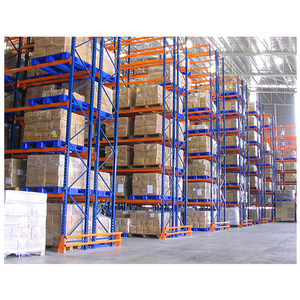
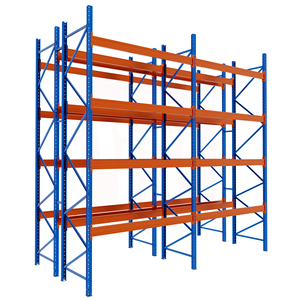
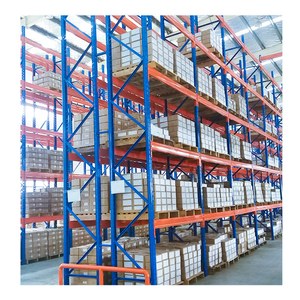
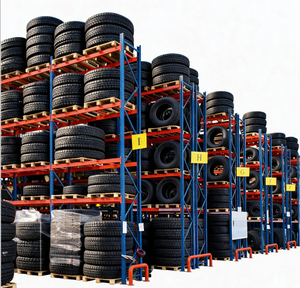
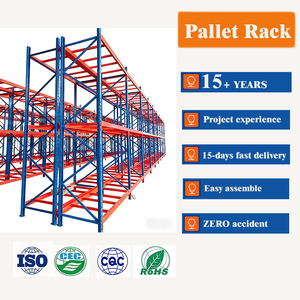
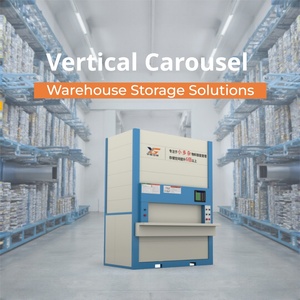
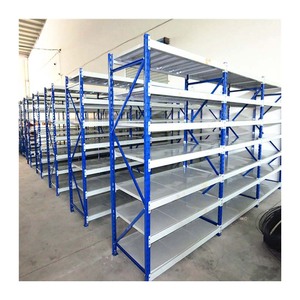
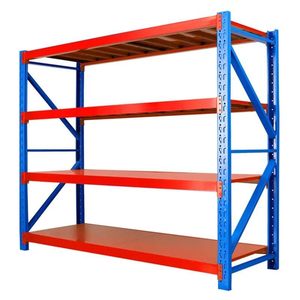
Understanding CE Certification & Structural Mechanics in Pallet Racking
A rigorous evaluation of design codes, steel metallurgy, FEA load calculations, and global safety standards governing modern industrial warehouse storage systems.
The Rigor of CE Certification (EN 15512 Framework)
In the global supply chain, CE marking for structural warehouse storage is not merely a label; it represents rigorous compliance with EN 15512:2020 (Steel static storage systems - Adjustable pallet racking systems - Principles for structural design). Unlike basic steel fabrications, certified pallet racking must withstand complex combinations of vertical dead loads, live pallet loads, dynamic forklift placement impacts, and environmental lateral shear forces.
As leading manufacturers, our CE certification verifies that finite element analysis (FEA) and destructive testing have been executed to evaluate critical structural behavior, including frame buckling, beam-to-upright connector stiffness, and base plate floor anchoring under maximum yield stress conditions.
- EN 15620 Compliance: Strict dimensional tolerances, frame verticality, and clearance standards for manual and automated reach trucks.
- EN 15629 Specification: Detailed structural engineering customized to site-specific slab loading limits and soil mechanics.
- EN 15635 Operations: Documented inspection protocols ensuring long-term operational structural integrity.
Metallurgical Quality & Structural Profiles
The foundation of an uncompromising industrial rack lies in raw material selection. We utilize certified cold-rolled high-tensile structural steel (Q235B and Q355B grades), offering optimal yield strength ($f_y$) and ultimate tensile strength ($f_u$) to balance load-bearing rigidity with structural elasticity.
Our upright columns feature advanced multi-stage cold-formed profiles with up to 12 rib-bending axes. This geometric profiling dramatically enhances the moment of inertia ($I_x, I_y$) and torsional rigidity, preventing local buckling under heavy vertical compression.
- Heavy-Duty Box Beams: Continuous twin-C profile interlocking seams robotically welded to multi-hook structural connectors.
- Surface Finishing: Automated 8-stage pre-treatment wash followed by thermosetting epoxy-polyester powder coating (70–90 μm) or hot-dip galvanizing per ISO 1461 for cold storage (-30°C).
- Safety Pin Mechanics: Automatic mechanical locking pins with high shear resistance to prevent accidental beam dislodgement.
Technical Parameters: Standard Selective vs. Heavy-Duty Structural Racking
| Engineering Feature | Standard Roll-Formed Pallet Racking | Heavy-Duty CE Certified Structural Racking | High-Density Automation (Radio Shuttle / AS/RS) |
|---|---|---|---|
| Steel Grade Standard | Commercial Q195 / Q235 Steel | Certified Q235B / Q355B High-Yield Steel | Q355B Cold-Rolled Precision Structural Steel |
| CE Design Standard | Basic Manufacturer Internal Standard | EN 15512:2020 / FEM 10.2.02 Certified | EN 15512 & EN 15620 Class 100/200 Precision |
| Beam Load Capacity (per pair) | 1,000 kg – 2,500 kg | 2,000 kg – 4,500 kg | 1,500 kg – 3,000 kg (High Dynamic Load) |
| Upright Frame Profile | 80mm – 90mm Standard Teardrop / Omega | 90mm – 120mm Multi-Rib Structural Profile | 100mm – 140mm Heavy Column Section |
| Seismic Safety Integration | Optional Base Anchor Expansion | Engineered Dynamic Response (NCh2369 / EN 16681) | Integrated 3D Structural Dynamic Bracing |
| Corrosion Resistance Finishes | Standard Electrostatic Powder Coat | Epoxy Powder Coating / Hot-Dip Galvanized | Duplex Galvanized & Anti-Static Cleanroom Finish |
Future Trends in Industrial Warehouse Storage Procurement
How global supply chain automation, carbon reduction targets, and IoT structural health monitoring are reshaping commercial racking procurement.
1. Automated AGV/AMR & Shuttle Integration
Traditional static storage is rapidly evolving to accommodate Autonomous Guided Vehicles (AGVs), Autonomous Mobile Robots (AMRs), and 4-Way Radio Shuttle systems. Future-proof procurement requires ultra-precise rack tolerances (EN 15620 Class 100) to prevent robotic docking errors and ensure seamless pallet positioning.
2. Cold-Chain Thermal Efficiency Optimization
With refrigerated warehouse operating costs soaring due to energy prices, global logistics providers are replacing standard selective racking with high-density Drive-In, Push-Back, and Radio Shuttle systems. Maximizing vertical cube utilization reduces cold storage footprint and slashes kWh power consumption per pallet position.
3. Decarbonization & Green Steel Lifecycle
Environmental, Social, and Governance (ESG) mandates are driving global buyers toward certified low-carbon steel racking. Manufacturers prioritizing electric arc furnace (EAF) steel, 100% recyclable components, and zero-VOC powder coating processes are gaining decisive competitive edges in major international tenders.
Why Global Procurement Teams Partner With Us
From initial site survey to structural FEA design, continuous manufacturing QA/QC, and global compliance installation—we deliver turnkey reliability.
Seismic Engineering & Site-Specific Calculations
Building warehouses in seismically active regions (such as South America, Western US, Pacific Rim, and Southern Europe) requires structural engineering that goes far beyond catalog load tables. Our structural engineers calculate dynamic ground acceleration, soil ductility, and building natural frequencies using site-specific standards like NCh2369, NCh433, and EN 16681.
We supply fully documented structural engineering dossiers, seismic base anchors, braced upright frame topologies, and heavy-duty floor plates to guarantee full compliance for municipal permits and insurance underwriting.
Turnkey Manufacturing & End-to-End Execution
Operating out of automated manufacturing facilities equipped with CNC cold-roll forming lines, robotic laser welding, and automated powder coating chambers, we maintain total quality control across every production stage under ISO 9001 and ISO 14001 certification.
Our dedicated project management team handles the entire lifecycle: initial 2D/3D BIM layout design, structural load analysis, custom fabrication, international container packing, and on-site certified installation oversight.
Frequently Asked Questions by Industrial Storage Buyers
Essential guidance for procurement officers, warehouse operations managers, and structural engineers.
What specific structural parameters does CE Certification (EN 15512) cover for pallet racking?
CE certification according to EN 15512:2020 specifies structural design requirements for adjustable pallet racking made from steel components. It covers ultimate limit state (ULS) and serviceability limit state (SLS) calculations, including column stiffness, beam-to-column connector rotational rigidity, frame bracing shear resistance, dynamic beam deflection limits ($L/200$), base plate anchor tension loads, and overall global racking stability under combined loading conditions.
How do Q235B and Q355B steel grades differ in heavy-duty racking applications?
Q235B steel offers a minimum yield strength ($f_y$) of $235 \text{ MPa}$ and an ultimate tensile strength of $370\text{--}500 \text{ MPa}$, making it ideal for standard selective racking uprights and beams. Q355B is a high-strength low-alloy structural steel with a yield strength of $355 \text{ MPa}$ and tensile strength up to $630 \text{ MPa}$. Using Q355B allows engineers to design lighter, thinner profiles that achieve significantly higher load-bearing capacities, especially in high-bay racking systems exceeding 10–15 meters in height.
What is the recommended anti-corrosion coating for cold storage and humid environments?
For ambient warehouses, an 8-stage pre-treated electrostatic epoxy-polyester powder coating (70–90 μm thickness) offers superior scratch and impact resistance. However, for cold storage rooms operating down to $-30^\circ\text{C}$ or humid coastal logistics hubs, hot-dip galvanizing per ISO 1461 is recommended. Hot-dip galvanizing applies a zinc alloy layer (typically 55–85 μm) that chemically shields steel against moisture condensation and thermal shock corrosion.
How are racking systems calculated to survive earthquake loads?
Seismic rack engineering requires site-specific dynamic response spectrum analysis considering local ground acceleration ($a_g$), soil profile coefficients, and building structural ductility. Under standards like EN 16681 and NCh2369, engineers integrate heavy-duty floor baseplates, expanded concrete wedge anchors, specialized diagonal X-bracing along upright frames, and rigid top-tie portal beams to absorb dynamic lateral kinetic energy without catastrophic collapse.
What is the difference between selective racking, drive-in racking, and radio shuttle racking?
Selective Racking provides 100% direct pallet accessibility with 40–50% floor area utilization. Drive-In Racking eliminates aisles to achieve 70–80% density using LIFO (Last-In, First-Out) storage, but requires forklifts to drive inside frames. Radio Shuttle Racking uses semi-automated electric shuttles running on rails inside deep channels to deliver 85%+ spatial utilization with both FIFO and LIFO capabilities, reducing forklift travel time and structural damage risk.
How frequently should industrial pallet racks undergo formal safety inspection?
In accordance with EN 15635 and local occupational safety standards, warehouse racks must undergo weekly visual checks by internal warehouse operators, formal monthly documented inspections by safety officers, and an annual comprehensive audit conducted by an expert qualified rack inspector. Immediate technical inspections are mandatory following any forklift impact collision or significant seismic event.
Optimize Your Facility with CE Certified Industrial Racking
Submit your warehouse floor layout, beam span requirements, and pallet unit loading data. Our senior structural engineers will deliver a complete CAD design, structural load analysis, and competitive factory-direct quote.