A pallet rack can look like a simple steel frame. In a busy warehouse, it shapes travel paths, picking speed, and usable space. Choosing a Pallet Storage Racking System therefore starts with the work: pallet dimensions, load weights, handling equipment, and inventory turnover. The right design makes daily movements feel straightforward. The wrong one can leave aisle space wasted or access awkward.
MHI’s 2024 Annual Industry Report found that 55% of surveyed supply-chain professionals planned to increase investment in technology and innovation. That finding points to a wider shift: storage decisions increasingly need to support changing operations, not just today’s pallet count. Warehouse-design specialist Robert B. Frazelle’s published work emphasizes aligning storage choices with material flow. Put plainly, rack selection should serve how goods move. Check the actual layout, too.
This guide compares 10 pallet storage racking systems, from selective racks to high-density options. Each has trade-offs. A denser layout may reduce direct access to individual pallets; a more accessible layout may use more floor space. That tension is easy to overlook. The best choice depends on the building, inventory profile, equipment, and safe operating practices. Use the comparisons as a shortlist, then verify load requirements and site conditions with qualified professionals before installation.
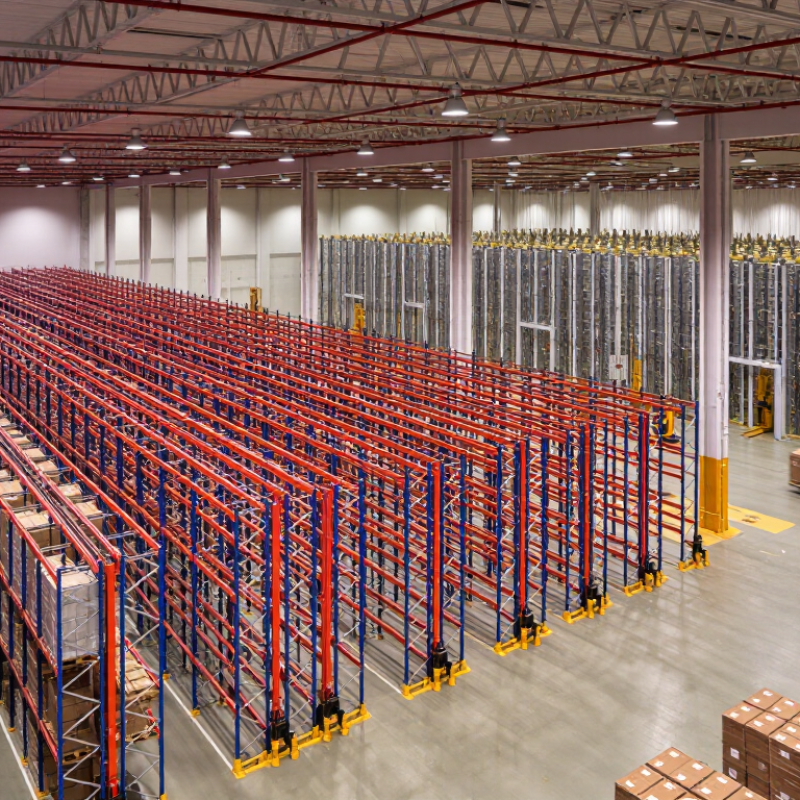
A 48 × 40-inch pallet is a common North American warehouse footprint, as noted in guidance from the National Wooden Pallet and Container Association. But matching the footprint is only the start. Measure the actual load, including overhang, wrap, and uneven cartons. A pallet can fit between uprights and still obstruct a flue space or create unsafe clearance.
Rated capacity belongs to the rack configuration, not to the pallet alone. ANSI/RMI MH16.1-2021 covers the design and evaluation of steel storage racks; beam capacity depends on factors such as beam span and loading. For example, two 2,000-pound pallets on one beam level create a 4,000-pound pair load. Check the rack’s posted capacity and confirm that the frame can support the cumulative loads across its levels. Real loads are often less uniform than a neat spreadsheet suggests.
Tips: Record the heaviest pallet, not the average. Keep loads centered, inspect damaged pallets, and never guess at a rating. If rack drawings or capacity labels are missing, pause and have a qualified rack professional verify the system before loading it.
Selective racking gives operators direct access to every pallet position. That makes picking individual SKUs straightforward, especially when orders change throughout the day. A forklift can reach a pallet without moving another one. The trade-off is aisle space: wide access lanes and single-deep storage can limit overall pallet capacity. In a busy warehouse, that extra access may prevent delays and misplaced stock.
Double-deep racking places one pallet behind another, adding storage positions without expanding the building. It usually needs a reach truck with extended reach. The rear pallet is less accessible, so this layout works best when each lane holds the same SKU and replenishment patterns are predictable. Not always. If stock varies often, operators may spend time rearranging pallets, and inventory rotation can become harder to manage. Before choosing, check equipment reach, aisle width, pallet dimensions, and rack load ratings with a qualified storage professional.
Tips
Compare usable pallet positions, not just rack rows. Mark a sample aisle on the floor and test turning clearance with your actual forklift. Review peak picking periods, too. A denser system can look efficient on paper, yet create a bottleneck during a morning rush. I would also leave room for imperfect pallets; real loads are rarely as neat as the drawings.
Drive-in and drive-through racks look similar, but their operating rules differ. Drive-in lanes usually work on LIFO: the last pallet stored is the first retrieved. This suits deep storage of a few high-volume SKUs, such as identical cartons stacked behind one another. The trade-off is reduced selectivity; a forklift may need to move front pallets to reach stock deeper in the lane. Drive-through racks allow access from both ends and can support FIFO, with loading at one end and picking at the other. That matters for dated goods. It also takes disciplined lane management.
Push-back systems store pallets on nested carts. Operators load and retrieve from the same face, typically using LIFO, while gravity moves remaining pallets forward. Pallet-flow racks use inclined rollers so pallets advance toward the picking face, supporting FIFO and steady replenishment. They can help separate loading and picking traffic. But rollers, pallet condition, and lane balance need attention. Small details matter.
MHI’s 2024 Annual Industry Report found that 55% of surveyed supply-chain professionals planned to increase investment in robotics and automation. That signals growing interest in mechanized operations, not proof that automation suits every warehouse.
Before choosing, compare SKU count, pallet turnover, load dimensions, forklift aisle needs, and inventory rotation rules. A dense rack can save floor space, yet create awkward access if demand patterns change. That deserves a second look.
Pallet shuttle systems store pallets several positions deep, with a powered shuttle carrying loads along rails inside each lane. The forklift sets a pallet at the lane entrance and retrieves it when needed. Less travel inside the rack. That can help operations handling many pallets of the same product. It is not ideal for every inventory mix, though. Different products need separate lanes, and poor lane planning can leave space technically full but awkward to use. Keep pallet dimensions, load weight, and aisle traffic in the design review.
Mobile racks mount rack rows on powered bases that move along floor rails. Operators open an aisle only where access is needed, reducing the number of permanently open aisles. This can increase storage density, especially where floor space is tight. But access becomes sequential: another row may need to move before a picker reaches the target. That delay matters during busy periods. Rails also need clean, level surroundings, and staff need clear operating procedures. The trade-off is easy to underestimate. A site survey should compare order patterns, peak retrieval rates, floor condition, and emergency access before either system is selected. Even a small change in pallet size can affect usable capacity.
Cantilever racking suits long, awkward stock that will not sit safely on pallet beams. Steel bars, timber packs, and plastic pipe need clear arm spans and rated load capacities. Check each arm, column, and base against the actual bundle weight. Long loads can flex, shift, or overhang. That detail is easy to underestimate. Forklift access also matters: narrow aisles save floor space, but leave less room to turn. A layout may look efficient on paper and still frustrate operators handling a twelve-foot bundle.
AS/RS suits repeatable pallet loads and high-throughput storage, using cranes or shuttle systems to retrieve goods automatically. MHI’s 2024 Annual Industry Report found that 55% of surveyed supply-chain leaders planned to increase technology investment; 88% expected digital supply chains to become the norm within five years. These are survey expectations, not guarantees of warehouse savings. Before specifying automation, check pallet dimensions, load variation, order patterns, and recovery plans for equipment downtime. A hybrid layout can keep long stock on cantilever racks while routing standard pallets through AS/RS. It is not always the neatest answer. Sometimes the better design is the one staff can operate safely on a busy shift.
A typical lane is accessed from one load face, or from two faces for through-flow systems. Actual layouts vary by design.
“Load face” means a side of a lane from which goods can be loaded or retrieved. Two-face access is typical of drive-through and pallet-flow lanes; other systems commonly use one operating face per lane.
Every pallet position is directly accessible. A forklift can reach one pallet without moving another. The trade-off is wider aisles and lower storage density.
It suits lanes holding the same product, with predictable replenishment. A reach truck with extended reach is usually needed. Mixed stock can complicate retrieval.
Compare usable pallet positions, not just rack rows. Mark a sample aisle on the floor and test turning clearance with your actual forklift. Check peak picking periods, too.
Check pallet dimensions, load weight, and aisle traffic. Shuttles can reduce travel inside deep lanes. Different products need separate lanes, so planning matters.
They can reduce permanently open aisles and increase storage density. But access may be sequential, delaying retrieval during busy periods. Rails need clean, level surroundings.
It can store long items such as steel bars, timber packs, and plastic pipe. Check arm and column ratings against bundle weight. Long loads can flex or overhang.
It suits repeatable pallet loads and high-throughput operations. Review load variation, order patterns, and downtime recovery plans. Automation does not guarantee savings.
Yes. Long stock could use cantilever racks while standard pallets use automated storage. A hybrid layout may be less tidy, but staff usability matters more.
Choosing the right Pallet Storage Racking System starts with understanding the pallets and loads a warehouse handles. Many facilities use standard 48 × 40-inch pallets, but rack capacity must be matched to the actual weight and dimensions of stored goods. Selective racks provide direct access to every pallet, while double-deep designs increase storage density by placing pallets farther back, with some reduction in accessibility.
For higher-density storage, drive-in and drive-through racks use lanes that may support LIFO or FIFO workflows; push-back and pallet-flow systems offer other ways to manage pallet movement and inventory rotation. Pallet shuttle racks and mobile systems can store goods in deep lanes or reduce the number of fixed aisles. Cantilever racks suit long or bulky loads, while automated storage and retrieval systems help move and locate pallets with less manual handling. The best option depends on inventory rotation, access needs, available space, load ratings, and the level of automation a warehouse requires.